

Ultra-pure water (UPW) represents the highest standard of water purification, containing no measurable contaminants, dissolved salts, organic matter, or microorganisms. Its conductivity and resistivity levels are tightly regulated, often at 18.2 MΩ·cm resistivity at 25°C, making it the cleanest form of water available. Unlike standard purified or distilled water, ultra-pure water is specifically engineered to meet the exacting needs of industries where the smallest impurity could compromise safety, accuracy, or functionality.
This article explores why ultra-pure water is necessary, highlighting the key industries – pharmaceuticals, microelectronics, and laboratories – that rely heavily on this resource. Additionally, we will examine the specialized requirements of these sectors and how maintaining ultra-purity safeguards performance, compliance, and innovation. For lab and biopharma equipment, see AMPAC USA’s high purity water systems.
What Is Ultra-Pure Water?
Ultra-pure water is created by combining multiple purification techniques such as reverse osmosis (RO), deionization, electrodeionization, ultrafiltration, and UV treatment. Unlike conventional purified water, which removes most contaminants, UPW eliminates virtually all ionic, organic, bacterial, and particulate matter.
Key attributes of UPW include:
- Extremely low conductivity (high resistivity).
- Absence of trace metals, salts, and organics.
- Sterility, free from bacteria and endotoxins.
- Consistent reproducibility, ensuring batch-to-batch accuracy in industrial or research processes.
These qualities make UPW indispensable for industries where even
anogram-level impurities can alter outcomes.
Why Ultra-Pure Water Is Necessary
The necessity of ultra-pure water arises from the sensitivity of modern technologies and health-critical industries. Impurities such as sodium, calcium, chlorine, organic carbon, and microbes can:
- Interfere with chemical reactions, leading to faulty lab results.
- Cause defects in microchips during semiconductor fabrication.
- Contaminate pharmaceutical formulations, risking patient safety.
- Distort analytical testing, reducing reproducibility and reliability.
In essence, UPW serves as both a raw material and a process medium, ensuring that operations proceed with precision, sterility, and compliance.
Ultra-Pure Water in the Pharmaceutical Industry
Formulation and Drug Manufacturing
Pharmaceutical products demand absolute purity, as any contamination could render a medication unsafe or ineffective. Ultra-pure water is essential for:
- Injectable drugs (Water for Injection – WFI): Even trace endotoxins or bacteria can cause severe reactions in patients.
- Active Pharmaceutical Ingredient (API) synthesis: Impurities could alter molecular structures or reduce drug potency.
- Cleaning processes: UPW ensures that production equipment and containers remain residue-free.
Regulatory Compliance
Organizations like the U.S. Pharmacopeia (USP) and European Pharmacopoeia (Ph. Eur.) set stringent standards for pharmaceutical water. UPW helps meet compliance for:
- USP Purified Water and Water for Injection requirements.
- Microbial load limits (e.g., less than 10 CFU/100 mL in some cases).
- Endotoxin thresholds, critical for intravenous drugs and vaccines.
Sterility Assurance
Ultra-pure water prevents cross-contamination during the manufacturing of vaccines, antibiotics, and biologics. For cell culture and biopharmaceuticals, UPW maintains sterile conditions that support viable research outcomes and safe large-scale production.
Ultra-Pure Water in Microelectronics and Semiconductor Manufacturing
Wafer Fabrication and Cleaning
The microelectronics industry is one of the largest consumers of ultra-pure water, with semiconductor fabs using millions of gallons daily. During wafer cleaning and etching, any ionic contaminant can result in:
- Microscopic defects.
- Reduced chip performance.
- Complete batch failures.
Even a single particle can short-circuit a microchip containing billions of transistors.
Flat Panel Displays and Photovoltaics
Beyond semiconductors, UPW is vital in flat panel display production and solar cell manufacturing. These industries demand surfaces free of particulates, as dust or mineral residues can compromise efficiency and product lifespan.
Yield Optimization
By maintaining UPW standards, microelectronics companies achieve higher yields, improved product reliability, and lower costs from reduced waste. The SEMI Standards for Semiconductor Water Purity highlights UPW as a cornerstone of next-generation fabrication processes.
Ultra-Pure Water in Laboratories and Research
Analytical Chemistry and Life Sciences
Laboratories rely on ultra-pure water for precision and reproducibility. Applications include:
- High-Performance Liquid Chromatography (HPLC): Contaminated water can cause ghost peaks or background noise, skewing results.
- Mass Spectrometry (MS): Impurities disrupt ionization efficiency, lowering detection sensitivity.
- Polymerase Chain Reaction (PCR): DNA amplification requires contaminant-free environments to prevent false results.
Cell Culture and Molecular Biology
In molecular biology, UPW supports experiments that require a sterile, controlled medium. For cell culture, protein crystallization, and enzyme assays, ultra-pure water prevents microbial contamination and ensures biomolecular stability.
General Laboratory Use
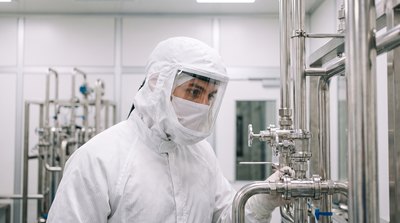
From cleaning glassware to preparing reagents, UPW eliminates risks of cross-contamination, maintaining experimental consistency and reducing error rates.
Other Industries That Depend on Ultra-Pure Water
While pharma, microelectronics, and labs dominate UPW usage, other sectors also depend on it:
Power Generation
Ultra-pure water is used in steam turbines and boilers to avoid corrosion and scaling. Impurities could damage multi-million-dollar equipment and reduce energy efficiency.
Cosmetics and Personal Care
In cosmetics, purity impacts shelf life and product safety. Ultra-pure water ensures that lotions, creams, and serums remain free of bacteria and maintain their intended formulations.
Food and Beverage
Though not as demanding as pharma, certain processes in the food industry use high-purity water for flavor consistency, microbiological safety, and cleaning of sensitive equipment.
How Ultra-Pure Water Is Produced
Producing UPW requires a multi-barrier purification system, integrating several processes:
- Pre-treatment: Sediment filtration, activated carbon, and softening.
- Reverse Osmosis (RO): Removal of dissolved salts and organics.
- Deionization or Electrodeionization: Elimination of residual ions.
- Ultrafiltration and UV Oxidation: Removal of endotoxins and bacteria.
- Polishing Stages: Final purification to achieve resistivity at 18.2 MΩ·cm.
Continuous monitoring ensures that resistivity, total organic carbon (TOC), and microbial counts meet industry standards.
Challenges in Maintaining Ultra-Pure Water Systems
- Microbial contamination: Even sterile systems face risks of biofilm growth.
- Material leaching: Pipes, tanks, and fittings must be constructed from inert materials like stainless steel or PVDF.
- System validation: Regular quality testing ensures compliance with USP, ASTM D1193, and SEMI standards.
- High operational costs: UPW systems require significant investment in both installation and maintenance.
The Future of Ultra-Pure Water
As technology advances, the demand for ultra-pure water continues to rise. Emerging applications include:
- Nanotechnology fabrication.
- Advanced drug delivery systems.
- genomics and proteomics research.
- Quantum computing and next-generation electronics.
Sustainability will also drive innovation, with industries seeking closed-loop recycling systems to reduce UPW consumption while maintaining quality.
Conclusion
Ultra-pure water is far more than purified water – it is a critical enabler of innovation, safety, and accuracy across multiple industries. In pharmaceuticals, it ensures patient safety and drug efficacy. In microelectronics, it guarantees defect-free chips and devices. In laboratories, it secures precision and reproducibility in every experiment. Beyond these, UPW supports power generation, cosmetics, food, and other advanced sectors.
As industrial and scientific demands grow sharper, the reliance on ultra-pure water will only deepen, cementing its role as one of the most valuable process resources in modern society.
Related Articles
- High Purity Water Systems
- Conductivity of RO Water
- Industrial RO Treatment
- Water Treatment Chemicals
Frequently Asked Questions
What makes ultra-pure water different from other purified water types?
Ultra-pure water (UPW) represents the highest standard of purification, distinguished by its lack of measurable contaminants, dissolved salts, organic matter, or microorganisms. Unlike standard purified or distilled water, UPW achieves an extremely high resistivity, typically 18.2 MΩ·cm at 25°C, making it the cleanest form of water available. This level of purity is specifically engineered to prevent compromise in sensitive industrial and scientific processes.
How is ultra-pure water typically produced for industrial applications?
Ultra-pure water is produced through a multi-stage purification process that combines several advanced techniques. This typically includes reverse osmosis (RO), followed by deionization, electrodeionization, ultrafiltration, and UV treatment. AMPAC USA engineers design these integrated systems to eliminate virtually all ionic, organic, bacterial, and particulate matter, ensuring consistent reproducibility for critical industrial needs.
What specific attributes define ultra-pure water’s quality?
The quality of ultra-pure water is defined by several key attributes, including extremely low conductivity (high resistivity) and the complete absence of trace metals, salts, and organics. It is also characterized by its sterility, being free from bacteria and endotoxins. These qualities ensure consistent reproducibility, which is vital for processes where even anogram-level impurities can significantly alter outcomes.
Why is ultra-pure water essential for pharmaceutical manufacturing?
Ultra-pure water is indispensable in the pharmaceutical industry because drug products demand absolute purity to ensure patient safety and medication efficacy. Contamination from impurities like microbes or organic carbon can render a medication unsafe or ineffective, leading to health risks and regulatory non-compliance. UPW is critical for formulation, drug manufacturing, and especially for injectables, serving as both a raw material and a process medium.
What are the risks of using contaminated water in microelectronics fabrication?
In microelectronics fabrication, the presence of even anogram-level impurities in water can cause catastrophic defects in microchips and other sensitive components. Contaminants such as sodium, calcium, or organic carbon can interfere with delicate manufacturing processes, leading to reduced yields, compromised device functionality, and significant financial losses. Ultra-pure water is therefore crucial to maintain the precision and integrity required for semiconductor manufacturing.
Conclusion
Ultra-pure water isn’t a luxury tier of clean — in pharmaceutical formulation, semiconductor wafer fabrication, and molecular biology labs, trace contamination that normal drinking water treatment would never catch can ruin a batch or a chip run entirely, which is why the industries covered above hold it to such a strict standard. Getting there means combining several purification stages, not just running water through a single filter twice. AMPAC USA designs systems around the specific ultra-pure water requirements of pharma, microelectronics, and lab applications rather than a generic high-purity spec. Contact our team at info@ampac1.com or (909) 548-4900 to discuss ultra-pure water systems for your application.
AMPAC USA engineers custom water purification systems for commercial, industrial, and emergency applications — from 500 GPD to multi-million GPD. Trusted by municipalities, military, and industry worldwide.