Quick Answer: The most impactful water-related New Year resolutions are: install certified home water filtration, increase daily water intake to recommended levels, eliminate single-use plastic water bottles, fix household leaks, switch to water-efficient appliances, test your water quality, and support organizations working on global water access.
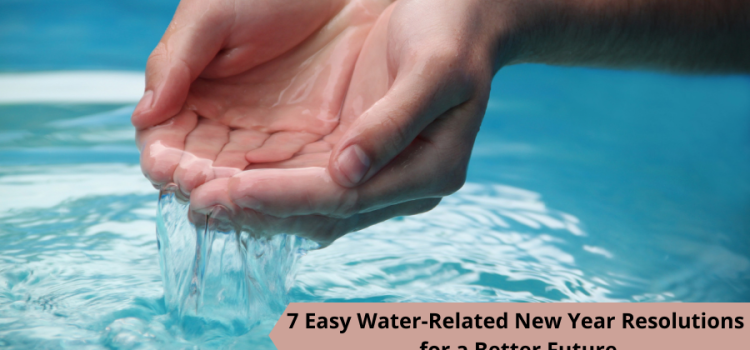
2022 is just a few hours away, and it’s time we start thinking of new year resolutions that we will actually stick to. If you are looking for some worthy new year resolutions, you might want to follow the 7 easy water-related new year resolutions for 2022 that will help you play a key role in a better and more sustainable future.
7 easy water-related new year resolutions for 2022-
- Don’t Use One-Time-Use Bottles
It is a smart idea to reduce your dependence on one-time-use bottles. Plastic is a huge threat to the environment, and it’s time we reduce its consumption. A smart way to stick to this new year’s resolution is to carry a glass or steel or even copper water bottle with you wherever you go. Such bottles can be reused and save you from over depending on plastic bottles.
This one is obvious. It would help if you reduced water wastage. Do a thorough examination of all the faucets, pipes, and other water infrastructure in and around your house to find and fix any leaks. Also, don’t leave the faucet running when bathing, brushing, shaving, or doing other stuff that needs water.
There are countless new ways to reuse water these days. You should go for a couple of them and reuse water as much as possible. For instance, the water rejected by the reverse osmosis system can be used for cleaning the house or watering the plants.
It is also recommended that you use smart appliances and fixtures (like toilets) that consume less water than usual. It will be a one-time expense that will lead to long-term water savings. Invest some money in 2022 and reap the benefits for the years to come.
Rainwater harvesting is an innovative idea to make the world better for future generations. It will also need a one-time investment and some basic maintenance, but it would be worth all the time, effort, and money.
If you want to save water and electricity this new year, you should switch to solar-powered water treatment systems that can operate with solar power and provide ample water for every household/commercial or industrial need. Solar power is not the future, it’s right here, and you must adapt it if you want to save the planet.
In addition to saving water and contributing to building a sustainable future, you should also pay attention to your personal health and well-being. For that, you should drink only 100% contamination-free water from a reverse osmosis system. A healthy you should be your goal in 2022 and drinking the recommended ounces of pure water will help you achieve that.
Where to Get the Best RO Systems?
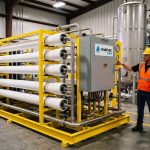
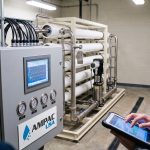
Trust AMPAC USA for the best reverse osmosis systems for residential, commercial, and industrial needs. They help ensure the water is tasteless, colorless, and odorless.
AMPAC USA water systems are well equipped and fully capable of converting any water into a product that meets the requirement of the end-user. Capable of performing flawlessly in harsh environments, our products assist the exploratory labs at the Arctic Circle to Oil rigs in Deserts, urban communities, and war zones. AMPAC USA water treatment systems are proven solutions to water treatment problems across the globe.
AMPAC USA advanced water purification systems are built to solve the most complex challenges related to water purification, treatment, provisioning, and Seawater Desalination, meant to work in the harshest environments around the globe. Our water treatment systems use the best Reverse Osmosis, Seawater Desalination, and water technologies of International standards for industrial, On-shore, and Offshore applications.
AMPAC USA designs and manufactures some of the world’s most reliable Commercial Reverse Osmosis Water Treatment Systems to treat water even in the toughest environments. We additionally strive for quality of international standards and excellent after-sales service. Our engineers are available to support your water treatment applications anywhere around the world. To know more, call us on 909-548-4900 or visit us here.
New Year resolutions related to water health and conservation can have measurable impacts on personal health, household costs, and environmental footprint. Unlike many resolutions that fade by February, water-related changes often lock in savings and health benefits that reinforce continued behavior. The evidence for hydration’s role in cognitive performance, kidney health, and metabolic function is well-established — and the environmental case for reducing plastic bottle consumption is unambiguous.
Upgrading home water filtration is one of the highest-return single actions a household can take for water quality. A properly installed, NSF-certified reverse osmosis system provides a decade or more of safe drinking water while eliminating ongoing bottled water costs. For a family spending $75 per month on bottled water, the system pays for itself in under a year. The health benefits extend beyond the obvious: removing lead, PFAS, and arsenic reduces chronic low-level exposure to verified carcinogens and neurotoxins. Annual water quality testing provides a baseline and peace of mind.
Conservation resolutions complement quality improvements. The EPA WaterSense program estimates that the average household can reduce water use by 20-30% through fixture upgrades and behavioral changes — saving 25,000-30,000 gallons annually. For households in water-stressed regions, these savings also translate to lower utility bills and reduced community demand on stressed aquifer systems. AMPAC USA encourages a holistic approach to water: prioritizing quality, reducing waste, and supporting the 2+ billion people globally who still lack access to safe water as a motivating framework for personal water practices.
Frequently Asked Questions
Can I reuse the wastewater from my home reverse osmosis system?
Yes, the reject water from residential reverse osmosis systems, which typically has a higher concentration of dissolved solids, can be safely repurposed for non-potable uses. Common applications include watering outdoor plants, flushing toilets, or cleaning floors. While modern RO systems are highly efficient, reusing this water further minimizes waste.
What water-efficient appliances should I prioritize for my home?
Prioritize appliances with WaterSense or Energy Star certifications, such as high-efficiency toilets, washing machines, and dishwashers. These systems are engineered to use significantly less water per cycle without compromising performance, leading to substantial long-term savings on both water and utility bills.
How do solar-powered water treatment systems benefit households and businesses?
Solar-powered water treatment systems utilize renewable solar energy to operate pumps and filtration processes, offering significant environmental and economic advantages. They reduce reliance on grid electricity, lower operational costs, and provide a sustainable solution for water purification, especially beneficial in remote areas or for off-grid applications.
What are the easiest ways to detect hidden water leaks in my house?
To detect leaks, first check your water meter before and after a two-hour period of no water use; if it changes, you likely have a leak. Also, listen for running water when no fixtures are in use, inspect visible pipes for drips, and use dye tablets in toilet tanks to check for silent leaks into the bowl. Addressing these promptly prevents significant water waste and potential property damage.
Why is it crucial to test my home’s water quality regularly?
Regular water quality testing is crucial because many contaminants, such as heavy metals, chemicals, or bacteria, are odorless, colorless, and tasteless. Identifying these hidden issues ensures you select the most effective filtration or purification system, safeguarding your family’s health and extending the lifespan of your plumbing and appliances. AMPAC USA’s engineers understand the diverse challenges of water sources globally.
Need a Water Treatment Solution?AMPAC USA engineers custom water purification systems for commercial, industrial, and emergency applications — from 500 GPD to multi-million GPD. Trusted by municipalities, military, and industry worldwide.