


Ask professional cannabis cultivators what goes into their water source before nutrients, and the answer is almost universally the same: reverse osmosis. RO isn’t a preference in commercial cannabis production — it’s a baseline. Here’s why, and what it means practically for growing cannabis with reverse osmosis water.
Why Tap Water Doesn’t Work Well for Cannabis
Municipal tap water is adequate for drinking. For precision nutrient management in cannabis cultivation, it’s a problem.
Tap water in most U.S. cities runs at 100–400+ ppm total dissolved solids, with highly variable calcium, magnesium, sodium, and chlorine content. That variability creates a fundamental challenge: if you’re targeting a specific nutrient solution EC (electrical conductivity) for your growth stage, you need to know exactly what you’re starting with. With tap water at 250 ppm one week and 180 ppm the next (seasonal and treatment variation is real), hitting precise targets is essentially impossible.
Chlorine and chloramine — added to municipal water to suppress bacteria — also suppress the beneficial microbial activity that many organic and living-soil growers specifically cultivate. If you’re running a no-till or biological grow, chlorinated tap water is working against your soil biology.
What RO Water Provides for Cannabis
A Controlled Starting Point
RO water exits the membrane at 0–50 ppm TDS — essentially a clean slate. You add exactly the nutrients you intend to add, at the concentrations you intend, without an unknown variable pre-loaded from the tap. This is the primary reason professional growers use RO: nutrient consistency across the entire crop.
EC (electrical conductivity) is the practical measure for cannabis cultivators — it correlates directly to dissolved nutrient concentration. Seedling and clone stage: 0.5–1.0 mS/cm. Vegetative: 1.0–2.0 mS/cm. Flowering: 1.5–3.0 mS/cm. Flushing: near-zero EC from RO water only. With RO as your base, every nutrient addition has predictable results.
Precise pH Management
Cannabis nutrient uptake is highly pH-sensitive. The ideal pH range for soil grows is 6.0–7.0 (most nutrients accessible at 6.2–6.8). Hydroponic and coco grows run at 5.5–6.5. Municipal tap water typically comes in at pH 7.2–8.0, alkaline enough to affect runoff pH and nutrient lockout if not aggressively corrected.
RO water enters at pH 6.0–6.5 (naturally acidic from dissolved CO₂), very close to the target range for most cannabis substrate types. Less acid needed for pH correction means smaller adjustments, less risk of pH crash, and better consistency across batches.
Elimination of Chlorine/Chloramine
RO carbon pre-filters remove 99%+ of chlorine and chloramines. This is relevant both for chemical growing (chlorine doesn’t harm synthetic nutrient uptake, but it does affect beneficial microbes if you’re using any inoculants) and especially for organic/biological cultivation where preserving the microbial community is part of the growing strategy.
The Calcium-Magnesium Consideration
This is the one area where RO requires active management. Cannabis has significant calcium and magnesium requirements — both are heavily used in photosynthesis (magnesium is the central atom in chlorophyll), protein synthesis, and cell wall structure. RO water, stripped of these minerals, requires Cal-Mag supplementation.
Most commercial cannabis nutrient lines include Cal-Mag as a separate supplement specifically for RO users. The standard approach: add Cal-Mag to RO water first (typically 150–200 ppm before other nutrients), then adjust pH, then add other nutrients. This order prevents calcium-magnesium precipitation at higher pH.
Failure to supplement Cal-Mag with RO water is the most common mistake new RO users make. Symptoms: interveinal chlorosis (yellowing between veins on middle/lower leaves), brown spots on older leaves, tip burn on new growth. The fix is simple — add Cal-Mag — but the prevention is simpler.
EC Targets and Strain Considerations
General EC targets for cannabis with RO water (everything in mS/cm):
- Seedlings and clones: 0.5–1.2 mS/cm
- Early vegetative: 1.2–1.8 mS/cm
- Late vegetative: 1.8–2.4 mS/cm
- Early flowering: 2.0–2.8 mS/cm
- Mid/late flowering: 2.5–3.2 mS/cm (some sativa-dominant strains push higher)
- Flushing (last 1–2 weeks): 0–0.5 mS/cm
These targets assume a Cal-Mag base in the 150–200 ppm range added to RO water before nutrient additions.
RO System Sizing for Cannabis Cultivation
Home growers with 4–10 plants typically use countertop or under-sink residential RO units producing 50–100 GPD. This is more than adequate for home cultivation — even a maximized 10-light residential setup rarely needs more than 5–10 gallons per watering day.
Commercial operations (licensed producers) need to size for actual daily water demand:
- Small commercial (100–500 plants): 200–500 GPD
- Mid-size (500–2,000 plants): 500–2,000 GPD
- Large-scale licensed producers: 5,000+ GPD, often with in-line EC/pH dosing systems
For commercial grows, RO is typically paired with automated nutrient dosing systems (dosatrons, computer-controlled fertigation) that use real-time EC and pH sensors to maintain target levels through each growth cycle. These systems don’t function accurately with variable tap water — they’re designed around RO as the base.
Water Reuse in Cannabis Cultivation
Progressive commercial cultivators are implementing water recycling programs that capture and treat runoff for reuse. RO plays a role here too: the recycled runoff typically has elevated EC from nutrient accumulation, and RO or nanofiltration is used to reduce TDS and EC before the water re-enters the nutrient mixing system.
Water conservation is increasingly important for cannabis facilities as environmental scrutiny of water use in agricultural operations grows. Recirculating hydroponic systems (DWC, NFT, ebb-and-flow) with RO-treated water use 70–80% less water than drain-to-waste systems.
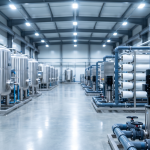
AMPAC USA’s RO systems for cannabis and hydroponic applications deliver consistent, 0-TDS base water for professional cultivation operations — from single-tent home grows to large-scale licensed producer facilities.
Related: For growers and specialty agriculture, AMPAC USA commercial RO systems deliver precise TDS control. See the 1,000 GPD commercial RO system and the full reverse osmosis application guide.
Related: For growers and specialty agriculture, AMPAC USA commercial RO systems deliver precise TDS control. See the 1,000 GPD commercial RO system and the full reverse osmosis application guide.
Related Articles
- Water Softener vs Reverse Osmosis: Which Do You Need? | AMPAC USA
- What Is Reverse Osmosis? The Complete 2026 Guide to RO Water Purification
- Whole House Reverse Osmosis vs Water Softener: Which Do You Need?
- Unlocking Pure Water: The Ultimate Guide to a 6 Stage Reverse Osmosis System
See our commercial reverse osmosis systems sized for cultivation-scale water demand.
Frequently Asked Questions
Why is pure water essential for cannabis cultivation?
Ultra-pure water, like reverse osmosis (RO) water, is non-negotiable for cannabis cultivation because it ensures precise nutrient delivery and optimal bioavailability. Clean water supports the plant’s basic metabolic functions, allowing efficient nutrient uptake without interference from unwanted dissolved solids. Without this foundational purity, proper nutrient absorption is compromised, hindering growth and potency.
What are the risks of using tap or well water for cannabis plants?
Tap and well water often contain high levels of Total Dissolved Solids (TDS), frequently hundreds of parts per million, which are not beneficial nutrients. These sources are typically rich in calcium and magnesium carbonates, leading to ‘hard water’ that can cause nutrient lockout. For instance, AMPAC USA encountered a Nevada farm with well water at 380 ppm TDS, primarily carbonates, which severely impeded nutrient absorption before an RO system was installed.
How does hard water affect cannabis nutrient uptake?
Hard water, characterized by high concentrations of calcium and magnesium carbonates, negatively impacts cannabis nutrient uptake. The molecular weight of these carbonate compounds is often too large for optimal plant absorption, essentially ‘clogging’ the plant’s system. This interference makes it difficult for plants to efficiently take in the beneficial nutrients provided, leading to nutrient lockout and compromised growth.
What level of TDS is problematic for cannabis irrigation?
For cannabis irrigation, Total Dissolved Solids (TDS) levels in the hundreds of parts per million (ppm) are problematic, especially when these solids are not beneficial nutrients. High TDS, particularly from carbonates, can lead to nutrient lockout and hinder plant performance. AMPAC USA’s field experience shows that well water at 380 ppm TDS, primarily carbonates, caused significant nutrient uptake issues for a large-scale indoor farm.
Why is reverse osmosis considered the best water purification method for cannabis?
Reverse osmosis (RO) is considered the best water purification method for cannabis because it consistently produces ultra-pure water, free from unwanted dissolved solids and contaminants. This purity ensures that growers have a clean slate to precisely control their nutrient solutions, guaranteeing plants receive exactly what they need without interference. AMPAC USA’s engineers, with decades of field experience, advocate RO as non-negotiable for optimal yield and potency.
AMPAC USA engineers custom water purification systems for commercial, industrial, and emergency applications — from 500 GPD to multi-million GPD. Trusted by municipalities, military, and industry worldwide.