
As water scarcity intensifies across the globe, reverse osmosis (RO) systems have become essential for purifying seawater, brackish water, and contaminated freshwater sources. However, a major consideration today is not just purification quality but also energy efficiency and sustainability.
That’s where the debate begins: solar desalination vs. traditional RO systems. Which one is the better long-term investment for clean water access?
Let’s break it down.
What Are Traditional RO Systems?
Traditional reverse osmosis systems use high-pressure pumps powered by electricity (usually grid-based or from diesel generators) to push water through semi-permeable membranes, removing up to 99.9% of salts and impurities.
They are widely used in:
- Industrial facilities
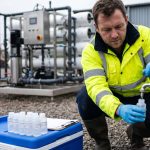
- Urban water treatment plants
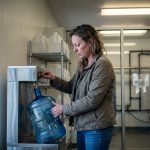
- Residential filtration units
- Agricultural water purification
While effective, traditional RO systems can be energy-intensive and dependent on stable power infrastructure.
What Are Solar Desalination Systems?
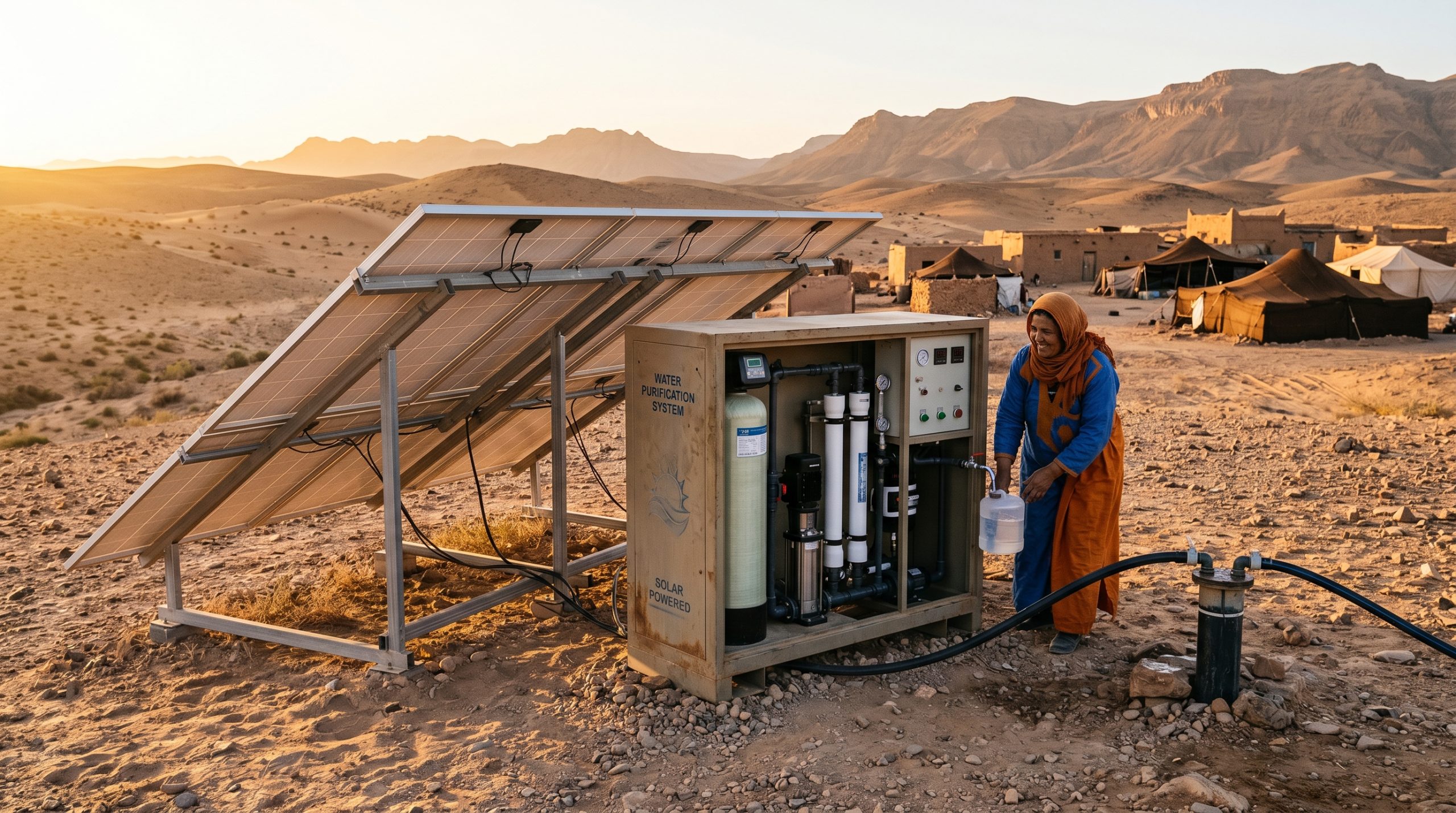
Solar-powered desalination machines combine solar photovoltaic (PV) technology with RO membranes. Instead of relying on external electricity, they use solar panels to generate power, making them ideal for off-grid or remote environments.
These systems are increasingly being deployed in:
- Coastal villages and islands
- Humanitarian relief camps
- Military and offshore operations
- Remote agricultural farms
Read: How Solar-Powered Desalination Machines Work: A Complete Guide for Sustainable Water Purification
Side-by-Side Comparison: Solar vs. Traditional RO
| Feature | Solar RO Systems | Traditional RO Systems |
| Power Source | Solar (Renewable Energy) | Grid or Diesel Generator |
| Energy Costs | Minimal to None | High (Electricity/Fuel Required) |
| Environmental Impact | Eco-friendly, Zero Emissions | Moderate to High (Depends on Fuel) |
| Setup Location | Ideal for Remote/Off-Grid Areas | Needs Reliable Infrastructure |
| Operational Complexity | Automated, Low-Maintenance | May Require Supervision |
| Initial Investment | Higher (Due to Solar Panel Integration) | Lower |
| Long-Term Savings | High (Free Energy Source) | Moderate to Low |
| Mobility & Portability | Often Mobile and Packaged | Typically Stationary |
When to Choose Solar Desalination Systems
- You need clean water in remote or off-grid locations
- You want long-term cost savings
- You’re planning for disaster relief, emergency setups, or temporary camps
- You prefer eco-friendly solutions with low carbon emissions
When Traditional RO Systems Make Sense
- You already have reliable electricity
- The system is part of a permanent infrastructure.
- Your budget allows for continuous energy costs
- You require large-scale purification in industrial or urban environments.
Read: Top Benefits of Using Solar RO Systems in Remote and Off-Grid Areas
AMPAC USA Offers Both Solutions
At AMPAC USA, we manufacture high-quality commercial RO systems and solar seawater desalination machines tailored for a wide range of industries and applications. Whether you’re setting up a city-wide purification system or a mobile field unit, we have a solution built for you.
Explore our full line:
Final Thoughts
Both systems have their place in modern water treatment. However, if your goal is sustainability, energy efficiency, and independence from the grid, then solar-powered desalination systems are the future. For more conventional or industrial setups, traditional RO systems still offer unmatched performance.
At AMPAC USA, we help clients evaluate, customize, and install the right water purification solution based on real-world conditions and needs.
Frequently Asked Questions
What are the long-term cost benefits of solar desalination compared to traditional RO?
Solar desalination systems offer substantial long-term cost savings by eliminating or drastically reducing electricity and fuel expenses. Once the initial investment in solar PV integration is made, operational energy costs become minimal, leveraging a free and renewable power source. This leads to a significantly lower total cost of ownership over the system’s lifespan, especially in remote areas where grid power is expensive or unavailable.
For what specific environments are solar-powered RO systems most suitable?
Solar-powered RO systems are ideal for remote, off-grid locations, coastal villages, islands, and humanitarian relief camps where reliable grid electricity is scarce. Their self-sufficient nature, powered by solar panels, makes them perfect for military bases, offshore operations, and temporary setups requiring independent water purification. AMPAC USA engineers have direct field experience deploying robust solutions in such challenging environments.
How do solar desalination systems reduce environmental impact compared to traditional RO?
Solar desalination systems significantly reduce environmental impact by utilizing renewable solar energy, resulting in zero carbon emissions during operation. Unlike traditional RO systems that often rely on grid electricity (potentially from fossil fuels) or diesel generators, solar RO offers an eco-friendly solution. This aligns with global sustainability goals and minimizes the carbon footprint of water purification processes.
Is the higher initial investment in solar desalination systems justified?
Yes, the higher initial investment in solar desalination, primarily due to solar panel integration, is often justified by substantial long-term savings and operational independence. While upfront costs are greater, the elimination of ongoing electricity or fuel expenses leads to a lower total cost of ownership over the system’s lifespan. For critical applications or remote locations, the reliability and sustainability benefits further outweigh the initial capital outlay.
What are the primary operational dependencies and challenges of traditional RO systems?
Traditional RO systems primarily depend on a stable and reliable electrical grid or consistent fuel supply for their high-pressure pumps. They are energy-intensive, meaning operational costs can be significant due to electricity consumption or diesel generator fuel. This dependency makes them less suitable for off-grid locations or areas with unstable power infrastructure, requiring careful planning for power availability and cost.
Conclusion
Neither option is universally better — it depends on what you have access to. Traditional RO makes sense where grid power is stable and cheap, since the systems are proven and straightforward to maintain. Solar desalination earns its higher upfront cost in off-grid or remote locations, where paying for fuel deliveries or grid extension would cost more over time than the solar investment itself. AMPAC USA builds both, so the decision comes down to your site’s power situation rather than a one-size-fits-all recommendation. For more detail on how the solar side works, see our solar desalination guide. Contact our team at info@ampac1.com or (909) 548-4900 to figure out which setup makes sense for you.
AMPAC USA engineers custom water purification systems for commercial, industrial, and emergency applications — from 500 GPD to multi-million GPD. Trusted by municipalities, military, and industry worldwide.