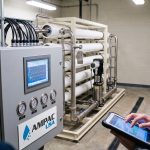

Reverse osmosis has genuinely impressive credentials: EPA-designated Best Available Technology for PFAS removal, the treatment method used in most commercial drinking water plants worldwide, 95–99.5% removal of virtually every regulated contaminant. At the same time, it wastes water, strips beneficial minerals, and requires pressure to function. An honest assessment covers both sides.
Pros of Reverse Osmosis Water
Broadest Contaminant Removal of Any Residential Technology
This is the headline advantage, and it’s genuinely unmatched. RO removes:
- Lead (99%+) — the primary concern for pre-1986 plumbing
- PFAS (95–99%) — the EPA designated RO a Best Available Technology for PFAS compliance in 2024
- Arsenic (~95%) — a significant natural contaminant in western U.S. groundwater
- Nitrates (83–92%) — agricultural runoff concern, particularly dangerous for infants
- Fluoride (85–95%)
- Dissolved salts and TDS (97–99.5%)
- Bacteria and viruses (99% by physical exclusion)
No carbon filter, UV system, or water softener removes this range of contaminants in a single pass. For households with known water quality concerns, this is a decisive advantage.
Consistent, Verifiable Output
Unlike carbon filters (where performance varies with contact time, flow rate, and media saturation) or UV (which requires turbidity-free water to work reliably), RO membrane performance is measurable with a $15 TDS meter. A healthy membrane’s TDS rejection rate doesn’t fluctuate with usage patterns.
Removes Emerging Contaminants That Other Methods Miss
Pharmaceuticals, microplastics, PFAS short-chain compounds, and industrial chemicals aren’t comprehensively addressed by conventional home filtration. RO’s physical size exclusion mechanism removes most of these regardless of whether they’re specifically regulated.
Cons of Reverse Osmosis Water
Water Waste
Traditional residential RO systems reject 3–4 gallons of concentrate down the drain for every gallon of permeate produced. This is inherent to the membrane process: the concentrate stream must be maintained to flush away rejected contaminants and prevent membrane fouling.
Modern high-efficiency residential systems have improved this substantially — to 1:1 or 2:1 rejection ratios. Some newer designs recirculate concentrate to improve recovery further. Still, any RO system wastes more water than point-of-use carbon filters, which waste essentially none.
In drought regions or homes on water-metered supply, this is a real cost consideration.
Mineral Removal
RO removes calcium and magnesium (95–99%) along with contaminants. The output is low-TDS water with mildly acidic pH (~6.5). For most adults with varied diets, this is not a health concern — dietary intake provides the bulk of mineral requirements. For populations where water is a primary mineral source, the WHO has documented concerns with very long-term low-TDS consumption.
The straightforward solution: a remineralization stage (calcite cartridge) restores calcium and magnesium and raises pH to ~7.5–8.0. Most quality systems include this or offer it as an upgrade.
Pressure Requirements
Residential RO systems require a minimum of 40 PSI to operate; optimal performance runs at 60–80 PSI. Homes with low water pressure (common in some well systems, high-rise buildings, or older infrastructure) need a booster pump, which adds $100–$200 to the setup cost and introduces an additional component to maintain.
Slow Production Rate
A 50–100 GPD residential RO membrane produces water slowly by design — the pressure-membrane interaction takes time. The storage tank addresses this for typical household use (on-demand flow from the stored volume), but it means RO isn’t practical for high-flow applications (filling a bathtub, watering a garden) without significant system sizing.

Ongoing Maintenance
Pre-filters need replacement every 6–12 months ($30–$60/year), and the membrane every 2–5 years ($30–$80). This is less than bottled water costs for equivalent volume, but it requires attention. Systems where pre-filters are neglected risk membrane damage from chlorine breakthrough.
Pros and Cons of Seawater Desalination Reverse Osmosis (SWRO)
At the industrial and municipal scale, SWRO has its own distinct profile:
Pros:
- Converts the most abundant water source (ocean water) to potable water, drought-independent
- Technology is proven at scale — 22,000+ plants globally, producing 100M+ m³/day
- Energy consumption has fallen dramatically with energy recovery devices (from 6+ kWh/m³ to under 3 kWh/m³)
- Water cost from SWRO is now competitive with conventional treatment in many water-scarce regions
Cons:
- High capital cost for large plants ($1–10+ billion for major municipal installations)
- Brine discharge must be managed carefully to avoid marine ecosystem impacts
- Still more energy-intensive than treating freshwater sources when they’re available
- Marine intake infrastructure raises concerns about entrainment of marine organisms
Is Reverse Osmosis Worth It?
For most applications where water quality is a genuine concern: yes. The mineral removal issue has a straightforward solution (remineralization). The water waste is a real trade-off, but one that modern systems have improved substantially. The cost is lower than long-term bottled water use.
If your tap water tests clean and your only concern is taste, a carbon filter is sufficient and simpler. The decision comes down to what’s actually in your water — which is why a water test before choosing any filtration system is the right first step.
AMPAC USA’s residential RO systems and seawater desalination systems cover the full range — from kitchen sink purification to industrial-scale saltwater treatment.
Related: Compare options with our full lineup of seawater desalination systems, from compact 500 GPD marine watermakers to large-scale municipal plants. For remote sites, see our solar-powered water treatment systems.
Related Articles
- Seawater Desalination in 2026: Technologies, Costs, and the Future of Fresh Water
- Seawater Desalination Systems: Turning the Tide on Global Water Scarcity
- Seawater Desalination: Tapping into Seawater’s Potential for Drinkable Water
- The Future of Clean Water: AMPAC USA’s Seawater Desalination System
Frequently Asked Questions
How does Seawater Reverse Osmosis (SWRO) convert saltwater into drinking water?
Seawater Reverse Osmosis (SWRO) is a pressure-driven membrane separation process. It involves pumping seawater through a semi-permeable membrane that allows only water molecules to pass, effectively rejecting salts, microorganisms, and other impurities. This advanced technology reliably produces high-purity water suitable for potable and industrial use.
What are the key benefits of Seawater Reverse Osmosis (SWRO) for freshwater supply?
SWRO provides a reliable, constant source of freshwater, especially vital for arid coastal regions, by utilizing abundant seawater reserves. It produces ultra-pure water, often with total dissolved solids (TDS) below 500 ppm, meeting WHO and EPA drinking water standards. Furthermore, SWRO systems are modular and scalable, allowing customization for diverse needs from offshore platforms to large municipal plants, a capability AMPAC USA has implemented globally.
What level of water purity can be expected from Seawater Reverse Osmosis systems?
Seawater Reverse Osmosis systems are capable of producing exceptionally high-purity water. They consistently achieve total dissolved solids (TDS) levels below 500 ppm, which meets stringent WHO and EPA standards for safe drinking water. This process efficiently removes salts, bacteria, viruses, and harmful organic compounds, ensuring a clean and safe output for human consumption and industrial processes.
Are Seawater Reverse Osmosis (SWRO) systems suitable for various applications and capacities?
Yes, SWRO technology is highly modular and scalable, making it adaptable for a wide range of applications and capacities. Systems can be customized from small mobile units for ships and military use to extensive municipal desalination plants. AMPAC USA’s experience includes designing and manufacturing systems for offshore oil rigs, luxury resorts, and food & beverage plants across 150+ countries.
How have recent technological advancements improved Seawater Reverse Osmosis (SWRO) efficiency?
Continuous technological advancements have significantly enhanced SWRO efficiency and cost-effectiveness. Innovations in membrane materials, energy recovery devices (ERDs), and pretreatment technologies have improved membrane durability, reduced fouling, and lowered overall energy consumption. These developments make SWRO a more sustainable and economical solution for freshwater production compared to older methods.
What does the desalination reverse osmosis process actually involve, step by step?
The desalination reverse osmosis process starts with intake screening and pretreatment (removing sediment and chlorine) to protect the membranes, then high-pressure pumping forces seawater across semi-permeable membranes that reject salts and impurities. The result is high quality, filtered water on one side and concentrated brine on the other. This reverse osmosis water filtration approach is the same core mechanism AMPAC USA applies across our seawater desalination solutions and marine desalination systems, scaled to fit anything from a single vessel to a municipal plant.
AMPAC USA engineers custom water purification systems for commercial, industrial, and emergency applications — from 500 GPD to multi-million GPD. Trusted by municipalities, military, and industry worldwide.