

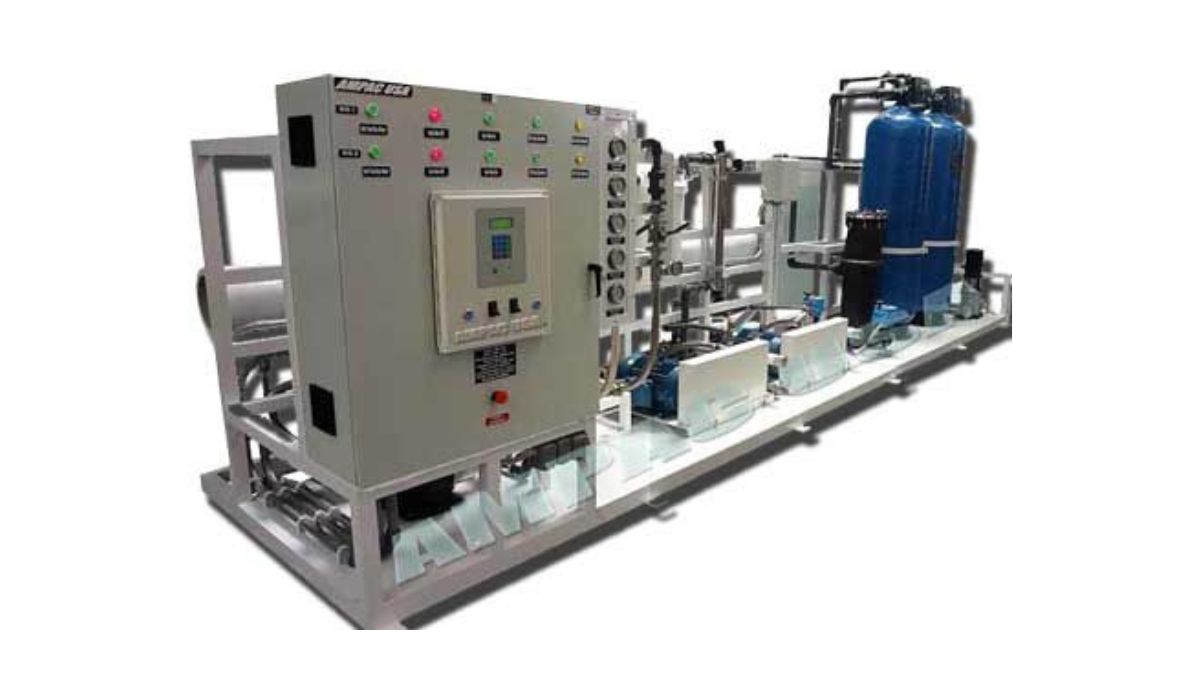

In an era marked by environmental concerns and a growing need for sustainable solutions, access to clean water has become a paramount global challenge. The demand for freshwater sources is escalating rapidly, primarily due to population growth and climate change-induced water scarcity. Addressing this pressing issue requires innovative technologies, and one company that stands at the forefront of the clean water revolution is AMPAC USA.
Providing a Lifeline to Communities
Clean Water Scarcity: A Global Crisis
Clean, potable water is a fundamental human need, yet millions of people worldwide still lack access to it. This crisis stems from a variety of factors, including contamination, pollution, and over-exploitation of natural freshwater sources. As the situation worsens, the need for alternative water sources becomes increasingly evident.
Read: Seawater Desalination: Tapping into Seawater’s Potential for Drinkable Water
AMPAC USA’s Vision
AMPAC USA, a pioneer in advanced water treatment and purification systems, envisions a world where clean, safe water is accessible to all, irrespective of geographical location or resource constraints. Their mission is to bridge the gap between water scarcity and abundance through cutting-edge desalination technologies.
Harnessing the Power of Seawater Desalination
The Seawater Desalination Solution
Seawater desalination is a process that holds immense promise in the quest for sustainable water sources. It involves the removal of salt and other impurities from seawater to produce freshwater suitable for drinking, irrigation, and industrial use. AMPAC USA has perfected this technology, making it a beacon of hope for communities facing acute water shortages.
How Seawater Desalination Works
The process of seawater desalination employs reverse osmosis, a sophisticated filtration technique. Water is forced through a semi-permeable membrane, which traps salts and impurities while allowing pure water molecules to pass through. The result is crystal-clear, potable water.
The Benefits of Seawater Desalination
Abundant Water Supply: Seawater is an almost limitless resource, covering more than 70% of the Earth’s surface. By tapping into this vast source, AMPAC USA ensures a consistent supply of clean water.
Environmental Sustainability: Seawater desalination is environmentally friendly, as it doesn’t deplete freshwater reserves or harm ecosystems. It’s a sustainable solution for the long term.
Reduced Water Stress: Communities facing water stress can alleviate their plight by adopting seawater desalination systems. This technology offers a lifeline to regions plagued by drought.
Read: Solving The Middle East Water Scarcity Problem
Advantages of Seawater Desalination from AMPAC USA
Innovating for a Better Future
AMPAC USA’s commitment to innovation is unwavering. They continuously refine and enhance their desalination systems to maximize efficiency, minimize energy consumption, and reduce operating costs. This dedication to improvement ensures that their solutions remain at the cutting edge of clean water technology.
Global Impact
With a global reach, AMPAC USA has made a significant impact in water-scarce regions worldwide. Their systems have been deployed in disaster relief efforts, remote communities, and arid regions, providing immediate access to clean water when it’s needed most.
Sustainable Water Supply
Seawater desalination offers a reliable source of freshwater, reducing dependence on dwindling freshwater reserves.
Environmental Impact
AMPAC USA’s technology prioritizes eco-friendliness, minimizing harm to marine ecosystems during the desalination process.
Disaster Relief
The portability of AMPAC USA’s systems makes them invaluable for providing emergency clean water in disaster-stricken areas.
Scalability
These systems can be customized for various applications, from small-scale residential use to large industrial projects.
Read: Seawater Desalination: Turning Oceans into Fresh Water Sources
The Role of Seawater Desalination in Climate Change Mitigation
Climate change exacerbates water scarcity issues, leading to prolonged droughts and unpredictable rainfall patterns. Seawater desalination offers a viable solution to mitigate the effects of climate change on water resources. By harnessing the power of the ocean, AMPAC USA’s technology can provide a stable source of freshwater, reducing the reliance on depleting groundwater reserves.
Conclusion
The future of clean water lies in innovation, sustainability, and accessibility. AMPAC USA’s seawater desalination technology embodies these principles and represents a beacon of hope in the fight against water scarcity. By harnessing the power of seawater, AMPAC USA is not only providing communities with a lifeline but also paving the way for a more sustainable and water-abundant world.
In a world where every drop counts, AMPAC USA is leading the way towards a future where clean water is not just a privilege but a universal right.
Frequently Asked Questions
How does AMPAC USA’s seawater desalination system produce clean water?
AMPAC USA’s seawater desalination systems primarily utilize reverse osmosis, a sophisticated filtration technique. This process forces seawater through a semi-permeable membrane, effectively trapping salts and other impurities while allowing pure water molecules to pass through. The result is crystal-clear, potable water suitable for drinking, irrigation, and industrial use.
What global water challenges does AMPAC USA’s desalination technology address?
AMPAC USA’s desalination technology addresses critical global water challenges stemming from population growth, climate change, contamination, and over-exploitation of freshwater sources. With over 30 years of field experience, AMPAC USA has deployed systems in 150+ countries, providing essential clean water to diverse sectors like military bases, luxury resorts, and municipalities.
Is seawater desalination an environmentally sustainable solution?
Yes, seawater desalination, as perfected by AMPAC USA, is an environmentally sustainable solution. It does not deplete finite freshwater reserves or harm existing ecosystems, instead tapping into the Earth’s almost limitless seawater supply, which covers over 70% of the planet’s surface. This makes it a responsible and long-term approach to water security.
For what types of applications does AMPAC USA provide seawater desalination systems?
AMPAC USA designs and manufactures commercial and industrial seawater desalination systems for a wide range of demanding applications. Our engineers have direct field experience installing systems on offshore oil rigs, military bases, luxury resorts, municipalities, and food & beverage plants across 150+ countries.
What are the primary benefits of implementing AMPAC USA’s seawater desalination systems?
Implementing AMPAC USA’s seawater desalination systems provides an abundant and consistent supply of clean water by tapping into the Earth’s vast oceanic resources. This technology ensures environmental sustainability by not depleting freshwater reserves, significantly reducing water stress for communities and industries facing scarcity.
Conclusion
Oceans cover more than 70% of the planet, so unlike freshwater aquifers, seawater isn’t a resource you can run out of — desalination just needs the right engineering to make it usable. AMPAC USA has been building that engineering for over 30 years, with systems now running in 150+ countries across everything from offshore rigs to municipal supply. If you want to see how the conversion process works step by step, see Seawater Desalination: Tapping into Seawater’s Potential for Drinkable Water. Contact our team at info@ampac1.com or (909) 548-4900 to discuss a desalination system for your location.
AMPAC USA engineers custom water purification systems for commercial, industrial, and emergency applications — from 500 GPD to multi-million GPD. Trusted by municipalities, military, and industry worldwide.
