
In short: Legionella doesn’t need a steady food supply to survive in a building’s pipes. When nutrients run out, the bacteria shift into a dormant “viable but non-culturable” (VBNC) state that lets them persist in low-nutrient water for over a year, sometimes stay invisible to routine lab testing, and reactivate once conditions improve. Combined with biofilm protection and a growth-friendly temperature range roughly between 77°F and 113°F, that’s why a system can test clean one quarter and cause an outbreak the next. Reliable control comes down to three levers that actually work: keeping hot water above 140°F at the heater and above 120°F at the tap, maintaining a disinfectant residual through the whole distribution system, and removing the organic load and dissolved minerals that feed biofilm in the first place, which is where reverse osmosis pretreatment earns its keep.
Legionnaires’ disease isn’t rare anymore. Reported U.S. cases have climbed more than fivefold since 2000, according to CDC surveillance data, and the disease now shows up almost every time a large building’s water system is neglected long enough. Roughly 95% of people who get infected need hospitalization, and CDC and state health department data put the fatality rate around 1 in 10. Most of that risk traces back to cooling towers, hot water tanks, and plumbing that facility teams assumed were under control because a water sample came back negative.
What Is Legionella and Why Does It Live in Building Water Systems Specifically?
Legionella is a naturally occurring bacterium found in freshwater environments like lakes and streams, but it becomes dangerous when it gets into engineered water systems, cooling towers, hot tubs, decorative fountains, large hot water tanks, and the long pipe runs inside hotels, hospitals, and commercial buildings, where warm, stagnant conditions let it multiply to infectious levels. People get sick by inhaling contaminated water droplets, not by drinking the water, which is why showerheads, cooling tower drift, and misters are common exposure points.
Buildings didn’t used to have this problem at scale. Older plumbing ran shorter distances with less standing water. Modern buildings have larger footprints, more dead-leg piping, low-flow fixtures that reduce turnover, and hot water systems sized for efficiency rather than constant circulation. Every one of those design choices, each reasonable on its own, adds up to more stagnant water sitting in the ideal temperature band for Legionella to grow.
How Does Legionella Survive When There’s Nothing Left to Feed On?
This is the part most facility managers don’t know, and it’s the reason “the water tested clean” doesn’t mean the system is actually clean. When nutrients in the water run low, Legionella pneumophila doesn’t just die off. Research on starved Legionella strains has found that bacteria can shift into a dormant, low-metabolism state and remain detectable in ultrapure water, meaning essentially no nutrients at all, for more than a year, with total cell counts staying roughly constant for up to 400 days. Some sub-populations retain high enzymatic activity and stay that way for at least 100 days into starvation.
That dormant condition is called the viable but non-culturable, or VBNC, state. Cells in this state can’t be grown on the standard lab media used for routine Legionella testing, which is exactly the problem. A water sample can come back negative on a culture test while the pipe is still carrying live, infectious bacteria. Studies have shown that starved VBNC Legionella can still infect and replicate inside amoebae and human macrophages, the same mechanism that makes Legionella dangerous when it’s actively growing. The bacteria are waiting, not gone.
Why Doesn’t Routine Water Testing Catch This?
Standard culture-based Legionella testing was built to detect actively growing, culturable bacteria, and it does that reliably. What it wasn’t built to detect is a population that has deliberately shut down its ability to grow on a petri dish while staying biologically alive and capable of causing disease later. When conditions improve, warmer water, a nutrient pulse, contact with the right amoeba host, VBNC cells can resuscitate and return to an actively growing, fully infectious state.
This is why a building can pass a Legionella test and still have an outbreak weeks later, and why health departments increasingly recommend PCR-based testing (which detects genetic material regardless of culturability) alongside traditional culture methods, especially after an illness cluster. A negative culture result tells you what’s actively growing right now. It doesn’t tell you what’s dormant and waiting for the next stagnation event.
What Role Does Biofilm Play in All of This?
Biofilm is the slimy layer of microorganisms and organic material that forms on the interior surfaces of pipes, tanks, and cooling tower fill. It’s Legionella’s preferred hiding spot, and it’s also where the bacteria get most of their protection. Biofilm shields Legionella from disinfectant contact, buffers it against temperature swings, and, critically for the starvation question, is itself an oligotrophic (low-nutrient) environment where VBNC populations are believed to persist and eventually re-infect amoebae living in the same film.
You can disinfect the bulk water in a tank and still have a problem, because chlorine or other oxidants moving through flowing water often don’t penetrate biofilm deep enough to reach the bacteria embedded in it. That’s why one-time shock disinfection events, however aggressive, tend to produce a temporary dip in Legionella counts followed by a rebound once the residual fades and the surviving biofilm population re-establishes itself. Ongoing control requires keeping the organic load and mineral scale that feed biofilm formation low in the first place, not just periodically attacking the bacteria that have already colonized it.
What Actually Controls Legionella: Temperature, Disinfection, or Filtration?
All three, and skipping any one of them leaves a gap the others can’t fully cover on their own.
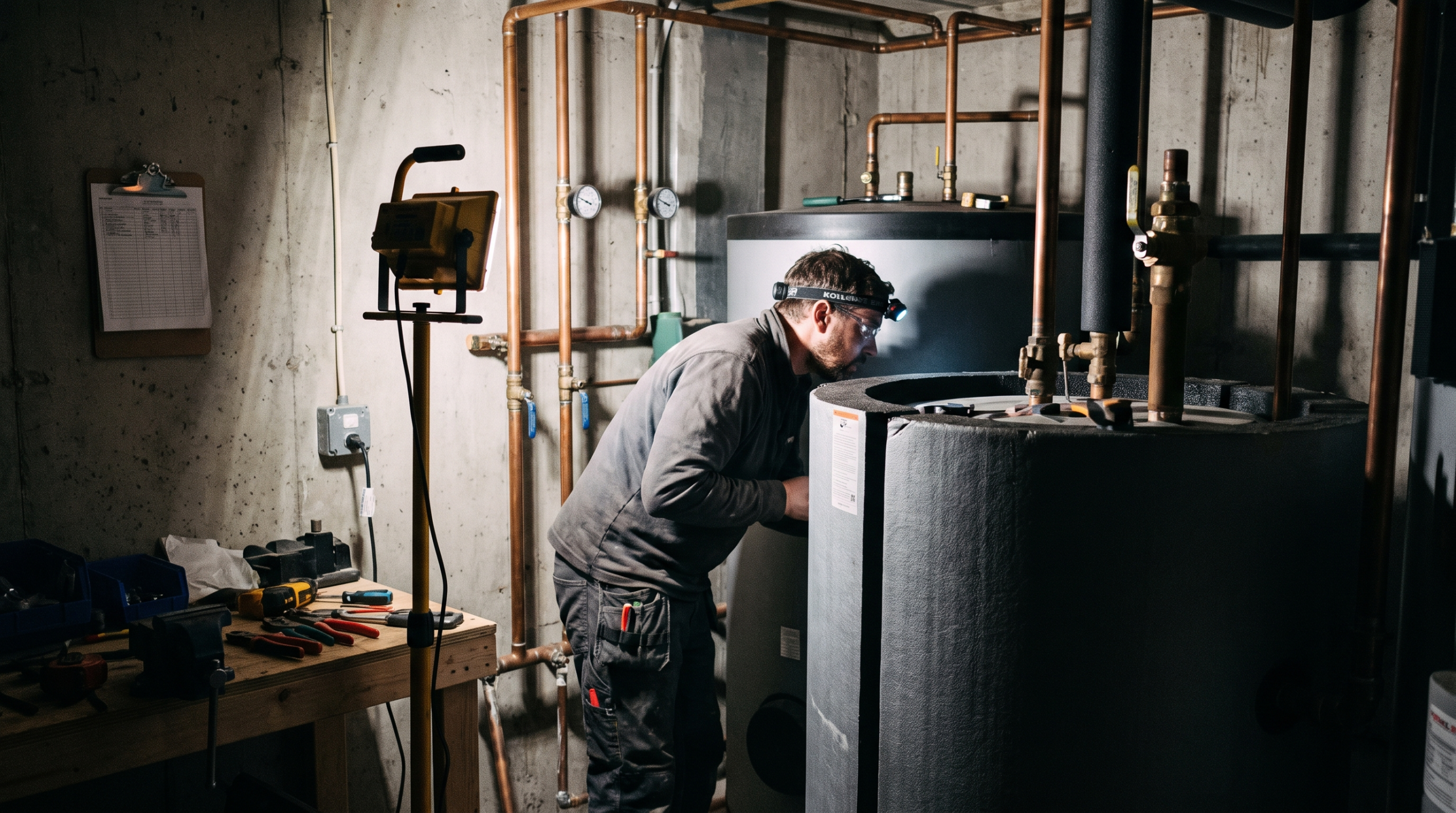
Temperature control is the most well-established lever. Legionella grows across roughly the 77°F to 113°F range and is generally considered dormant, not dead, at lower temperatures. CDC and ASHRAE guidance both point to the same numbers: keep hot water heaters at or above 140°F and deliver water to outlets at or above 120°F, while keeping cold water systems below about 68°F where practical. ASHRAE Standard 188 formalizes this into a required water management program for buildings whose systems create conditions conducive to Legionella growth, covering everything from cooling towers to decorative fountains.
Disinfection (chlorine, chloramine, chlorine dioxide, copper-silver ionization, or UV depending on the system) reduces the actively growing population and needs to maintain a measurable residual all the way through the distribution system, including dead legs and low-flow branches, not just at the point of injection. This is where a lot of programs quietly fail. A strong residual at the water heater doesn’t mean anything if it decays to zero before it reaches a rarely used guest room shower three floors up.
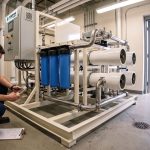
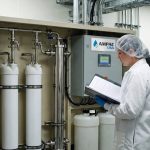
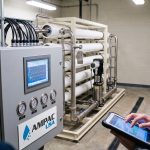
Filtration and pretreatment address the root of the problem rather than the symptom. Legionella needs organic nutrients, dissolved minerals, and sediment to establish biofilm in the first place. Reducing that load through properly sized filtration and reverse osmosis pretreatment cuts down the scale and organic material that biofilm needs to form, which means less surface area for Legionella, and its VBNC reservoir, to hide in. Facilities running commercial reverse osmosis systems ahead of hot water tanks, cooling towers, or humidification systems are removing a large share of the mineral and organic content that would otherwise feed ongoing biofilm growth, which makes every other layer of the control program, temperature, disinfectant residual, flushing, work harder and last longer.
Does Reverse Osmosis Actually Kill Legionella, or Just Reduce the Risk Feeding It?
It does both, depending on where it sits in the system. RO membranes reject bacteria-sized particles at a very high rate as water passes through, so water coming out the permeate side of a properly maintained RO system carries a dramatically reduced bacterial load, including Legionella. But the more consistent, system-wide benefit is upstream: RO strips out the dissolved minerals and organic compounds that would otherwise deposit as scale and feed biofilm formation downstream in tanks, cooling towers, and long pipe runs.
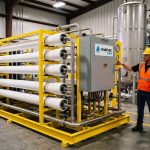
That distinction matters for facility planning. RO isn’t typically installed as a final barrier at the point of use for Legionella specifically. It’s installed further upstream as part of an overall water treatment strategy, feeding cleaner water into hot water systems, cooling towers, boilers, and process equipment so there’s simply less for biofilm to build on in the first place. AMPAC USA designs and builds reverse osmosis systems sized for exactly this kind of commercial and industrial application, where the goal isn’t a single disinfection event but a sustained reduction in the conditions that let Legionella, and its dormant VBNC reservoir, keep coming back.
What Should Facility Managers Actually Do With This Information?
Start from the assumption that a clean culture test doesn’t mean a clean system, especially in buildings with long pipe runs, low-flow fixtures, or any history of stagnant sections. A real Legionella control program combines temperature management at both the heater and the outlet, a verified disinfectant residual that reaches every branch of the distribution system, regular flushing of low-use fixtures, and pretreatment that reduces the organic and mineral load feeding biofilm formation. ASHRAE 188 water management plans exist specifically because no single measure catches everything, and the starvation-survival research on VBNC Legionella is a good reminder why: a bacterium that can sit dormant in essentially nutrient-free water for over a year isn’t something a single disinfection cycle is going to permanently solve.
Frequently Asked Questions
Can Legionella really survive over a year without nutrients?
Yes. Studies on starved Legionella pneumophila strains found total detectable cell counts remained roughly stable for up to 400 days in ultrapure water, with the bacteria shifting into a dormant, low-metabolism VBNC state rather than dying off.
If a water test comes back negative for Legionella, is the system safe?
Not necessarily. Standard culture-based testing only detects bacteria that are actively growing and able to form colonies on lab media. Legionella in the VBNC state doesn’t grow on culture media but can remain viable and infectious, which is why health departments increasingly recommend PCR testing alongside culture methods, especially following an illness or outbreak investigation.
What temperature actually kills Legionella?
Legionella grows across roughly 77°F to 113°F and becomes dormant, not dead, as temperatures drop. CDC and ASHRAE guidance recommend keeping water heaters at or above 140°F and delivering hot water to fixtures at or above 120°F to control growth; sustained exposure well above 140°F is what actually reduces viable counts.
How does biofilm make Legionella harder to eliminate?
Biofilm physically shields bacteria from disinfectant contact and buffers them against temperature and chemical fluctuations. It’s also believed to be where dormant VBNC Legionella populations persist longest, which is why one-time shock disinfection often produces only a temporary reduction before counts rebound.
Does installing an RO system eliminate the need for temperature control and disinfection?
No. Reverse osmosis reduces the mineral and organic load that feeds biofilm formation and removes a high percentage of bacteria from treated water, but it works as one layer of a broader water management program alongside temperature control and disinfectant residual, not as a replacement for either.
Sources: CDC Legionella Surveillance and Trends; CDC MMWR Legionellosis Outbreak Reports; “Persistent presence of outer membrane epitopes during short- and long-term starvation of five Legionella pneumophila strains” (PMC); “Starved viable but non-culturable (VBNC) Legionella strains can infect and replicate in amoebae and human macrophages” (ScienceDirect/PubMed); “Differential development of Legionella sub-populations during short- and long-term starvation” (ScienceDirect); Vermont Department of Health; ASHRAE Standard 188; Minnesota Department of Health Legionellosis Annual Summary.
AMPAC USA engineers custom water purification systems for commercial, industrial, and emergency applications — from 500 GPD to multi-million GPD. Trusted by municipalities, military, and industry worldwide.