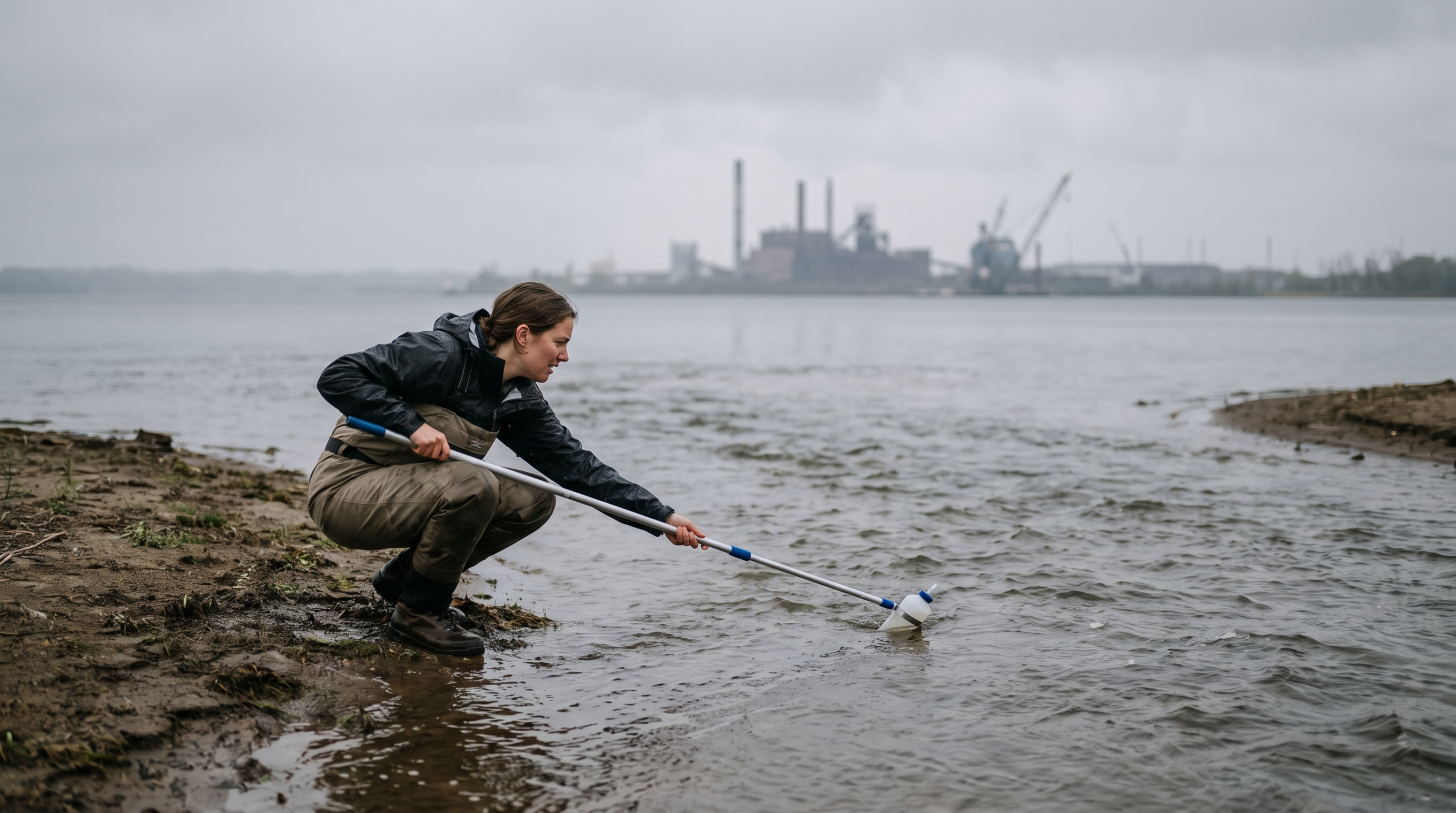

In short: Great Lakes tributaries aren’t dealing with one pollutant at a time. USGS sampling across dozens of tributary sites has turned up complex mixtures, sometimes 100+ pharmaceuticals and over 200 pesticide compounds detected in the same watershed, layered on top of PFAS, phosphorus, and legacy industrial chemicals. No single-target treatment method handles that kind of mix. That’s the practical case for reverse osmosis: it doesn’t screen for one contaminant class, it rejects dissolved solids and organic compounds across the board, which is exactly the profile a mixed agricultural-industrial watershed produces.
This isn’t an abstract water-quality debate. It’s showing up in real monitoring data from the Maumee River, in phosphorus targets that keep missing their deadlines, and in fish consumption advisories that didn’t exist a decade ago. Below is what the actual research says, and where treatment technology fits into closing the gap.
What Chemicals Are Actually Showing Up in Great Lakes Tributaries?
Far more than most people assume, and rarely in isolation. A USGS study across 44 sampling sites on 16 Great Lakes tributaries screened for 257 pharmaceutical compounds and detected 110 of them in the water. Ten stood out for their potential to cause biological effects: caffeine, nicotine, albuterol, sulfamethoxazole, venlafaxine, acetaminophen, carbamazepine, gemfibrozil, metoprolol, and thiabendazole. A separate passive-sampling study across 15 tributaries screened 223 pesticides and pesticide breakdown products.
The pattern that emerges from this research is a land-use split. Watersheds dominated by agriculture tend to carry more pesticides. Watersheds near urban centers carry more pharmaceuticals and wastewater indicators, the stuff that passes through municipal treatment and out into rivers. Neither shows up alone. USGS researchers have been explicit that these compounds are consistently detected as complex mixtures, which is what makes source tracing and treatment planning genuinely difficult, you’re rarely dealing with a single known contaminant at a known concentration.
Is Agricultural Runoff Still the Bigger Problem, or Has Industry Caught Up?
Agriculture remains the dominant nonpoint source, but industrial and pharmaceutical inputs have added a layer that wasn’t part of the conversation a generation ago. On the phosphorus side, the numbers are stark: an estimated 80 to 90 percent of phosphorus loading to Lake Erie’s western basin comes from agricultural sources, according to the binational Lake Erie phosphorus targets set under the Great Lakes Water Quality Agreement. Roughly 88 to 93 percent of total phosphorus loading overall comes from nonpoint sources, agriculture being the dominant land use behind that figure.
The 2015 US-Canada agreement called for a 40 percent cut in Lake Erie phosphorus loading by 2025, bringing western and central basin loads down to 6,000 metric tonnes a year. Heidelberg University’s National Center for Water Quality Research, which has monitored the Maumee River since 2009, reports no statistically significant downward trend in dissolved reactive phosphorus loading over that period. The target hasn’t been hit, and the trend line hasn’t meaningfully bent.
Industrial and legacy chemical inputs run on a parallel track. In 2016, the US and Canadian governments designated the first eight Chemicals of Mutual Concern under the Great Lakes Water Quality Agreement: PCBs, mercury, PBDEs, PFOA, PFOS, long-chain perfluorinated carboxylic acids, hexabromocyclododecane, and short-chain chlorinated paraffins. Several of those are PFAS compounds, chemicals that don’t break down and accumulate in fish tissue. Michigan has tested fish for PFAS since 2012 and now issues annual consumption guidance because of it.
Why Does It Matter That These Are Mixtures Instead of Single Contaminants?
Because mixtures behave differently than any one chemical tested in isolation, and most water treatment thinking, and most regulation, was built around single-contaminant limits. A pesticide-mixture study using EPA’s ToxCast data and adverse outcome pathway models found that combinations of chemicals detected together in Great Lakes tributaries could produce biological effects that individual compound testing wouldn’t predict on its own. The researchers’ conclusion wasn’t alarmist. Current mixture levels likely aren’t causing obvious harm to fish and wildlife populations yet. But “likely not causing obvious harm yet” is a different statement than “safe,” and it’s a moving target as loading continues.
For a facility drawing water from or discharging into a Great Lakes tributary, this matters practically. A treatment approach built to strip out one regulated contaminant, say, nitrates, or a specific pesticide, can pass right through a dozen other compounds sitting in the same water. Mixture chemistry doesn’t respect single-analyte permit language.
What Does PFAS Add to This Picture Specifically?
PFAS compounds are the piece of this mixture that’s hardest to treat with conventional methods, because they’re engineered to be chemically stable. That’s the whole point of the chemistry, they resist heat, water, and oil, which is also why they resist breaking down in the environment or in a standard treatment plant. PFOA and PFOS made the original 2016 Chemicals of Mutual Concern list specifically because of that persistence and their tendency to bioaccumulate up the food chain into the fish people eat.
Conventional biological treatment, the kind municipal wastewater plants rely on, wasn’t designed to remove compounds that don’t biodegrade. That’s part of why PFAS keeps showing up in fish consumption advisories across Great Lakes states years after the initial designation. It’s also why membrane-based approaches, reverse osmosis specifically, have become the technology most often discussed for PFAS removal in industrial and municipal settings: RO membranes reject dissolved compounds by size and charge, not by biological breakdown, which is a mechanism PFAS can’t simply outlast.
How Does Industrial Reverse Osmosis Actually Handle a Multi-Contaminant Mixture Like This?
By rejecting dissolved solids and organic compounds broadly, rather than targeting a single regulated pollutant. That’s the structural advantage RO has over treatment methods built around one contaminant class. A semi-permeable membrane under pressure doesn’t care whether the dissolved compound on the reject side is a pesticide, a pharmaceutical metabolite, a PFAS molecule, or phosphorus-bound sediment. If it’s dissolved and above the membrane’s rejection threshold, it gets pulled out of the permeate stream.
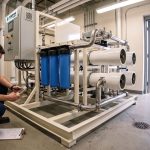
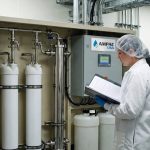
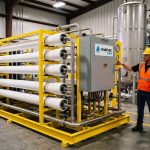
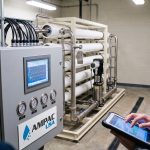
That’s the reasoning behind AMPAC USA’s industrial reverse osmosis systems: facilities pulling source water from a stressed watershed, or discharging process water back into one, need a system engineered for exactly this kind of unpredictable, multi-contaminant load, not a single-target polish step. For smaller operations, food processors, light manufacturers, facilities that don’t need industrial-scale throughput but still can’t afford a mixture of dissolved contaminants passing through untreated, a commercial reverse osmosis system does the same rejection work at a scale that fits the facility.
None of this replaces the upstream work. Phosphorus targets, PFAS phase-outs, pesticide stewardship, that’s the demand-side half of the equation, and it’s the half that determines what’s entering the watershed in the first place. Treatment is the half a facility actually controls on its own site: what it draws in, and what it sends back out.
What Should Facility Operators and Water Planners in the Great Lakes Basin Actually Do With This?
Stop treating source water quality as a fixed assumption. If a facility’s intake sits on or near a Great Lakes tributary, the water arriving at the plant is very likely a mixture, not a single known contaminant at a known concentration, and permit compliance built around one regulated analyte can miss the rest of what’s actually there. The GLRI’s current Action Plan IV, covering fiscal years 2025 through 2029, keeps toxic substances and nonpoint source pollution as two of its five core focus areas, which is itself an admission that a decade and a half of restoration funding hasn’t closed this gap yet.
The honest takeaway from the research: mixture contamination in Great Lakes tributaries isn’t a crisis event with a clear before-and-after. It’s a slow accumulation, missed phosphorus deadlines, a growing PFAS chemical list, pharmaceutical compounds nobody was testing for a decade ago, and it calls for treatment systems built to handle unpredictable combinations, not single-pollutant checklists.
Frequently Asked Questions
What kinds of chemicals have USGS found in Great Lakes tributaries?
USGS sampling has detected 110 of 257 screened pharmaceutical compounds across 16 tributaries, plus hundreds of pesticide compounds in separate passive-sampler studies, alongside legacy industrial chemicals like PCBs and PFAS. Watersheds near agriculture skew toward pesticides; watersheds near urban areas skew toward pharmaceuticals and wastewater indicators.
Is Lake Erie’s phosphorus problem actually improving?
Not according to the monitoring data. The binational target called for a 40 percent phosphorus reduction by 2025 from 2008 levels. Heidelberg University’s Maumee River monitoring, running since 2009, shows no statistically significant downward trend in dissolved reactive phosphorus over that period.
Why is PFAS harder to remove than other Great Lakes contaminants?
PFAS compounds are chemically engineered to resist breakdown, which means they pass through conventional biological wastewater treatment largely intact. That persistence is why PFOA and PFOS were designated Chemicals of Mutual Concern in 2016 and why membrane-based treatment like reverse osmosis, which rejects by molecular size and charge rather than biological degradation, is the approach most often used to remove them.
Can one treatment technology handle a mixture of pesticides, pharmaceuticals, and PFAS at once?
Reverse osmosis comes closest, because it rejects dissolved solids and organic compounds broadly rather than targeting a single contaminant class. It isn’t a universal solution to watershed-level pollution, but for a facility’s own intake and discharge water, it addresses the mixture rather than one component of it.
Where does industrial water treatment fit into fixing Great Lakes water quality overall?
It’s the piece a facility actually controls. Phosphorus loading, PFAS phase-outs, and pesticide stewardship are upstream, regulatory and agricultural problems. What a manufacturer or processor treats on its own site, water coming in, water going back out, is the half of the equation treatment technology can address directly, right now.
Sources: U.S. Geological Survey (USGS) Great Lakes tributary pharmaceutical and pesticide studies; USGS Chemicals of Concern in the Great Lakes Basin; EPA Great Lakes Restoration Initiative Action Plan IV; International Joint Commission Lake Erie phosphorus targets; Heidelberg University National Center for Water Quality Research; Environment and Climate Change Canada, Chemicals of Mutual Concern designations.
AMPAC USA engineers custom water purification systems for commercial, industrial, and emergency applications — from 500 GPD to multi-million GPD. Trusted by municipalities, military, and industry worldwide.