
In short: Harmful algal blooms (HABs), caused by cyanobacteria, release toxins called cyanotoxins that ordinary disinfection doesn’t touch. Chlorine kills bacteria but does nothing to break down microcystin or cylindrospermopsin, and it can even rupture algal cells and release more toxin into the water. The combination that actually works is granular or powdered activated carbon to adsorb the toxins and organic byproducts causing taste and odor problems, paired with reverse osmosis membranes to reject what’s left. Neither one alone is a complete answer. Together, they are the standard the EPA points utilities and industrial water users toward when a bloom hits.
If you’ve noticed pond-scum green water in a local reservoir, a musty smell coming out of the tap, or a “do not drink” notice on the local news, you’ve run into a harmful algal bloom problem. It’s not new. Lake Erie has had blooms for decades. But it’s getting more frequent, and it’s no longer a Midwest-in-August story. It shows up in reservoirs across the country, and if your facility pulls water from a lake, river, or reservoir anywhere near agricultural runoff or a warm summer, it’s worth understanding what these blooms actually do to your water and what removes them.
What Exactly Is a Harmful Algal Bloom?
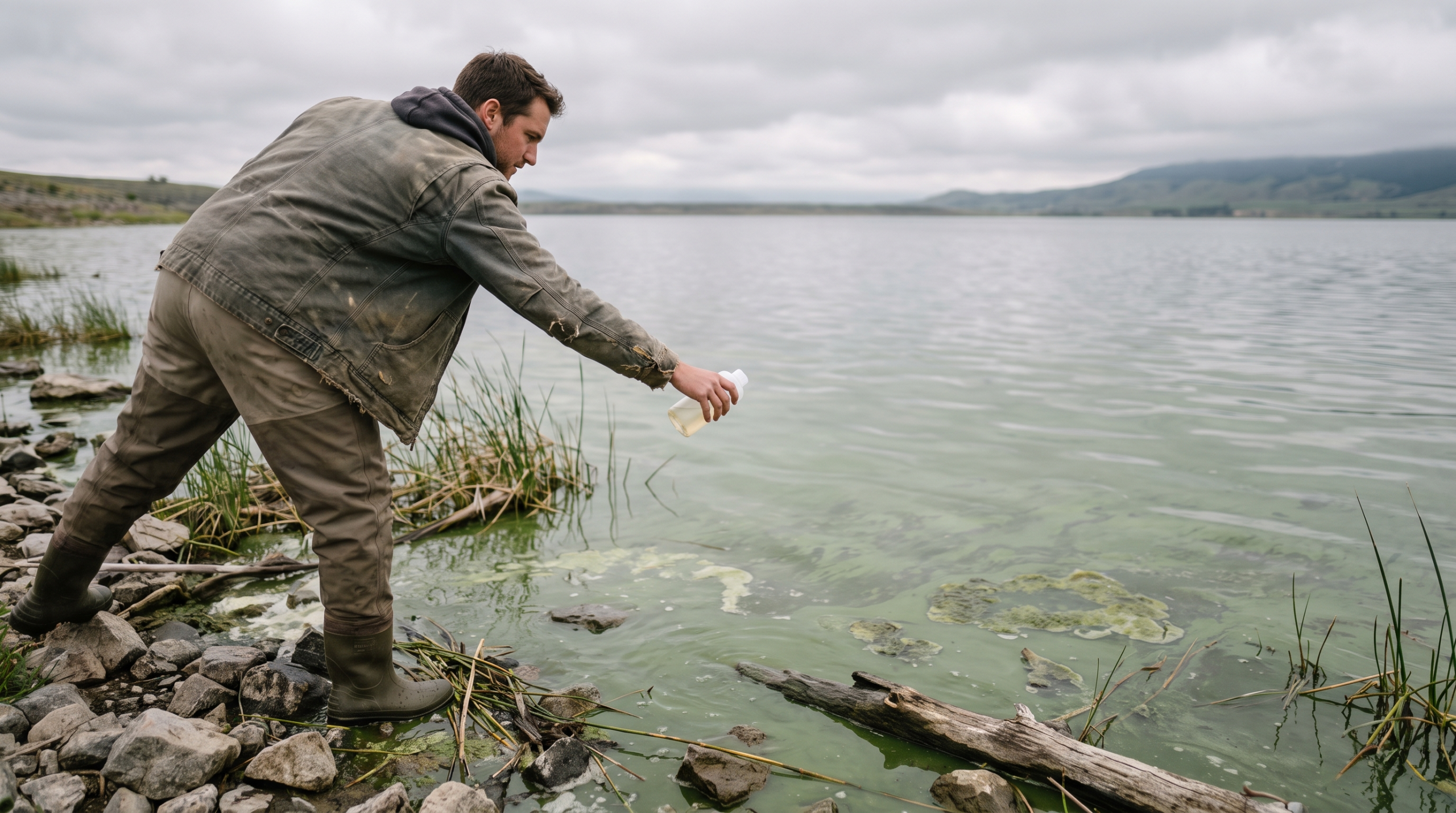
A harmful algal bloom is a rapid overgrowth of cyanobacteria, sometimes still called blue-green algae, that happens when warm water, sunlight, and excess nutrients (mainly nitrogen and phosphorus from fertilizer runoff and wastewater) line up at the same time. The bloom itself turns water green, blue-green, or occasionally red-brown, and it can form a visible scum or mat on the surface.
The “harmful” part isn’t the color or the smell, though both are real problems. Some cyanobacteria species produce cyanotoxins, compounds that are toxic to the liver, nervous system, or skin depending on the type. Not every bloom produces toxins, and you can’t tell which ones do just by looking at them. According to EPA, the frequency and intensity of these blooms has increased significantly over the past fifty years across a wide range of lake and reservoir conditions, which is why more water systems are building bloom response into their treatment planning instead of treating it as a rare event.
Why Can’t Chlorine Just Handle This?
Chlorine and standard disinfection are built to kill pathogens like bacteria and viruses, and they’re genuinely good at that job. They are not built to break down cyanotoxins, which are dissolved organic compounds, not living organisms that die when disinfected.
There’s a worse problem hiding here. If a treatment plant chlorinates water that still contains intact cyanobacteria cells, the chlorine can rupture those cells and release the toxin stored inside them directly into the finished water, raising the toxin concentration instead of lowering it. That’s why EPA guidance for utilities managing cyanotoxins stresses removing the algal cells and toxin before oxidation, not treating disinfection as the finish line. Standard chlorination is one piece of a multi-barrier approach. On its own, against a real bloom, it’s not enough.
What Actually Happened in Toledo, and Could It Happen Again?
In August 2014, a cyanobacteria bloom on Lake Erie surrounded Toledo’s water intake and pushed microcystin levels in the finished drinking water past safe thresholds. The city issued a “do not drink” advisory that left roughly 400,000 residents without safe tap water for three days. Bottled water ran short fast enough that the Ohio governor called in the National Guard to help distribute it. The advisory was lifted once consistent testing showed microcystin back under the 1 microgram-per-liter threshold the city was using.
Toledo wasn’t a fluke or a one-time freak event. A decade later, Lake Erie still produces toxic blooms most summers, and researchers who lived through 2014 say the underlying nutrient-runoff conditions haven’t gone away. The lesson utilities and industrial facilities took from it wasn’t “install more chlorine.” It was “build treatment that actually removes the toxin before it reaches the tap or the process line,” because by the time a bloom is bad enough to show up in finished water, it’s too late to just wait it out.
How Much Cyanotoxin Is Actually Considered Unsafe?
EPA’s 10-day drinking water health advisory sets the threshold for microcystins at 0.3 micrograms per liter for pre-school children and 1.6 micrograms per liter for school-age children and adults. For cylindrospermopsin, another common cyanotoxin, the thresholds are 0.7 and 3.0 micrograms per liter respectively. These are health advisories, not enforceable federal limits, but they’re the numbers utilities and water treatment operators use to decide whether water is safe to serve, and they’re strict enough that even a moderate bloom can push a source water over the line without it being visibly obvious in the raw water.
That’s a genuinely small number. It means detection matters as much as treatment, and it means treatment systems need real removal capacity, not partial reduction, once a bloom is confirmed.
Does Activated Carbon Actually Remove Cyanotoxins?
Yes, activated carbon is one of the most consistently effective tools against cyanotoxins, but the type and dose matter. Research on powdered activated carbon (PAC) combined with conventional treatment shows removal rates above 80% of microcystin from raw water under proper dosing. Granular activated carbon (GAC) filters work well too, but only if the carbon bed is replaced or regenerated on schedule. A saturated GAC filter stops adsorbing and can start passing toxin straight through, which is a real operational risk during an extended bloom season.
Carbon type matters more than most people expect. Studies comparing carbon sources found wood-based activated carbon removed more microcystin-LR than coconut-based carbon, largely because of differences in pore structure. This is also the layer that handles the musty, earthy taste and odor compounds (geosmin and MIB) that blooms produce, which is often the first thing customers or plant operators notice, well before toxin levels become a health concern.
Where Does Reverse Osmosis Fit In?
Reverse osmosis membranes physically reject cyanotoxin molecules based on size and charge, providing a second, independent barrier behind activated carbon rather than a replacement for it. Research on RO for cyanotoxin removal goes back decades, and more recent studies on nanofiltration and RO membranes confirm they can be effective against both microcystin and cylindrospermopsin, though actual removal efficiency depends on membrane pore size and the specific water chemistry involved, which is why site-specific testing is recommended rather than assuming a blanket removal rate.
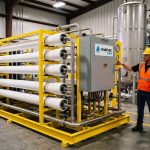
For industrial operations, this matters beyond drinking water compliance. A facility pulling process water from a lake or reservoir during bloom season needs water that’s not just “safe to drink” but consistent enough for boiler feed, cooling, or product-contact use, and RO is the technology that gets you there reliably. AMPAC USA’s industrial reverse osmosis systems are built for exactly this kind of variable source water, where influent quality can shift week to week and the system still needs to hold a consistent output spec. For smaller facilities or satellite locations pulling from the same affected watershed, a commercial reverse osmosis system scaled to the actual demand can do the same job without oversizing the investment.
The most reliable configuration pairs both technologies: activated carbon knocks down dissolved toxin and taste/odor compounds first, and RO membranes catch what gets past that stage. Neither one is a silver bullet by itself. Together they cover each other’s weak points, physical adsorption on one side, size-and-charge rejection on the other, and that redundancy is exactly what a bloom season demands, since toxin concentrations can spike faster than most facilities can react to lab results.
What Should a Facility Do Before Bloom Season Hits?
Facilities sourcing from lakes, rivers, or reservoirs should confirm their treatment train includes both a carbon stage and a membrane barrier before peak bloom season, not after a taste-and-odor complaint or a toxin alert shows up. Waiting until a bloom is confirmed to start planning treatment upgrades means running on borrowed time, since carbon procurement, system sizing, and membrane installation all take longer than a bloom takes to develop.
The honest picture is that HABs aren’t going away. Warmer summers and nutrient runoff from agriculture aren’t reversing on their own, and EPA’s own data shows blooms have been trending more frequent and more intense for decades, not just in isolated years. Facilities that treat this as a recurring seasonal risk, with the right combination of activated carbon and RO already in place, don’t have to scramble every August. The ones that treat it as a one-time emergency response usually find out the hard way that chlorine alone was never going to be enough.
Frequently Asked Questions
Can you tell if water has cyanotoxins just by looking at it or smelling it?
No. A bloom that looks green or has a musty odor might not produce toxins, and clear-looking water downstream of a bloom can still carry dissolved cyanotoxin. Visual inspection catches taste-and-odor compounds like geosmin, not the toxins themselves, which require lab testing to confirm.
Does boiling water remove cyanotoxins?
No, and it can make things worse. Boiling doesn’t break down microcystin or cylindrospermopsin, and if the water still contains intact algal cells, heat can rupture them and release more toxin, similar to the problem with chlorinating water that hasn’t had cells removed first.
How long do harmful algal blooms typically last?
It varies widely by water body, nutrient load, and weather, from a few weeks to most of a summer season. Lake Erie’s blooms, for example, commonly run from July through October depending on rainfall and runoff timing that year.
Is reverse osmosis alone enough to handle a cyanotoxin bloom?
RO membranes are effective at rejecting cyanotoxin molecules, but removal efficiency depends on membrane pore size and water chemistry, and a heavy bloom load puts more strain on the membrane. Pairing RO with an activated carbon pretreatment stage gives two independent barriers instead of relying on one, which is the more reliable setup for variable bloom conditions.
Do smaller facilities or rural water systems need to worry about this, or is it just an issue for big cities like Toledo?
Any facility pulling source water from a lake, pond, or reservoir with nutrient runoff nearby is exposed, regardless of size. Smaller systems often have less redundancy and fewer testing resources than a city utility, which can make a sudden bloom harder to catch early, not easier.
Sources: U.S. EPA — Harmful Algal Blooms and Cyanotoxins in Drinking Water; U.S. EPA — Managing Cyanotoxins in Public Drinking Water Systems; U.S. EPA — Drinking Water Health Advisories for Cyanotoxins; U.S. EPA Drinking Water Health Advisory for Microcystins (2015 report, PDF); Circle of Blue — Toledo Issues Emergency ‘Do Not Drink Water’ Warning; Michigan Public — Toxic blooms on Lake Erie still a problem 10 years after Toledo shut down its water system; Impact of water quality and operational factors on microcystin removal by powdered activated carbon (PMC); Removal of Trace Organic Contaminants by Parallel Operation of RO and GAC (PMC); Elimination of microcystin peptide toxins from water by reverse osmosis — Neumann et al., Environmental Toxicology and Water Quality1098-2256(1998)13:2%3C143::AID-TOX5%3E3.0.CO;2-7).
AMPAC USA engineers custom water purification systems for commercial, industrial, and emergency applications — from 500 GPD to multi-million GPD. Trusted by municipalities, military, and industry worldwide.