
In the contemporary environmental landscape, wastewater treatment stands as a cornerstone of sustainable water management. The integration of advanced techniques like reverse osmosis and seawater desalination represents a significant advancement in this field, addressing the growing concerns of water scarcity and pollution.
The Critical Role of Reverse Osmosis in Wastewater Treatment
Principles of Reverse Osmosis
Reverse osmosis operates on the principle of using a semi-permeable membrane to filter out impurities from water. This process is paramount in purifying wastewater, rendering it suitable for a variety of applications, ranging from agricultural irrigation to industrial processes.
Benefits of Reverse Osmosis in Wastewater Treatment
- Efficient Contaminant Removal: Capable of eliminating diverse pollutants, including microorganisms, heavy metals, and chemical contaminants.
- Water Conservation: Facilitates water recycling, reducing the dependence on freshwater sources.
- Enhanced Water Quality: Ensures the production of high-purity water, meeting stringent quality standards.
Seawater Desalination: A Solution to Global Water Shortage
Seawater desalination emerges as a crucial technology in regions afflicted by freshwater scarcity. It involves extracting freshwater from seawater, thereby providing a reliable source of potable water.
Desalination Methods
- Thermal Desalination: Utilizes heat to evaporate seawater, condensing the vapor into freshwater.
- Membrane-Based Desalination: Employs reverse osmosis for efficient and cost-effective desalination.
Synergy of Reverse Osmosis and Seawater Desalination
Enhanced Water Treatment Efficacy
The combination of reverse osmosis with seawater desalination offers numerous advantages, including improved energy efficiency, increased water production rates, and diminished environmental impacts, particularly in terms of brine disposal.
Comprehensive Wastewater Treatment Process
From Inception to Reuse
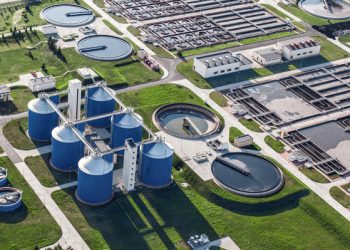
- Initial Treatment: Screening and grit removal.
- Primary Phase: Organic solid separation in settling tanks.
- Biological Treatment: Microbial degradation of organic content.
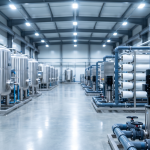
- Reverse Osmosis Stage: High-efficiency filtration for fine contaminants.
- Desalination (if applicable):Removal of salts and minerals.
- Advanced Tertiary Processes: Further purification, including UV disinfection.
- Final Steps: Safe discharge or repurposing in various sectors.
Environmental and Public Health Impacts
Sustainable Practices and Benefits
- Reduced reliance on chemical treatments in both RO and desalination.
- Implementation of energy-efficient systems, potentially powered by renewable sources.
- Alleviation of water scarcity through effective desalination techniques.
Public Health Enhancements
- Provision of consistently safe, clean water.
- Preservation and protection of natural ecosystems.
- Prevention of waterborne diseases, ensuring community health and well-being.
Read: A Cornerstone Technology in The Quest For Pristine Water Quality
The Future Landscape of Wastewater Treatment
Embracing Innovation and Efficiency
Future advancements in wastewater treatment are anticipated to focus on optimizing energy consumption, increasing water recovery rates, and reducing ecological footprints. Innovations may include the development of more efficient membrane materials for reverse osmosis, the integration of renewable energy sources, and the exploration of new desalination technologies.
Advanced Wastewater Treatment Technologies
Cutting-Edge Developments
- Nanofiltration: An extension of reverse osmosis, utilizing nanotechnology for even finer filtration, targeting specific contaminants.
- Electrodialysis Reversal (EDR):A process complementary to RO, using electric fields to separate charged particles, ideal for varying salinity levels.
- Zero Liquid Discharge (ZLD) Systems: Aim to eliminate wastewater discharge entirely, recovering valuable resources and minimizing environmental impact.
Community and Industry Applications
Diverse Utilization of Treated Water
- Agricultural Irrigation: Using treated wastewater for irrigation, especially in arid regions.
- Industrial Applications: Employing high-purity water in processes such as manufacturing and cooling.
- Urban Landscaping and Recreational Use: Utilizing treated water for municipal landscaping, reducing the demand on potable water sources.
Global Impact and Policy Implications
Worldwide Significance
The application of advanced wastewater treatment technologies, especially reverse osmosis and seawater desalination, is increasingly recognized globally as essential for sustainable water management. This recognition is driving policy changes and investments in water infrastructure across various regions.
Policy and Regulation
- Standards and Guidelines: Establishing stringent regulations for water quality and treatment processes.
- Incentives for Sustainable Practices: Encouraging the adoption of efficient and eco-friendly water treatment technologies.
- International Collaboration: Sharing knowledge and resources to address global water challenges.
Read: Common Mistakes to Avoid in Water Purification: Precautions to Take
Conclusion
The advancement of wastewater treatment through reverse osmosis and seawater desalination is pivotal in tackling the dual challenges of water scarcity and environmental sustainability. As we continue to innovate and implement these technologies, we pave the way for a future where clean, safe water is accessible for all, ensuring a healthier planet for generations to come.
Frequently Asked Questions
How quickly can an emergency water purification unit be deployed?
AMPAC USA's EPRO and mobile RO units can be operational within 30–60 minutes of arrival on-site. Trailer-mounted and skid-mounted systems are pre-plumbed and pre-wired, requiring only connection to a power source and water source. Units treat river water, lake water, or brackish groundwater.
What flow rates are available for emergency water treatment?
AMPAC USA's emergency systems range from 1,500 GPD portable units to 50,000+ GPD trailer-mounted systems. Military-specification units are available for forward operating base deployment, producing potable water meeting EPA and WHO drinking water standards from virtually any source.
Are emergency RO systems suitable for disaster relief operations?
Yes. AMPAC USA's emergency systems are used by FEMA, the U.S. military, and international NGOs for disaster relief. They treat flood water, contaminated groundwater, and brackish sources, removing bacteria, viruses, and chemical contaminants to produce safe drinking water on-site.
What power sources can emergency water purification systems use?
AMPAC USA's emergency systems can run on generator power (120/240V or 480V 3-phase), solar panels with battery backup, or vehicle power take-off (PTO). Low-power models consume as little as 0.5 kW, making them viable for off-grid deployment.
How durable are military-grade water purification systems?
AMPAC USA's military systems are built to MIL-SPEC standards with stainless steel frames, powder-coated components, and UV-resistant materials. They are designed to operate in temperatures from -20°F to 120°F and are vibration-tested for transport in military vehicles.
Related Articles
- Mining Wastewater Treatment: How Reverse Osmosis Provides Eco-Friendly Solutions
- Pros and Cons of Reverse Osmosis Water & Seawater Desalination
- How to Size a Commercial Reverse Osmosis System: A Buyer Guide for 2026
- Water Purification Technologies: Ultrafiltration, Nanofiltration and Reverse Osmosis
Conclusion
This post highlighted how emergency and military-grade water purification systems provide safe drinking water rapidly in the most challenging field conditions. For organizations requiring deployable water treatment capability, AMPAC USA engineers portable and trailer-mounted systems built to perform wherever they are needed. Contact our team at info@ampac1.com or (909) 548-4900 to discuss your emergency water treatment requirements.
AMPAC USA engineers custom water purification systems for commercial, industrial, and emergency applications — from 500 GPD to multi-million GPD. Trusted by municipalities, military, and industry worldwide.