

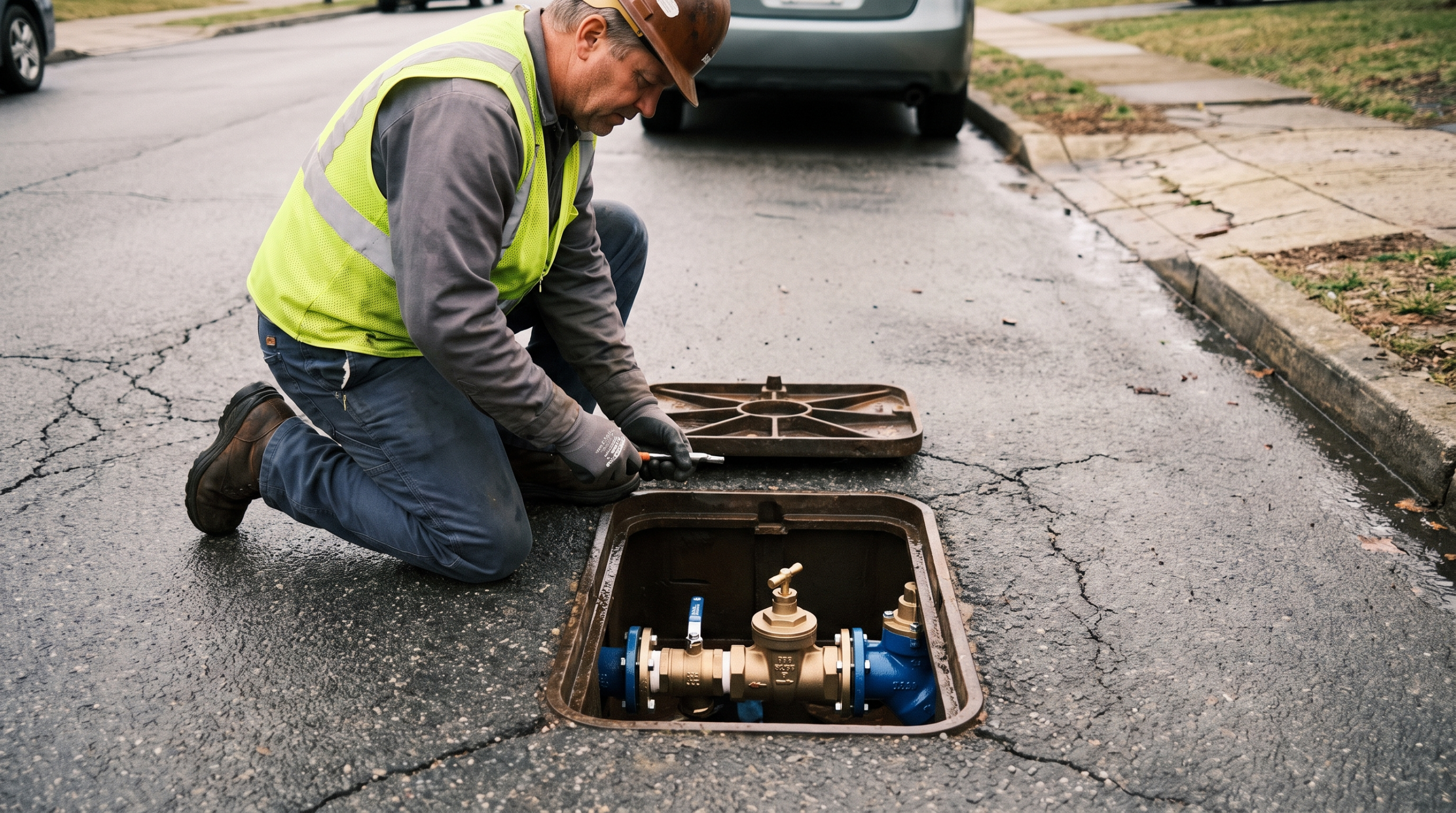

In short: most bacteria found in tap water doesn’t come from the treatment plant. It comes from what happens after treatment, inside the pipes themselves. Water leaves a municipal plant clean and disinfected, then travels through miles of distribution infrastructure, much of it decades old, where biofilm builds up on interior pipe walls and slowly releases bacteria back into the water. The EPA estimates the U.S. loses nearly 20% of treated water, about 2 trillion gallons a year, to aging pipe infrastructure before it ever reaches a tap. Every mile of pipe with a leak, a pressure drop, or a scaled interior is a mile where bacteria has a chance to get back in. Point-of-use reverse osmosis and UV treatment exist specifically to catch what the last leg of that trip lets through.
This isn’t an alarmist take on municipal water. U.S. treatment plants do the hard part well. The problem is what happens in the tens of thousands of miles of pipe between the plant and the faucet, a part of the system most people never think about, and one that’s aging faster than it’s being replaced.
Is Tap Water Safe to Drink Straight from the Treatment Plant?
Yes, in the sense that water leaving a properly operated U.S. municipal plant meets EPA Safe Drinking Water Act standards for bacteria, turbidity, and disinfectant residual. The plant is not usually where the risk starts.
The risk builds afterward, in the distribution network. A 2016 study in Applied and Environmental Microbiology tracking a full-scale drinking water system found that biofilm attached to pipe walls, not the water itself, is where most of a distribution system’s bacterial biomass actually lives. A related full-scale study published in npj Biofilms and Microbiomes found that after five weeks of monitoring, 58% of the bacteria detected in distributed water had originated from pipe biofilm, not the source water or the treatment process. That’s the core fact worth sitting with: the water your utility sends out and the water that reaches your tap are not necessarily carrying the same bacterial load.
What Is Biofilm, and Why Does It Build Up Inside Water Pipes?
Biofilm is a thin, slimy layer of bacteria, minerals, and organic material that colonizes the interior wall of a pipe and keeps growing there, mostly immune to the disinfectant passing over it. It forms in almost every water distribution system on earth to some degree. The question is how much, and how effectively a utility manages it.
Chlorine and chloramine are effective against bacteria suspended in water. They’re far less effective against bacteria embedded in an established biofilm layer, which physically shields the organisms living deeper inside it. Research on chloramine removal from a full-scale distribution system, published in npj Clean Water, found that when the disinfectant residual dropped, total bacterial cell counts in that system increased by up to 440%. That’s not a hypothetical, it’s measured data from an operating utility. Flushing helps knock loose material free, but researchers studying biofilm regrowth dynamics have found that flushing alone does not eliminate the layer attached to the pipe wall. It grows back.
Older pipe materials make this worse. Iron pipes corrode and scale internally, creating more surface area and more nooks for biofilm to colonize. Older cement-lined and unlined pipes have rougher interior surfaces than modern PVC or lined ductile iron. Age isn’t the only variable, but it’s a real one.
How Old Is America’s Water Pipe Infrastructure, Really?
Old enough that the American Society of Civil Engineers gives the country’s drinking water infrastructure a C- on its most recent Infrastructure Report Card, and wastewater systems a D+. A significant share of the pipe network in major U.S. cities was installed generations ago, some of it before World War II, and much of it is now past its intended service life.
The dollar figure attached to fixing it is enormous. The EPA’s most recent Drinking Water Infrastructure Needs Survey puts the 20-year investment need for public water systems at more than $625 billion, and nearly $423 billion of that is tied specifically to replacing or rehabilitating aging transmission and distribution pipelines, the exact part of the system where biofilm forms and bacteria regrow.
In the meantime, the pipes keep breaking. Industry estimates put water main breaks in North America somewhere between 700 and 850 per day, with the EPA citing roughly 240,000 water main breaks a year nationally, costing more than $3 billion annually in repairs. Every break is also a moment where a pipe depressurizes, and depressurization is exactly when contamination gets pulled in from outside the pipe wall through small leaks and joints, a documented mechanism behind distribution-system-linked outbreaks according to CDC-reviewed research on distribution deficiencies.
Do Water Main Breaks and Low Pressure Actually Let Bacteria Into the System?
Yes. It’s one of the better-documented failure modes in distribution system contamination, and it’s a physics problem as much as a biology one.
Municipal pipes are supposed to stay pressurized at all times, keeping water flowing outward and keeping soil, groundwater, and anything else outside the pipe from getting in. When a main breaks, or when pressure drops during high demand, a repair, or a power outage, that pressure differential can briefly reverse. Contaminated water outside the pipe, from soil, nearby sewer lines, or standing water around a leaking joint, can get drawn in through the same small openings biofilm has already colonized. CDC-reviewed research on health implications of distribution system deficiencies identifies transient pressure fluctuations as a real mechanism behind documented waterborne illness events, not just a theoretical risk.
A CDC surveillance report covering 2009 to 2010 recorded 33 reported drinking water outbreaks across 17 states, resulting in 1,040 illnesses, 85 hospitalizations, and nine deaths. Distribution system deficiencies accounted for roughly 12% of the identified causes in that surveillance period, with Legionella in building plumbing and untreated groundwater making up a larger share. It’s not the majority cause, but it’s a real and recurring one, and it’s concentrated in exactly the aging-infrastructure areas the ASCE report card flags.
Does This Mean My Tap Water Is Contaminated Right Now?
Almost certainly not in a way that violates federal standards, if you’re on a well-run municipal system. Utilities test for total coliform and E. coli regularly under the EPA’s Revised Total Coliform Rule, and a confirmed acute violation, fecal coliform or E. coli detected, triggers a boil water notice, not silence. Most U.S. tap water meets its regulatory bar most of the time.
What the research above actually supports is narrower and more useful: bacterial levels can vary meaningfully between the treatment plant and your specific tap, driven by pipe age, biofilm buildup, distance from the plant, water age in the line, and how recently there’s been a pressure event nearby. That variation is real even when a system is in full compliance, because compliance is measured at monitoring points, not at every individual faucet.
What Actually Stops Bacteria That Gets Past the Treatment Plant?
Point-of-use treatment, specifically reverse osmosis combined with UV disinfection, is the practical answer, because it treats water at the exact point where distribution-system risk has already had its chance to happen: the tap itself.
Reverse osmosis membranes are dense enough to reject bacteria, cysts, and most waterborne pathogens along with dissolved contaminants, independent of whatever happened in the pipe upstream. UV disinfection adds a second, chemical-free layer that neutralizes bacteria and viruses that make it through, without relying on a chlorine residual that may have already been consumed by biofilm miles back in the system. Together, they form a final barrier that doesn’t care whether the water’s bacterial load changed between the treatment plant and the building.
This is the layer AMPAC USA builds equipment for. Our residential reverse osmosis systems are sized for homes that want that final barrier at the kitchen tap, without relying entirely on what a municipal system delivers after miles of aging pipe. For buildings, hospitals, restaurants, and manufacturing facilities where consistent water quality actually matters for compliance or process integrity, our commercial reverse osmosis systems are built for exactly that continuous, higher-volume demand. If you’re evaluating what reverse osmosis technology actually does and where it fits into a facility’s water strategy, our reverse osmosis overview walks through the engineering behind it.
None of this replaces the need to fix aging pipe infrastructure at the municipal level, that’s a $625 billion problem that isn’t AMPAC’s to solve. But it is the piece a homeowner or facility manager can actually control, right now, at the point where the water leaves the tap.
What Should Homeowners and Facility Managers Actually Do About This?
Don’t panic about municipal water quality, but don’t assume the treatment plant’s numbers are the last word on what comes out of your tap, either. If your home or facility has older plumbing, sits at the end of a long distribution line, or is in an area with frequent water main work, point-of-use RO and UV treatment is a reasonable, well-understood way to close that gap. It’s not a reaction to a crisis. It’s matching the treatment to where the actual risk in the system lives.
Frequently Asked Questions
Does chlorine in tap water kill all the bacteria in the pipes?
No. Chlorine and chloramine are effective against bacteria suspended in the water itself, but far less effective against bacteria embedded in biofilm on pipe walls, which physically shields organisms from the disinfectant. Research on chloramine removal from a full-scale system found bacterial cell counts rose by up to 440% once the disinfectant residual dropped.
Can flushing a pipe or water line get rid of biofilm?
Not completely. Studies on biofilm regrowth dynamics in drinking water distribution systems found that flushing dislodges loose material but doesn’t eliminate the attached layer, and bacteria regrow from what remains.
How much treated water does the U.S. lose to aging pipes before it reaches customers?
The EPA estimates aging infrastructure causes the loss of nearly 20% of treated water nationally, about 2 trillion gallons a year, costing utilities and customers an estimated $6.4 billion annually.
Is a whole-house or point-of-use RO system actually necessary if my municipal water passes all its tests?
It’s not required, but it addresses a gap that compliance testing doesn’t fully close: water quality at your specific tap can differ from water quality at the utility’s monitoring points, especially with older plumbing or distribution lines. RO plus UV treats water at the point of use, after any pipe-related changes have already occurred.
What’s the difference between residential and commercial RO systems for this kind of protection?
Residential systems are sized for household point-of-use demand, typically under a kitchen sink or as a whole-home unit. Commercial systems handle continuous, higher-volume flow for buildings, healthcare facilities, restaurants, and manufacturing operations where water quality consistency affects compliance or process reliability, not just drinking water taste.
Sources: U.S. Environmental Protection Agency (Drinking Water Infrastructure Needs Survey, Revised Total Coliform Rule, water loss and main break estimates); American Society of Civil Engineers (Infrastructure Report Card); Centers for Disease Control and Prevention (waterborne disease outbreak surveillance, distribution system deficiency research); Applied and Environmental Microbiology (biofilm regrowth dynamics); npj Biofilms and Microbiomes (bacterial release from pipe biofilm); npj Clean Water (chloramine removal and bacterial regrowth).
AMPAC USA engineers custom water purification systems for commercial, industrial, and emergency applications — from 500 GPD to multi-million GPD. Trusted by municipalities, military, and industry worldwide.
