

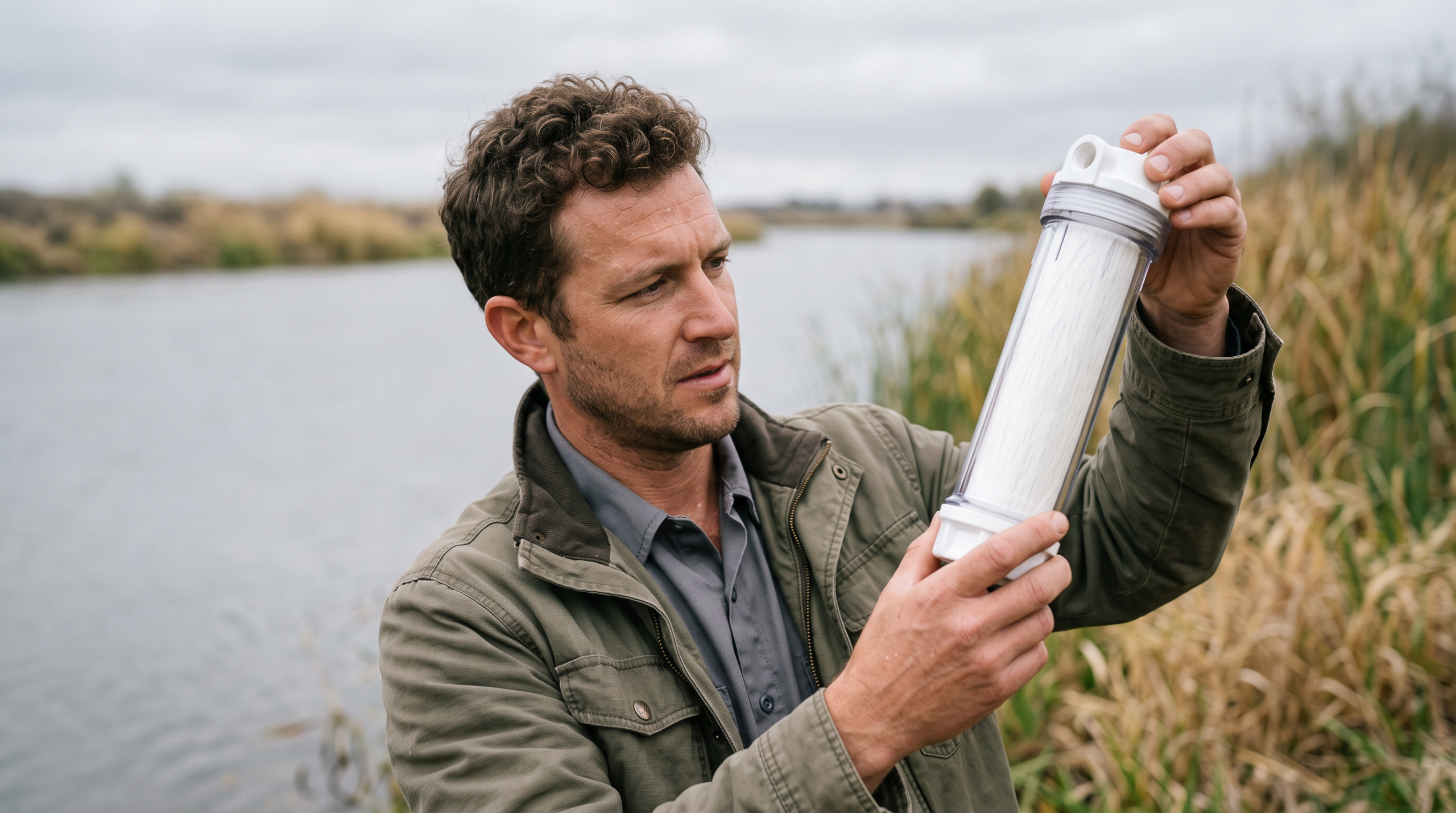

Norovirus and Hepatitis A get into rivers, lakes, and reservoirs mainly through human sewage: overflows from aging sewer systems, failing septic tanks, and agricultural or urban runoff that carries fecal contamination into the same water bodies used for drinking supply and irrigation. Once in the water, both viruses are tough to kill with disinfection alone, which is why membrane filtration, specifically ultrafiltration (UF) and reverse osmosis (RO), has become the more dependable line of defense. RO membranes can achieve better than 5-log removal of viruses (over 99.999%), while UF alone typically manages 1 to 3-log removal depending on pore size and membrane integrity, according to reviewed literature on drinking water treatment.
This isn’t a hypothetical problem. Los Angeles County declared a hepatitis A outbreak in 2025 after confirming 165 cases since 2024, three times the 2023 total, with wastewater surveillance showing a roughly sevenfold spike in viral concentration before case counts caught up. CDC surveillance also shows the share of U.S. drinking water outbreaks tied to surface water sources climbed from 11.8% in the late 1990s to 17.9% by 2000, and more recent CDC data (2015-2020) attributes 27% of drinking water outbreaks to surface water sources. The pathogens haven’t changed. The infrastructure carrying them keeps failing in the same predictable ways.
How Do Norovirus and Hepatitis A Actually End Up in Surface Water?
Both viruses are shed in extremely high concentrations in human stool, and it takes very little of either to cause infection. Norovirus is famous for its low infectious dose, in some studies fewer than 20 viral particles are enough to make someone sick, which is part of why it’s the leading cause of acute gastroenteritis outbreaks worldwide. Hepatitis A behaves similarly: it survives for weeks outside the body and spreads efficiently through the fecal-oral route.
The pathway into surface water is usually mundane. Combined sewer overflows during heavy rain push untreated or partially treated sewage directly into rivers and lakes. Septic systems near waterways leak when they’re old, overloaded, or poorly sited. Agricultural runoff carrying manure or contaminated irrigation water reaches streams. In the LA County outbreak, wastewater surveillance is what caught the rise before it fully showed up in reported case counts, which tells you something important: these viruses are moving through water systems more often than clinical case counts alone would suggest.
Why Can’t Chlorine and UV Disinfection Handle This on Their Own?
Chlorination and UV disinfection are effective against many waterborne pathogens, but norovirus and hepatitis A are both non-enveloped viruses with unusually tough protein capsids, which makes them more resistant to standard disinfection than enveloped viruses or most bacteria. Norovirus in particular is notoriously hard to inactivate with routine chlorine residuals, and turbidity in surface water can shield viral particles from UV light entirely, cutting disinfection efficiency without anyone realizing it’s happening.
That resistance is exactly why membrane-based physical removal matters as a companion to disinfection, not a replacement for it. A membrane doesn’t care whether a virus is resistant to chemical inactivation. If the pore is small enough, or the reverse osmosis membrane’s rejection mechanism is doing its job, the virus doesn’t get through, period.
What’s the Actual Difference Between UF and RO for Virus Removal?
Ultrafiltration uses membranes with pore sizes around 0.01 to 0.1 microns, which physically block most bacteria and larger viruses but can still let smaller viral particles through, especially if the membrane has any integrity issues. Reviewed studies put UF virus removal in the 1 to 3-log range. Reverse osmosis uses a much tighter, non-porous membrane that rejects contaminants by size exclusion and diffusion rather than a simple sieve mechanism, and it consistently achieves better than 5-log virus removal in low-pressure RO applications, according to peer-reviewed comparisons of the two technologies.
Practically, that gap matters. A 3-log reduction removes 99.9% of viral particles. A 5-log reduction removes 99.999%. Against a pathogen like norovirus, where a handful of surviving particles can still cause illness, that two-log difference is the gap between “mostly safe” and “reliably safe.” This is why facilities handling surface water with any history of fecal contamination risk, municipal systems, food and beverage processors, hospitals, tend to specify RO rather than UF alone, or run UF as pretreatment ahead of RO rather than as the final barrier.
AMPAC USA’s commercial reverse osmosis systems are built around exactly this logic: multi-stage membrane treatment sized for the actual pathogen and turbidity load a facility is dealing with, not a one-size-fits-all cartridge setup.
Does Multi-Barrier Treatment Actually Reduce Outbreak Risk in Practice?
Yes, and the CDC’s own outbreak surveillance data backs this up indirectly. The agency’s water quality deficiency categories consistently point back to treatment gaps, untreated or under-treated groundwater accounted for roughly a quarter of drinking water outbreak deficiencies in the 2009-2010 surveillance period, and surface water source outbreaks have trended upward over the past two decades as aging infrastructure and extreme weather events increase overflow and runoff events. The pattern is consistent: where treatment barriers are missing or under-designed for the actual pathogen load, outbreaks follow.
A properly designed multi-barrier system, typically pretreatment filtration, UF, RO, and a disinfection step, doesn’t rely on any single stage to catch everything. If turbidity knocks out UV efficiency, the RO membrane is still rejecting viral particles by mechanism, not by line-of-sight. If a membrane has a pinhole defect, downstream disinfection is still there as a backstop. That redundancy is the entire point, and it’s why regulatory bodies increasingly credit combined treatment trains rather than any single technology as sufficient for high-risk surface water sources.
Who Actually Needs to Worry About This: Just Municipalities, or Commercial Facilities Too?
Anyone drawing process water from surface water, or supplying water to the public, food production, or healthcare settings, needs to take this seriously. Municipal drinking water utilities are the most visible case, but commercial and industrial facilities that use surface water or shallow groundwater under the influence of surface water for process water, food and beverage production, or facility potable supply carry the same exposure. A restaurant group, food processor, hotel, or hospital relying on a well with any hydraulic connection to surface water isn’t automatically protected just because it’s “groundwater” on paper.
AMPAC’s industrial reverse osmosis systems are designed for exactly this kind of higher-risk source water, facilities that can’t afford to gamble on turbidity spikes or contamination events knocking out their water supply or, worse, putting contaminated water into a product or a building’s potable system.
What Should a Facility Do If It Suspects Its Source Water Is At Risk?
Start with a real water quality assessment, not an assumption. Test for indicator organisms (total coliform, E. coli), check turbidity trends, and look at the facility’s actual hydrogeology, is the well shallow, near a river, downgradient from agricultural land or a wastewater discharge point. If any of that raises a flag, the fix isn’t a single cartridge filter. It’s a properly sized treatment train matched to the pathogen risk actually present.
For municipal-scale or high-volume commercial applications, that usually means looking at reverse osmosis systems built for the specific flow rate and contamination profile of the source, not an off-the-shelf unit sized for a typical urban water supply with none of these risk factors. AMPAC USA designs and manufactures RO and UF systems for exactly this range of applications, from municipal supply to food and beverage processing to healthcare facilities, because the sizing and pretreatment requirements are genuinely different depending on what’s actually in the source water.
Frequently Asked Questions
Can boiling water at home protect against norovirus and Hepatitis A?
Yes, boiling water for at least one minute inactivates both viruses effectively, but that’s a household-scale response, not a substitute for proper source water treatment at a facility or municipal level, where continuous, high-volume protection is needed.
Is reverse osmosis overkill for a facility that’s never had a contamination event?
Not necessarily overkill, but it depends on the source. A facility on a protected, deep groundwater source with no surface water influence has a very different risk profile than one drawing from a river, shallow well near agricultural runoff, or any source with a history of turbidity spikes. A water quality assessment should drive the decision, not a default assumption either way.
How much virus removal does a standard municipal treatment plant typically achieve?
It varies widely by plant design and source water, which is exactly the problem CDC surveillance data points to: deficiencies in treatment, not the existence of treatment, are what show up repeatedly in outbreak investigations. A conventional filtration-plus-chlorination plant can fall well short of the 5-log virus removal that low-pressure RO achieves.
Why is norovirus specifically hard to remove compared to other waterborne pathogens?
Its low infectious dose (as few as 20 particles in some studies), non-enveloped structure that resists standard disinfection, and tendency to be shielded by turbidity from UV treatment combine to make it more persistent through conventional treatment stages than many other waterborne pathogens.
Does UF need to be paired with RO, or can it work as a standalone barrier?
UF alone typically achieves only 1 to 3-log virus removal, which may not be sufficient against high-risk sources or highly infectious pathogens like norovirus. It’s commonly used as pretreatment ahead of RO, protecting the RO membrane from fouling while RO handles the final virus rejection, rather than as a standalone final barrier for high-risk surface water.
Sources: CDC (Surveillance for Waterborne Disease Outbreaks Associated with Drinking Water, 2015-2020, MMWR); CDC/Los Angeles County Department of Public Health Hepatitis A outbreak reporting, 2024-2025; MMWR Notes from the Field, Genomic and Wastewater Surveillance Data to Guide a Hepatitis A Outbreak Response, LA County; peer-reviewed comparisons of low-pressure RO and UF virus log-reduction values (ScienceDirect, PMC).
AMPAC USA engineers custom water purification systems for commercial, industrial, and emergency applications — from 500 GPD to multi-million GPD. Trusted by municipalities, military, and industry worldwide.
