
Water quality affects hospitality operations in ways that don’t always make it onto the maintenance checklist until something breaks. Scale buildup destroys commercial dishwashers in three years instead of ten. Spotty glassware generates guest complaints. Poor water flavor affects coffee, cocktails, and ice — products where taste is the whole point. A 300-room hotel with hard water and no treatment system is quietly spending $40,000–$80,000 more per decade on equipment repair and replacement than a comparable property that addressed the water problem upfront.
This guide covers what commercial water treatment systems hotels and restaurants actually use, why each one matters, and how to size and specify them.
The Four Water Problems Hospitality Properties Face
1. Hard Water Scale
Hard water (above 7 grains per gallon / 120 ppm as CaCO₃) deposits calcium carbonate scale on any surface where water heats or evaporates. In a hotel, that means boilers, steam generators, water heaters, dishwashers, ice machines, laundry washers, cooling towers, and every showerhead in the building. A 1/8-inch scale deposit on a boiler heat exchanger increases fuel consumption by 25%. A scaled dishwasher jet arm reduces wash pressure and cleaning performance. Hard water is the single most economically damaging water quality problem for hospitality properties.
2. Spotting on Glassware and Dishes
TDS above 50–100 ppm in the final rinse water leaves visible mineral deposits on glass surfaces as the water evaporates. Polishing every glass in a high-volume restaurant bar is a labor cost; glasses that spot despite polishing generate guest complaints. Both problems go away when the final rinse water is treated.
3. Taste and Odor in Beverages
Chlorine, chloramine, and high mineral content affect coffee, espresso, tea, and cocktails. The Specialty Coffee Association’s water quality standard targets TDS of 150 ppm and hardness of 50–175 ppm — which is narrower than municipal tap water in many US markets. A $20,000 espresso program running on untreated water is underperforming.
4. Biological Risk in Water Features
Hotels with decorative fountains, spas, pools, or cooling towers face Legionella risk from warm, stagnant water. Proper water treatment in these applications is a regulatory requirement in most jurisdictions, not optional maintenance.
Water Treatment Systems by Application
Boilers and Steam Systems
Steam boilers for laundry, kitchen, and HVAC require the most aggressive pre-treatment. Scale at boiler temperatures (above 212°F) accumulates faster and binds more tightly than scale in lower-temperature applications. A single boiler tube failure from scale-induced overheating can cost $15,000–$40,000 in repair.
Standard treatment: Commercial water softener to remove hardness, followed by chemical oxygen scavenging and pH conditioning for the boiler feedwater. For high-pressure boilers (above 150 psi), reverse osmosis pre-treatment before softening is standard practice — it removes silica and other minerals that softening alone doesn’t address.
Sizing note: Softener sizing is based on the boiler’s daily makeup water demand in gallons × water hardness in grains per gallon. A hotel boiler consuming 1,500 GPD of makeup water at 15 GPG hardness requires a softener with at least 22,500 grains per day capacity (with 25% buffer: 28,000+ grains).
Commercial Laundry
Hard water requires more detergent to achieve equivalent cleaning — typically 30–50% more soap at 15+ GPG versus softened water. Softened water also protects heating elements and reduces fabric wear from mineral precipitation in fibers. A 20-unit hotel doing 60 loads per day can recoup a commercial softener’s cost in detergent savings alone within 18–24 months.
Kitchen and Dishwasher
High-temperature commercial dishwashers (170°F+ final rinse) with hard water produce visible scale on jets, racks, and dish surfaces within months. Most commercial dishwasher manufacturers void warranties when the machine operates above 120 ppm hardness without documented softener protection.
Standard treatment: Softened water supply to the dishwasher. Many high-end restaurant kitchens add a reverse osmosis system on the final rinse circuit to achieve spot-free results without polishing labor.
Ice Machines
Ice machine scale buildup is one of the most common service calls in the hospitality industry. Hard water deposits on evaporator plates reduce ice production and, in severe cases, require a full evaporator replacement. Beyond scale, high-TDS water produces cloudy ice — a visual quality issue in cocktail service.
Standard treatment: Dedicated inline filter with scale inhibitor cartridge (for light-to-moderate hardness) or softened water supply (for hardness above 7 GPG). High-end bars producing craft ice for cocktails typically run a small RO system dedicated to ice machine supply to achieve clear, slow-melting ice at low TDS.
Coffee, Espresso, and Bar Water
The Specialty Coffee Association specifies target water chemistry for brewing: TDS 75–250 ppm (target 150), total hardness 17–85 ppm (target 51 ppm as CaCO₃), and chlorine-free. Most US municipal water either misses on hardness or requires chlorine removal.
Standard treatment: Carbon filtration (chlorine removal) + partial softening or RO blending to hit the target TDS. A full RO system on espresso bar water that produces 5–10 ppm TDS product water will need remineralization to reach the SCA target range — pure RO water actually makes flat-tasting espresso.
Guest Rooms and Showers
Showerheads in hard-water markets scale and require replacement every 2–4 years instead of 8–12 years. Soap and shampoo also lather less effectively in hard water, leading to higher amenity consumption and occasionally guest complaints about residue.
Standard treatment: Central whole-building softener covering all guest room supply water. Most hotel properties run a single softener on the main supply; the cost is recovered in showerhead, fixture, and water heater maintenance savings within 3–5 years.
Typical Commercial Water Treatment System Configurations
| Property Type | Primary Problem | Recommended System | Approximate Equipment Cost |
|---|---|---|---|
| 50–150 room hotel, municipal water, moderate hardness (7–12 GPG) | Scale, guest room fixtures | Central commercial water softener (duplex for 24/7 availability) + carbon pre-filter | $4,000–$12,000 |
| 150–500 room hotel, municipal water, hard (12–25 GPG) | Scale + boiler + laundry | Duplex softener (main building) + dedicated boiler softener + sediment and carbon pre-treatment | $12,000–$35,000 |
| Full-service hotel with laundry, pool, and food service | Scale + beverage quality + Legionella risk | Duplex softener + RO on beverage/ice circuits + carbon filtration + UV for pool/spa makeup | $25,000–$80,000 |
| Fine dining restaurant (50–200 covers) | Beverage quality + dishwasher scale + spotting | Carbon filtration + RO system (600–2,000 GPD) for beverage and ice, softener for dishwasher | $6,000–$20,000 |
| Quick service or high-volume restaurant | Ice machine scale, dishwasher | Commercial softener + sediment/carbon pre-filters | $2,500–$8,000 |
| Hotel with well water supply | Iron, hardness, biological risk | Iron removal → multimedia filtration → softener → carbon → UV disinfection | $15,000–$50,000+ |
Return on Investment: What Water Treatment Actually Saves
Water treatment ROI in hospitality is measurable across several cost centers:
- Equipment life extension: A commercial dishwasher that lasts 12 years instead of 4 with hard water saves $8,000–$15,000 per unit in replacement cost. A hotel boiler operating at rated efficiency instead of 20% below due to scale avoids $5,000–$15,000/year in excess fuel cost.
- Detergent savings: Soft water cuts detergent use 30–50% in laundry. At a 200-room property doing commercial laundry, this is $3,000–$8,000/year in chemical savings.
- Labor reduction: Eliminating glassware polishing in a 100-seat bar saves 1–2 hours per shift in labor; at $20/hr that’s $7,000–$15,000/year.
- Service call avoidance: Ice machine and dishwasher descaling service calls run $200–$600 each. Scale-related failures run $1,000–$8,000. A property with a well-maintained water treatment system eliminates most of this category.
Payback periods for commercial water softeners in hospitality typically run 18–36 months when accounting for all cost categories. RO systems for beverage and ice circuits pay back in 3–6 years through equipment life extension and labor savings.
Water Quality Testing: Start Here
Before specifying any treatment system, get a water analysis. Municipal water reports (Consumer Confidence Reports) give you a snapshot of the utility’s distribution system, but they don’t account for what happens to your water in the building’s plumbing, which can be substantially different. A laboratory water test costs $50–$200 and takes the guesswork out of system selection.
Key parameters for hospitality water treatment:
- Total hardness (grains per gallon or ppm as CaCO₃)
- Total dissolved solids (TDS, ppm)
- Iron and manganese (if on well water)
- pH
- Chlorine or chloramine residual
- Silica (if sizing a boiler system)
Commercial Water Systems for Hotels and Restaurants — AMPAC USA
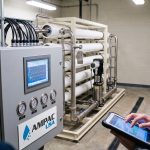
AMPAC USA designs and manufactures commercial water treatment systems for the hospitality industry from our Woods Cross, UT facility. From standalone softeners to full treatment trains with RO, carbon, and UV disinfection, we size and configure systems to your property’s specific water chemistry and flow requirements. Every system ships factory-tested.
Frequently Asked Questions
What is the most economically damaging water quality problem for hotels?
Hard water scale. It builds up in boilers, water heaters, dishwashers, ice machines, and showerheads throughout a property. A 1/8-inch scale deposit on a boiler heat exchanger alone increases fuel consumption by 25 percent.
How does water treatment affect hotel beverage programs?
The Specialty Coffee Association targets 150 ppm TDS and 50-175 ppm hardness for brewing, often narrower than municipal tap water. Untreated water with chlorine, chloramine, or excess minerals directly affects coffee, espresso, and cocktail quality.
What water treatment system does a full-service hotel typically need?
A duplex softener for the main building (laundry, kitchen, HVAC) plus a dedicated RO system for beverage and ice circuits, carbon filtration, and UV disinfection for pool or spa makeup water where Legionella risk applies.
What is the payback period for hotel water treatment systems?
Commercial softeners typically pay back in 18-36 months through equipment life extension, detergent savings, and reduced labor. RO systems for beverage and ice circuits pay back in 3-6 years.