
Choosing between bottled water and tap water? It’s a common dilemma. Everyone has an opinion, and frankly, both options have their quirks. As engineers who’ve spent decades in water purification, we understand why this isn’t a simple ‘yes’ or ‘no’ answer. Let’s break down the realities, not just the marketing hype.
Bottled water isn’t just a convenience; it’s a colossal business. In 2016 alone, the U.S. bottled water industry produced roughly 12.8 billion gallons. That’s a staggering volume, and we’ve seen those numbers climb steadily ever since. People are buying it, no doubt about that.
Yet, millions of Americans still rely on municipal tap water as their main source. What we’ve found is that for daily consumption, a well-maintained tap water supply — especially when enhanced by a robust home purification system like reverse osmosis — is often the smartest choice. Honestly, most environmental and public health experts would agree: bottled water should really be reserved for emergencies or situations where your tap supply is compromised.
The Pros and Cons of Bottled Water
Pros
- Let’s look at the upsides.
- Emergency essential. When disaster strikes, bottled water is critical.
- Always accessible. You can grab a bottle almost anywhere.
- Easy to store. Stockpiling for an unforeseen event? No problem.
- Highly portable. Carry it to the gym, office, or out in the field.
- Sealed for safety. Minimal risk of external contamination before opening.
- Immune system backup. For those with compromised immunity, it offers a reliable alternative if tap water quality is uncertain.
Cons
- Now, for the downsides.
- Environmental burden. Single-use plastic bottles create massive waste.
- Chemical concerns. Some plastics can leach chemicals — like phthalates or microplastics — into the water, especially when exposed to heat.
- Questionable quality. Here’s the thing: bottled water regulations are often less stringent than municipal tap water standards. We’ve seen bottled water that’s barely better than unfiltered tap.
- Energy hog. Manufacturing, shipping, and chilling bottles consume significant energy.
- Costly habit. Buying bottled water daily adds up quickly. It’s far more expensive per gallon than tap.
- It expires. Yes, bottled water has a shelf life. It doesn’t truly ‘go bad’ in the sense of rotting, but the plastic can degrade and affect taste over time.
Nutritional Difference
Many assume water is just water, nutritionally speaking. But that’s not quite right. Some bottled brands actually fortify their products, adding back minerals and electrolytes — such as sodium, magnesium, or calcium — that might be naturally present in spring water or added for taste and perceived health benefits.
Health Difference
Generally, tap water in the U.S. is quite safe, largely due to the Safe Drinking Water Act (SDWA) of 1974. This federal law empowers the U.S. Environmental Protection Agency (EPA) to establish national drinking water standards, protecting us from a long list of contaminants. The EPA oversees over 150,000 public water systems, serving more than 300 million people daily. That’s a massive undertaking.
That said, regulations are only as good as the infrastructure supporting them. Our nation’s aging water infrastructure — those miles of pipes and connections — can certainly compromise water quality, especially with lead issues in older cities. And let’s be real: natural disasters, from floods to hurricanes, can quickly overwhelm municipal treatment plants, rendering tap water unsafe. In these scenarios, bottled water becomes a necessity.
It’s also true that many municipal water supplies contain fluoride. While public health agencies often champion fluoride for dental health, some individuals express concerns about its long-term effects on overall health, citing potential links to issues like kidney problems or thyroid imbalance. (It’s a debate that continues, frankly).
Pros and Cons of Tap Water
Municipalities pull tap water from natural freshwater sources — lakes, rivers, aquifers. Here’s our take on its pros and cons.
Pros
- The advantages are clear:
- Unbeatable convenience. Turn on the faucet. Water’s there.
- Extremely economical. Pennies per gallon, not dollars.
Cons
- But there are drawbacks:
- Purity isn’t guaranteed. Even regulated tap water can contain residual chlorine, disinfection byproducts, or trace contaminants.
- Regular testing is key. We always recommend home water quality testing, especially if you have an older home or well water.
- Taste and odor issues. Chlorine, used for disinfection, often leaves an unpleasant taste or smell. That’s a common complaint we hear.
Which is Better: Tap Water or Bottled Water
Bottom line: there’s no single ‘best’ option for everyone. Your choice depends on your specific situation, local water quality, and personal preferences. What we advocate for is informed decision-making. Rely on tap water when it’s safe and purified, saving bottled water for travel or verified emergencies. That’s practical.
The Simple Solution
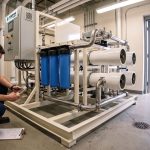
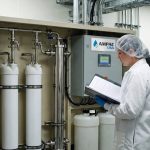
So, how do you get truly pure water every day, right in your home? The simple, proven solution is a reverse osmosis (RO) water purification system. An RO system delivers water that is virtually free of contaminants, tasteless, colorless, and odorless — reliably pure, every single time.
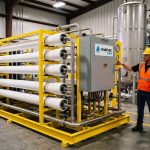
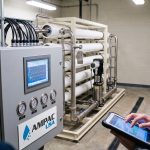
At AMPAC USA, we’ve designed and manufactured commercial and industrial RO systems for over 30 years — installations on offshore oil rigs, military bases, luxury resorts, municipalities, and food & beverage plants across 150+ countries. We bring that same level of engineering excellence to our residential RO systems. Our R.O.idential RO line uses advanced reverse osmosis, a technology proven to eliminate up to 99% of dissolved solids and common contaminants. Whether you’re dealing with hard water, brackish well water, or simply want the cleanest drinking water, we have a solution. From compact point-of-use systems for a single faucet to whole-house units handling hundreds of gallons per day (GPD), we cover it. Plus, we offer a full R.O.ange of compatible accessories and spare parts.
Our residential RO systems are known in the industry for their robust build, durability, and sheer reliability. We manufacture these units in our state-of-the-art facility, adhering to rigorous standards — every step overseen by our experienced engineers. When you choose AMPAC, you get more than a system; you get 24/7 after-sales support and a solid manufacturer’s warranty. We even send our water quality experts to your site to assess your specific challenges and recommend the perfect solution. Honestly, that’s a service most companies don’t offer.
You can trust AMPAC USA for reverse osmosis water filtration systems, water softeners and conditioners, home UV systems, whole house water filters, and all the necessary accessories.
We offer a comprehensive line of residential water reverse osmosis treatment options. This includes end-to-end multi-stage systems, treatments designed for specific contaminants, fully automated appliances, and complementary components to upgrade existing installations. And yes, we stock genuine, top-quality spare parts.
AMPAC USA stands as one of the world’s leading manufacturers of advanced water purification and reverse osmosis equipment. We specialize in everything from massive commercial reverse osmosis drinking water systems to compact residential drinking water filtration and purification units.
Beyond that, we provide the highest quality residential reverse osmosis systems, mobile solar power systems, industrial oil separators, RO wastewater treatment systems, water coolers, automatic media filters, cartridge filters, water softeners, ultraviolet sterilizers, chemical dosing systems, and ozone systems. Need something unique? We also custom-build water treatment equipment. Our systems are engineered to perform comfortably under the toughest operating conditions — we’ve seen them endure everything from desert heat to arctic cold. Their robustness, durability, and competitive price points translate into a superior total cost of ownership (TCO) and exceptional long-term value. Want to learn more? Call us directly at 909-548-4900 or explore our residential RO products.
References
- International Bottled Water Association. “Bottled Water – Sustaining a Healthy Lifestyle.” 2017.
- U.S. Environmental Protection Agency. “Safe Drinking Water Act (SDWA).”
- U.S. Environmental Protection Agency. “Information about Public Water Systems.”
Frequently Asked Questions
Why is purified tap water often a smarter choice than bottled water for daily use?
As water purification engineers, we find that a well-maintained municipal tap water supply, especially when enhanced by a robust home purification system like reverse osmosis, is often the smartest choice for daily consumption. It’s significantly more cost-effective, reduces environmental plastic waste, and municipal standards are often more stringent than bottled water regulations.
Are bottled water quality regulations less stringent than municipal tap water standards?
Yes, bottled water regulations are frequently less stringent than those governing municipal tap water. Public water systems are subject to more rigorous testing, oversight, and disclosure requirements, ensuring a higher baseline quality for tap water compared to many bottled options.
What are the environmental consequences of relying on bottled water?
Relying on bottled water creates a massive environmental burden primarily due to single-use plastic bottle waste, which contributes significantly to landfills and pollution. Furthermore, the manufacturing, shipping, and chilling of these bottles consume substantial energy, increasing carbon footprints.
Can chemicals from plastic bottles leach into drinking water?
Yes, plastics used in bottled water can leach chemicals such as phthalates or microplastics into the water, particularly when exposed to heat or over time. This raises concerns about potential health impacts and can degrade the water’s taste and purity.
How much more expensive is bottled water compared to tap water?
Bottled water is far more expensive per gallon than municipal tap water, making it a costly daily habit. While tap water costs pennies per gallon, bottled water can be hundreds or even thousands of times more expensive, adding up quickly over time.
Related Articles
- Solar Desalination vs. Traditional RO Systems: Which Is Better for Water Purification?
- 7 Reasons Water Stores Are Better Than Bottled or Tap Water
- Water Softener vs Reverse Osmosis: Which Do You Need? | AMPAC USA
- Whole House Reverse Osmosis vs Water Softener: Which Do You Need?
AMPAC USA engineers custom water purification systems for commercial, industrial, and emergency applications — from 500 GPD to multi-million GPD. Trusted by municipalities, military, and industry worldwide.