
Every business leader wants to boost productivity without sacrificing quality. It’s a tough balancing act. What if one of the simplest, most overlooked solutions was right in front of us? Drinking pure water, specifically reverse osmosis (RO) water, can seriously increase workplace productivity. We’ve seen it firsthand, from small offices to big industrial sites where worker focus is everything. Let’s dig into how better hydration makes for a more effective team.
Effect of Water on Your Brain
Here’s a stark fact: studies suggest up to 75% of adults are always a bit dehydrated. Think about that for a second. Often, we think our stomach is rumbling for food when our body actually just needs water. In our experience, people simply aren’t drinking enough, and it impacts everything they do.
Even slight dehydration hits hard. Just four hours without enough water can drop energy levels and bring on a headache. Your brain is super sensitive to tiny shifts in body chemistry–potassium, sodium, you name it. A 1-2% drop in body water can already mess with how you think.
Drinking water fixes this. It helps expand the brain’s grey matter, letting it work more efficiently. On the flip side, not enough water can actually shrink brain tissue. It’s a simple deal: hydrated brain, better performance.
A Small Change Can Lead to Big Changes
The impact of proper hydration on productivity, whether you’re at the office or on a remote job site, is clear. A London study, for instance, had 34 people do tasks both before and after drinking water. The results? Hydrated participants finished tasks a remarkable 14% faster. That’s a huge gain.
What about the brain itself? Another study looked at young teens’ brains, then had them cycle for 90 minutes in heavy clothing to make them dehydrated. After that, their brain size had measurably shrunk–like losing a full year of aging. Imagine that effect on critical thinking and solving complex problems. This isn’t just about feeling a bit tired.
Facts About How Drinking Water Increases Productivity at Work
So, how does just drinking more water lead to a more productive workday? Let’s get specific.
- Less Anxiety
Your brain is roughly 73-75% water. It needs that water to work its best. Staying hydrated all day helps keep anxiety down, letting you focus and stay productive. A well-hydrated brain is a calmer brain.
- Better Creativity
Tackling creative tasks–whether you’re drafting a compelling marketing campaign or engineering a new system design–demands a sharp mind. Hydration gives your brain the boost it needs for innovative thinking.
- Stay Energized
That mid-afternoon slump? That sluggish feeling? Often, it’s just dehydration kicking in. If you’re stuck in a chair for hours–say, analyzing system data or managing a project–a simple glass of water can make a huge difference. It’s a quick, effective energy boost.
- Better Mood
Dehydration can leave you feeling tense, irritable, or plain confused. Staying hydrated calms your brain, helping you think more positively. A good mood at work? Absolutely critical for productivity and how your team works together.
- Less Fatigue
Research clearly shows dehydration slows down work and messes with concentration. When you’re properly hydrated, you work more efficiently, your focus sharpens, and you significantly reduce mistakes. We’ve seen this firsthand on sites where precision is non-negotiable.
- Less Stress
Want to cut down on work-related stress? Drink more water. Dehydration can actually spike cortisol, your body’s main stress hormone. Keep those water levels up, and cortisol levels drop. You’ll feel calmer, more in control, and ultimately, more productive.
- Helps You Avoid Illnesses
Frequent dehydration means you’re more likely to get sick, which obviously impacts productivity. Dizziness, headaches, lightheadedness–these are common signs your body needs more water. Regular hydration builds a stronger defense.
How to Drink More Water to Increase Productivity at Work?
- First, talk to a healthcare professional. They can tell you how much water you specifically need each day based on your activity, weight, and age.
- Set realistic daily hydration goals. Then, really try to hit them.
- Consider using a hydration tracking app. Many will remind you to sip water every 30-60 minutes.
- Feeling hungry? Grab a glass of water first. Often, that “hunger” is just thirst in disguise. If you’re still hungry, then have a healthy snack.
- When you’re craving a soda or coffee, try plain water instead. It’s often all you need.
- Make water more appealing. A slice of lemon, a few mint leaves, or cucumber can really make it taste better.
- Drink a full glass of water before every meal. It’s a simple habit that really adds up.
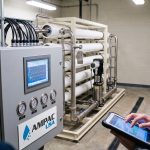
- And here’s the thing: the quality of your water matters. Trust a reliable source. AMPAC USA’s water treatment systems–for homes, businesses, or industrial sites–ensure your water is consistently pure, tasteless, colorless, and odorless. We design systems that deliver water with less than 10 ppm TDS, ensuring peak hydration and taste.
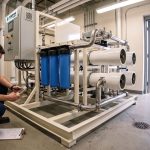
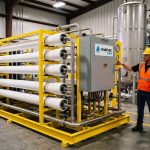
At AMPAC USA, we don’t just build systems; we engineer solutions. Our water treatment systems are strong, capable of turning almost any raw water source into high-quality product water that meets strict user needs. What we’ve found is that perfect performance in harsh environments is a must. From exploratory labs in the Arctic Circle to offshore oil rigs in the Persian Gulf, urban communities, and critical operations in war zones, AMPAC USA water treatment systems are proven, reliable solutions for tough water challenges globally. We’ve seen our 500+ GPD systems deployed in some of the world’s most demanding places, always delivering.
Our advanced water purification systems are specifically designed to tackle the hardest challenges: complex purification, treatment, provisioning, and large-scale seawater desalination. They’re built for extreme environments. We use only the highest-grade reverse osmosis, seawater desalination, and water technologies, meeting or exceeding international standards for industrial, on-shore, and offshore applications. Our engineers have hands-on experience in these exact settings.
AMPAC USA designs and manufactures some of the world’s most reliable commercial reverse osmosis water treatment systems. We build them to treat water effectively even in the most challenging conditions. On top of that, we hold ourselves to international quality standards and back every system with exceptional after-sales service. Our field engineers are ready to provide expert support for your water treatment applications anywhere in the world–we’ve deployed teams to over 150 countries. To explore your options, call us directly at 909-548-4900 or visit our website here.
References
- Adan, A. (2012). Cognitive performance and dehydration. *Journal of the American College of Nutrition*, 31(2), 71-78.
- D’Anci, K. E., & Rosenberg, I. H. (2010). Mild dehydration and its effects on cognitive performance and mood. *Nutrition Reviews*, 68(2), 110-117.
- Edwards, K. M., et al. (2007). Effect of hydration status on cognitive performance. *Physiology & Behavior*, 91(1), 1-8.
- Kempton, M. J., et al. (2011). Influence of hydration status on the stress response. *International Journal of Sport Nutrition and Exercise Metabolism*, 21(6), 463-470.
- Riebl, S. K., & Davy, B. M. (2010). The Effect of Hydration on Cognitive Performance and Mood. *American Journal of Clinical Nutrition*, 92(2), 382-389.
- USGS. (n.d.). The Water in You: Water and the Human Body. *U.S. Geological Survey*. water-you-water-and-human-body
- Watson, P., et al. (2004). The effect of dehydration on brain structure and function in healthy adolescents. *Human Brain Mapping*, 22(2), 104-111.
Related reading: QMRA of adenovirus in drinking water at a drinking water treatment plant using UV and chlorine dioxide disinfection, RO provides schools with safe Drinking Water, Drinking water purification at Home.
Frequently Asked Questions
How does even mild dehydration impact cognitive function and productivity?
Even a slight 1-2% drop in body water can significantly impair cognitive function, leading to reduced energy levels and headaches within just four hours. This dehydration can cause brain tissue to shrink, directly hindering critical thinking and problem-solving abilities. Staying hydrated helps expand the brain’s grey matter, allowing it to operate more efficiently.
What measurable productivity improvements can businesses expect from a hydrated workforce?
Studies show that properly hydrated individuals can complete tasks up to 14% faster than those who are dehydrated. Beyond speed, adequate hydration reduces anxiety and supports better creativity, leading to a more focused and effective workforce overall. AMPAC USA has observed these benefits firsthand in diverse commercial and industrial settings.
Why is reverse osmosis (RO) water specifically recommended for workplace hydration?
Reverse osmosis water is highly purified, removing contaminants that can affect taste and potentially health, encouraging consistent consumption. As experienced by AMPAC USA engineers on sites from offshore rigs to food plants, providing consistently pure water ensures employees drink enough, directly supporting sustained focus and productivity. This commitment to quality hydration is critical in demanding work environments.
What are the subtle signs that dehydration is affecting my work performance?
Subtle signs of dehydration impacting work performance include a noticeable drop in energy, persistent headaches, and difficulty concentrating on tasks. Your brain, which is 73-75% water, becomes less efficient with even minor water deficits, leading to impaired cognitive function and increased anxiety. Recognizing these early indicators and hydrating promptly can restore focus.
Can drinking water actually improve brain size or structure?
Yes, proper hydration helps expand the brain’s grey matter, enabling it to function more efficiently. Conversely, studies have shown that dehydration can cause measurable shrinkage of brain tissue, impacting cognitive abilities equivalent to losing a full year of aging. Consistent intake of pure water is essential for maintaining optimal brain structure and performance.
AMPAC USA engineers custom water purification systems for commercial, industrial, and emergency applications — from 500 GPD to multi-million GPD. Trusted by municipalities, military, and industry worldwide.