

Water is essential. We can’t live long without it, and neither can most other species. That’s why experts carefully study water quality, making sure we use the right kind for the right job. If you’re scratching your head over different water types, especially deionized vs. distilled water, you’re in the right place. Let’s clear things up!
Are Deionized Water and Distilled Water Different?
Absolutely, they’re quite different. Distilled water comes from boiling water to remove contaminants, dissolved solids, and things like chlorine. Deionized water, on the other hand, has all its dissolved mineral particles taken out.
Both are super pure and contaminant-free, which is why people often mix them up.
What’s Distilled Water Good For?
While you can drink distilled water sometimes, it’s really more useful in other ways. Think about your humidifier or CPAP machine, distilled water helps them run better. It’s also great for irons, keeping your clothes spotless. Car maintenance? It’s often safe for that too, meeting vehicle standards. Even your houseplants or fish in an aquarium will appreciate it.
What’s the Difference Between Deionized and Demineralized Water?
People often call deionized water “demineralized water” because the deionization process strips out all the minerals. While deionized or demineralized water might be safe to drink, it’s not ideal for your everyday water needs. It simply doesn’t have the beneficial minerals we all need.
Can I Drink Distilled Water?
Yes, distilled water is safe to drink. But remember, the distillation process removes most of the good, natural minerals from water. So, drinking it constantly, every single day, might actually do more harm than good.
Uses for Deionized Water
Because deionized water is usually 100% pure and contaminant-free, it’s a go-to for scientific experiments. It helps ensure consistent, predictable results. You’ll also find deionized water used in pharmaceutical applications, where safety and consistency are critical.
How Do Deionization Systems Work?
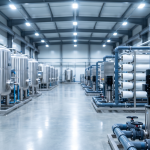
Deionization systems pull all the minerals from water, giving you the purest water possible. Also known as DI water, these systems can provide gallons of pure water for homes, businesses, or industrial uses.
What Are the Different Kinds of Water Deionization?
There are three main ways to deionize water. First, there’s co-current deionization. Here, both the water and the regeneration chemicals enter at the top of an ion exchange column, flow down together, and exit at the bottom.
The second type is counter-current deionization. In this method, water flows from the top, but the regeneration chemicals flow from the bottom. Or it can be the other way around, water from the bottom and chemicals from the top. This type takes less time to deionize compared to co-current, meaning fewer regenerations and lower costs.
Finally, we have mixed bed deionization. As the name suggests, this uses a 50/50 mix of cation and anion resin in a single ion exchange column. It’s a bit more complex, needing a trickier regeneration process, which means higher costs. Still, many choose it because it produces incredibly pure water.
Distilled vs. Deionized Water: A Quick Comparison
Many people want to know how distilled and deionized water stack up. If you’re one of them, here are a few key differences to keep in mind.
- Distillation has been around forever, since the 200s, but deionizing is a more recent invention, popping up in the mid-1900s.
- You can distill water at home with basic kitchen items, but deionizing requires very specific equipment. That’s why distilled water is so widely available, and sometimes the term gets used incorrectly.
- When it comes to energy, deionizing water is greener than distillation. Deionization only needs water flow, while distillation uses a lot of heating and cooling, which means much more energy.
- The resin beads used for deionization are reusable, making it a more eco-friendly process than distilling.
- Deionization often doesn’t remove organic stuff like viruses or bacteria. So, you might need an extra step, like UV light or ozone injection, after deionization.
FAQs About Deionized Water Vs. Distilled Water
Can I use distilled water instead of deionized water?
No, you can’t. Deionized water is different from distilled water. People often use the terms interchangeably, but they’re not the same. Their creation processes and applications are quite distinct.
What is deionized water used for?
Deionized water has several common uses. Two big ones are in engine cooling systems and for topping up lead-acid batteries. In cooling systems, the lack of minerals means minimal scale build-up, which helps extend the system’s life.
Can we drink deionized water?
It depends. Most deionized water is drinkable. However, not all of it is safe for people to consume. It’s always smart to check the label to make sure you can drink it without any worries!
Is distilled water better than regular water?
Distilled water is the purest form of water, that’s true. But that doesn’t automatically make it the healthiest choice for us. While it has no contaminants, it also lacks the helpful, naturally occurring electrolytes and minerals found in other types of water.
Got More Questions? Chat with the Experts at AMPAC USA
If you still have questions about deionized water vs. distilled water, reach out to the water quality experts at AMPAC USA. Since 1990, AMPAC USA has been designing, building, and maintaining reliable, cost-effective water treatment solutions for decades.
From seawater desalination systems to emergency portable watermakers, residential reverse osmosis to commercial reverse osmosis water, brackish water reverse osmosis to solar power water systems, and mobile water provisioning systems to industrial reverse osmosis systems, AMPAC USA does it all.
AMPAC USA also offers Type 1 laboratory water, water quality monitor systems, water softeners & conditioners, and wastewater treatment solutions. Pick the products you need and place an order today for quick deliveries. Our team will be happy to help you find the perfect solution for your pure water needs after asking a few simple questions.
For more details, visit https://www.ampac1.com/ or call +1 (909) 548-4900.
References:
https://excelwater.co.uk/latest-news/deionised-water-vs-distilled-water-whats-the-difference
https://blog.veoliawatertechnologies.co.uk/what-is-deionised-water
The Risks and Benefits of Deionized Water
https://www.healthline.com/nutrition/purified-vs-distilled-vs-regular-water
Related Articles
- Is Distilled Water Good for Babies? Everything Parents Need to Know
- Water Softeners for Well Water: Everything You Need to Know Before Buying
- Everything You Need to Know About Water Neutralization
- Water Fasting- Everything You Need to Know
Frequently Asked Questions
Is deionized water safe for human consumption?
While deionized water is pure and free of dissolved minerals, it is generally not recommended for long-term daily consumption. The deionization process removes beneficial minerals essential for human health, making it less suitable as a primary drinking source compared to mineralized water. For critical applications, AMPAC USA engineers ensure water purity meets specific industrial or scientific standards, not necessarily potable ones.
What are the primary industrial applications for deionized water?
Deionized water is crucial in industrial and scientific applications requiring ultra-pure water to prevent interference from mineral ions. This includes pharmaceutical manufacturing, laboratory experiments for repeatable results, electronics production, and boiler feed water in power generation to prevent scaling. AMPAC USA designs and manufactures systems specifically for these precise requirements across various industries.
How does deionized water differ from demineralized water?
Deionized water and demineralized water are often used interchangeably because the deionization process specifically removes dissolved mineral ions. This results in water free of salts and minerals, making both terms refer to water stripped of its mineral content. While the end result is similar, the purification methods can vary, with deionization typically using ion-exchange resins.
What specific impurities are removed during the water distillation process?
Distillation purifies water by boiling it, turning it into steam, and then condensing it back into liquid. This process effectively eliminates dissolved solids, heavy metals, bacteria, viruses, and common impurities like chlorine. The resulting distilled water is highly pure, making it suitable for applications where mineral and contaminant-free water is critical.
Why is it not advisable to drink distilled water exclusively for extended periods?
Drinking only distilled water long-term can be detrimental because the distillation process removes all naturally occurring beneficial minerals, such as calcium and magnesium, that are vital for human health. While safe for occasional consumption, consistent intake can lead to mineral deficiencies and potentially impact electrolyte balance over time. For daily hydration, water with balanced mineral content is preferred.
AMPAC USA engineers custom water purification systems for commercial, industrial, and emergency applications — from 500 GPD to multi-million GPD. Trusted by municipalities, military, and industry worldwide.