
Clean water. We take it for granted, don’t we? Until it’s gone. Then, everything stops. Emergency mobile water treatment solutions aren’t just “helpful”; they’re often the only thing standing between order and chaos. We’re talking systems designed for critical moments — natural disaster, infrastructure failure, or just a local water shortage. This guide from AMPAC USA breaks down what you need to know about getting reliable water when it matters most.
The Need for Emergency Mobile Water Treatment Systems in the Short Term
Sometimes, the need for emergency water treatment is short-lived. Days, maybe a few weeks. Think “boil water” advisories from local authorities. You’ve seen them. These often signal suspected bacterial contamination in the municipal supply.
That situation demands an RO emergency water treatment system. It’s the most reliable way to make contaminated water safe by removing bacteria. Our RO membranes, engineered with pores around 0.0001 microns, physically block bacteria and other impurities. This ensures genuinely pure, safe drinking water, free from microbial threats.
The Need for Emergency Water Treatment Systems in the Long Term
A water crisis isn’t always a quick fix. We’ve seen communities face long-term shortages, lasting months. No water for cooking, cleaning, basic hygiene. These shortages often stem from broader infrastructure issues — a major pipeline break, prolonged drought, or widespread power outage. When power fails, municipal pumps can’t maintain pressure. Water stops. That’s when a robust, long-term emergency system is critical.
Types of Impurities Treated by Emergency Water Treatment Systems
What kind of nasties do emergency systems handle? Plenty. Here’s a breakdown:
- Microbes
Microbial contaminants are a huge concern. Cysts, bacteria, viruses — unfiltered, they cause serious illness. While ceramic filters or chlorine were once used, RO membranes are far more effective. They physically block these microscopic invaders, like Giardia and Cryptosporidium, ensuring water is safe to drink with extreme reliability.
- Chemicals
Chemicals are another big one. Industrial runoff, pesticides, pharmaceuticals. Carbon filters helped, but modern RO technology is simply superior for removing a wide spectrum of dissolved chemical contaminants.
- TDS (Total Dissolved Solids)
Total Dissolved Solids (TDS) — salts, minerals, metals — are a growing problem, especially in brackish or coastal areas. We’ve seen TDS levels in the thousands of ppm. RO is the gold standard, reducing TDS to safe, palatable levels, typically 95-99% rejection.
- pH Levels
Beyond contaminant removal, an RO system also helps stabilize water’s pH, bringing it into a more neutral, acceptable range for consumption.
- Other Impurities and Imperfections
Ultimately, RO delivers water that’s not just safe, but genuinely pleasant to drink — tasteless, colorless, odorless. Virtually 99% contaminant-free.
The Usefulness of Emergency Mobile Water Treatment for Outdoor Enthusiasts
It’s not just large-scale emergencies. Hikers, campers, survivalists — outdoor enthusiasts need reliable, pure water. Many now turn to compact, RO-based emergency mobile water treatment systems. These units make water from almost any natural source safe, virtually contamination-free, on the spot.
The Need for Pure Water for Outdoor Enthusiasts
Heading into the backcountry? You cannot trust water just because it looks clear. Clear water can teem with pathogens. A pristine stream might have upstream access for livestock, wildlife, or people. Invisible contaminants like Giardia, E. coli, or Cryptosporidium — spread through waste — can ruin a trip. The more remote, often the higher the risk. Honestly, relying on visual inspection is a rookie mistake. Your best bet? A portable emergency mobile water treatment system. It traps virtually all contaminants, making water from nearly any source safe to drink.
Ways to Make Water Safe in Emergencies
- Chemical Treatments
Sure, you can purify water with chemicals. This traditional method often uses chlorine or iodine-based tablets/drops, designed to neutralize bacteria, viruses, and protozoa. Drop them in, wait, and they “do their magic.” They’re cheap, easy to pack, and a decent backup. But here’s the catch: they’re far from ideal as a main solution.
First, there’s a waiting period — 30 minutes to 4 hours — before water is safe. Precious time. Second, iodine-based treatments often leave a chemical taste, needing a separate neutralizer. More importantly, iodine is largely ineffective against Cryptosporidium. And honestly, we don’t recommend iodine for extended use, especially for pregnant women or those with thyroid conditions.
- Boiling Water
Boiling. Universally known. You need a heat source, fuel, a pot. Bring water to a rolling boil for at least one minute — at higher altitudes (above 6,500 feet or 2,000 meters), aim for three. This kills viruses, bacteria, most parasites, even in murky water. Simple, yes.
But serious drawbacks exist. You’ve got to carry fuel, stove, pot — not always practical. Time and effort? Boiling repeatedly for a group is a chore. You also wait for it to cool. And let’s be honest, boiled water often tastes flat. A pinch of salt per quart can help, but it’s another step.
If water is cloudy, pre-filter it through a clean cloth, paper towel, or coffee filter to remove sediment. Once clear, boil, cool, then store in a sanitized, tightly covered container. Clear water skips pre-filtration, but boiling and storage remain essential.
- Chemical Disinfectants (Bleach)
No stove? No iodine? Unscented household chlorine bleach (5.25%-8.25% sodium hypochlorite) can be a last resort. It’s effective against many viruses and bacteria. But a critical point: bleach won’t touch resistant parasites like Cryptosporidium or Giardia. And it’s completely useless if water is chemically contaminated.
Again, if cloudy, pre-filter. Then, follow the bleach label precisely. Generally, add specific drops per liter, stir, wait 30 minutes. Remember, colder, murkier, or colored water usually needs more bleach and longer contact time.
Chlorine dioxide tablets are another option, effective against Cryptosporidium — a big advantage. Just collect water and follow manufacturer’s directions. Always check active ingredients. Iodine-based tablets, for instance, aren’t recommended for long-term use, especially beyond a few weeks.
- Portable Filtration Systems (Especially RO)
Honestly, for true reliability, a portable, multi-stage emergency mobile water treatment system is your best bet. Forget chemicals and boiling. A good filter handles it all. Prioritize systems removing tough parasites like Giardia and Cryptosporidium. Portability is key. What we’ve found: a multi-stage Reverse Osmosis (RO) filter is the undisputed champion. It effectively eliminates virtually all impurities, delivering water that’s not just safe, but truly tasteless, colorless, and odorless. It’s the closest you’ll get to tap-quality water in an emergency.
Where to Get the Right Emergency Mobile Water Treatment System- AMPAC USA
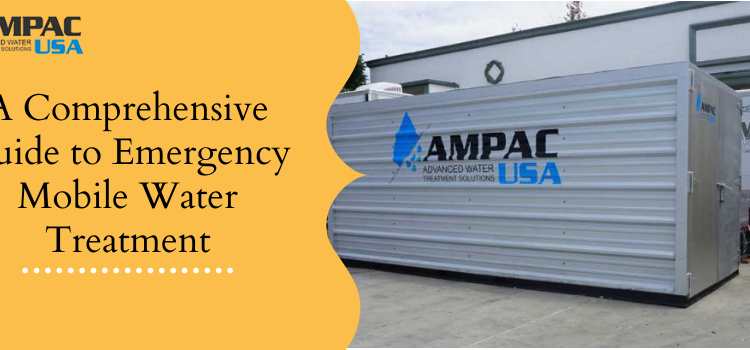
Finding the right emergency mobile water treatment system is critical. At AMPAC USA, we engineer solutions for real-world crises. Our range covers everything from compact, portable desalination units producing 150 GPD (570 liters per day) — for small teams — to modular, trailer-mounted systems delivering 250,000 GPD (946,250 liters per day). That larger capacity supplies roughly 430,000 people daily. Need more? We combine modules for massive-scale requirements, as we’ve done for municipalities.
In our 30+ years, AMPAC USA systems have proven their worth time and again. Reliability isn’t just a buzzword; it’s engineered into every unit. These systems are vital for surges in freshwater demand, sudden supply shortfalls, or failures of existing water infrastructure — from natural disasters to civil unrest. We build for the unexpected.
We specialize in robust, efficient Emergency Portable Seawater Desalination and Emergency Mobile Water Treatment systems, designed for rapid deployment during disaster relief or for critical supply on ships. Popular models include the Portable Emergency Seawater Desalination Watermaker 150GPD | 560LPD, the Mobile Seawater Desalination Watermaker System | SW100K-LX (perfect for marine applications), the Mobile Seawater Desalination Reverse Osmosis Watermaker 80,000 GPD (300m3/day) — the Mobile Seawater Desalination Plant | SW80K-LXC (a shipping container unit), and the Mobile Seawater Desalination Plant | SW100K-LXC, our turnkey solution.
Get in Touch to Get the Best- AMPAC USA
So what does this mean for you? If you need an emergency water treatment system, talk to us. Our engineers have decades of field experience — from offshore oil rigs to military bases — ready to guide you. We’ll pinpoint the exact system, ensuring it’s ready to ship when time is critical. Planning ahead? We can customize. Need solar power for a remote area? We’ve built those. We thrive on solving unique water purification challenges. Call us at 909-548-4900 or explore our emergency watermaker systems here.
References
- U.S. Environmental Protection Agency (EPA). National Primary Drinking Water Regulations. (General reference for drinking water standards).
- World Health Organization (WHO). Guidelines for Drinking-water Quality. (General reference for drinking water guidelines).
- Centers for Disease Control and Prevention (CDC). “Making Water Safe in an Emergency.” CDC. https://www.cdc.gov/healthywater/emergency/making-water-safe.html
- REI Co-op. “Water Treatment in the Backcountry.” REI Expert Advice. https://www.rei.com/learn/expert-advice/water-treatment-backcountry.html
- AMPAC USA. “Emergency Portable Watermakers.
Related Articles
- Need for Mobile Water Treatment Systems for Rural Areas
- How to Install a Reverse Osmosis Water Treatment Plant
- Mobile Solar water filtration Systems Purify Water in Remote Areas
- RO Systems in 2026: Technology Trends Reshaping Water Treatment
Frequently Asked Questions
When are emergency mobile water treatment systems needed?
Emergency mobile water treatment systems are essential during crises like natural disasters, man-made calamities, or severe water shortages. They provide critical access to pure water when municipal supplies are compromised, such as during boil water advisories or extended power outages that disrupt water distribution.
What types of impurities do emergency water treatment systems remove?
Emergency water treatment systems are designed to remove various impurities, primarily microbial contaminants like bacteria and cysts. Advanced RO systems, such as those from AMPAC USA, utilize fine membranes to ensure 100% contamination-free water, addressing health risks associated with impure water.
How do RO systems purify water during a boil water advisory?
During a boil water advisory, an RO Emergency Water Treatment system purifies water by forcing it through specialized membranes. These membranes have pores too small for bacteria and other microbial contaminants to pass, effectively trapping them and delivering safe, potable water without the need for boiling.
Can emergency water treatment systems provide water during long-term shortages?
Yes, emergency water treatment systems are crucial for long-term water shortages, which can last weeks or more. They ensure a continuous supply of pure water for essential daily needs like cooking, cleaning, and bathing, especially when issues like electricity loss disrupt conventional water distribution.
What expertise does AMPAC USA bring to emergency water treatment solutions?
AMPAC USA leverages over 30 years of experience designing and manufacturing advanced reverse osmosis systems. Our engineers possess direct field experience from installations on offshore oil rigs, military bases, and municipalities across 150+ countries, ensuring practical, trusted, and knowledgeable solutions for any emergency.
AMPAC USA engineers custom water purification systems for commercial, industrial, and emergency applications — from 500 GPD to multi-million GPD. Trusted by municipalities, military, and industry worldwide.