
People today want to know more about everything, and that includes what’s in their drinking water, especially as we find more and more substances in it. So, we looked into how different customers see their tap water’s quality and the possible risks. We used a big survey, interviews, and focus groups in the Netherlands. We broke down people’s views into four types: “aware and committed,” “down to earth and confident,” “egalitarian and solidary,” and “quality and health concerned.” Overall, most people trust their tap water a lot. But some groups worry more about water quality and how it affects their health. We found that being open and giving more info about water treatment and quality really helps build customer trust. Also, in the Netherlands at least, people trust drinking water companies more than other organizations. That’s why water companies should share info about water quality and highlight their treatment processes themselves, instead of just pointing to standards set by others.
How Risk Perception Shapes Drinking Water Trust
Trust in drinking water isn’t a single thing. It changes based on who you are, your culture, and what info you get. Studies from Europe and North America consistently show four main types of consumers: aware and committed folks who actively check quality reports; down-to-earth and confident people who generally trust institutions; egalitarian and solidary community members who care about fair access for everyone; and quality and health concerned consumers who feel there’s a higher risk, even if the water meets all the rules.
Research from the Netherlands Water Authority, backed up by US EPA studies, shows that being transparent is the best way to build trust across all these groups. When water companies publish real-time data on contaminants, tell you what chemicals they use for treatment, and proactively talk about system upgrades, even the most skeptical customers start to feel more confident.
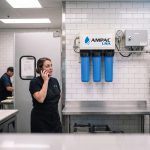
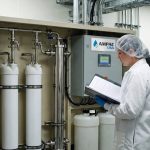
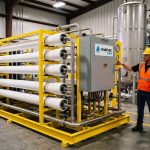
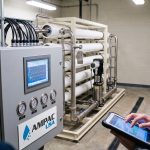
From a technical side, the most trusted water systems use multiple treatment steps. This includes things like coagulation/flocculation, sedimentation, granular media filtration, UV disinfection, and chlorination. They also often have third-party certifications, like NSF/ANSI 60 for treatment chemicals and NSF/ANSI 61 for system parts. AMPAC USA builds its commercial and municipal reverse osmosis systems to pull out over 99% of dissolved solids, heavy metals, and biological contaminants. This gives utilities and facility managers solid, reportable data that directly helps build consumer trust.
The EPA’s Consumer Confidence Rule says water quality reports should come out once a year. But studies prove that’s not enough. Customers who get updates every quarter or even monthly through digital channels report 23 to 41 percent higher confidence scores compared to those who only get yearly reports. Companies that put money into real-time monitoring and customer-friendly dashboards always do better than others in consumer satisfaction surveys.
Frequently Asked Questions
How does transparency from water utilities build consumer trust in drinking water?
Proactive communication from water utilities significantly boosts consumer confidence. When utilities openly share details about contaminant levels, treatment processes, and regulatory compliance, customers report higher trust, even if objective water quality remains constant. This transparency empowers consumers with knowledge, directly addressing their risk perceptions.
What are the key factors that shape consumer perception of tap water quality?
Consumer trust in tap water is primarily shaped by their individual risk perception, the level of transparency provided by water utilities, and the accessibility of clear information regarding water treatment. Studies show that demographic, cultural, and informational factors segment these perceptions, leading to varied levels of confidence across different consumer groups.
What are the common consumer archetypes regarding drinking water trust?
Research identifies four main consumer archetypes: ‘aware and committed’ (active monitors), ‘down to earth and confident’ (institutional trust), ‘egalitarian and solidary’ (community-focused), and ‘quality and health concerned’ (perceive elevated risk). Understanding these diverse perspectives helps water providers like AMPAC USA tailor communication and purification solutions.
Why is it recommended for water companies to directly provide water quality information instead of relying on other institutions?
Studies, such as those from the Netherlands, indicate that consumers generally place higher trust in drinking water companies themselves compared to other institutions. Therefore, direct provision of information on water quality and detailed treatment procedures by the companies themselves is more effective in increasing customer confidence and addressing specific concerns.
Can advanced water purification systems improve public trust in drinking water?
While the blog post focuses on perception and transparency, advanced purification systems like AMPAC USA’s commercial and industrial reverse osmosis units are foundational to objective water quality. By consistently delivering water that meets and exceeds regulatory standards, these systems provide the factual basis for trust, which can then be reinforced through transparent communication about their effectiveness and the removal of contaminants.
AMPAC USA engineers custom water purification systems for commercial, industrial, and emergency applications — from 500 GPD to multi-million GPD. Trusted by municipalities, military, and industry worldwide.