Home Products Industries Applications Solutions Support Insights Contact Us
Back to Blog
Nov 18, 2020·12 min read
blog 1439 unveiling complex responses at the molecular level transcrip

Unveiling complex responses at the molecular level: Transcriptional alterations by mixtures of bisphenol A, octocrylene, and 2′-ethylhexyl 4- (dimethylamino)benzoate on Chironomus riparius

Unveiling complex responses at the molecular level: Transcriptional alterations by mixtures of bisphenol A, octocrylene, and 2′-ethylhexyl 4- (dimethylamino)benzoate on Chironomus riparius

Quick Answer: Water softeners remove calcium and magnesium (hardness) via ion exchange, replacing them with sodium. Reverse osmosis (RO) systems remove a much broader range of contaminants — including hardness minerals, TDS, heavy metals, nitrates, and many organics — by forcing water through a semi-permeable membrane. For comprehensive water purification, RO is the more capable technology; for scale prevention alone, a softener is sufficient and less wasteful.

Abstract

Living organisms are exposed to mixtures of pollutants in the wild. Inland aquatic ecosystems contain many compounds from different sources that pollute the water column and the sediment. However, majority of toxicological research is focused on the effects of single exposures to toxicants. Furthermore, studies have been principally oriented toward ecologically relevant effects of intoxication, and lack an analysis of the cellular and molecular mechanisms involved in the response to toxicants. Effects of single, binary, and ternary mixtures of three compounds, bisphenol A, octocrylene, and 2′-ethylhexyl 4- (dimethylamino)benzoate, were assessed using a Real-Time PCR array. Forty genes, and additional six reference genes, were included in the array. The genes were selected based on their association with hormone responses, detoxification mechanisms, the stress response, DNA repair, and the immune system. The study was performed on Chironomus riparius, a benthic dipteran with an essential role in the food web. Transcriptional responses were assessed both 24 and 96 h post-exposure, to determinate short- and medium-term cellular responses. Individual fourth instar larvae were exposed to 0.1 and 1 mg/L of each of the toxic compounds and compound mixtures. A weak response was detected at 24 h, which was stronger in larvae exposed to mixtures than to individual toxicants. The response at 96 h was complex and principally involved genes related to the endocrine system, detoxification mechanisms, and the stress response. Furthermore, exposure to mixtures of compounds altered the expression patterns of an increased number of genes than did individual compound exposures, which suggested complex interactions between compounds affected the regulation of transcriptional activity. The results obtained highlight the importance of analyzing the mechanisms involved in the response to mixtures of compounds over extended periods and offer new insights into the basis of the physiological responses to pollution.

Keywords: Aquatic insect; Chironomids; Invertebrates; Mixture toxicity; Multi-stress; Transcriptional alterations.

The post Unveiling complex responses at the molecular level: Transcriptional alterations by mixtures of bisphenol A, octocrylene, and 2′-ethylhexyl 4- (dimethylamino)benzoate on Chironomus riparius appeared first on Facts About Water.

Source: Water Feed

What flow rates are available for emergency water treatment?

AMPAC USA's emergency systems range from 1,500 GPD portable units to 50,000+ GPD trailer-mounted systems. Military-specification units are available for forward operating base deployment, producing potable water meeting EPA and WHO drinking water standards from virtually any source.

Are emergency RO systems suitable for disaster relief operations?

Yes. AMPAC USA's emergency systems are used by FEMA, the U.S. military, and international NGOs for disaster relief. They treat flood water, contaminated groundwater, and brackish sources, removing bacteria, viruses, and chemical contaminants to produce safe drinking water on-site.

What power sources can emergency water purification systems use?

AMPAC USA's emergency systems can run on generator power (120/240V or 480V 3-phase), solar panels with battery backup, or vehicle power take-off (PTO). Low-power models consume as little as 0.5 kW, making them viable for off-grid deployment.

How durable are military-grade water purification systems?

AMPAC USA's military systems are built to MIL-SPEC standards with stainless steel frames, powder-coated components, and UV-resistant materials. They are designed to operate in temperatures from -20°F to 120°F and are vibration-tested for transport in military vehicles.

Conclusion

This post highlighted how emergency and military-grade water purification systems provide safe drinking water rapidly in the most challenging field conditions. For organizations requiring deployable water treatment capability, AMPAC USA engineers portable and trailer-mounted systems built to perform wherever they are needed. Contact our team at [email protected] or (909) 548-4900 to discuss your emergency water treatment requirements.

Water Softeners vs. Reverse Osmosis: Technical Comparison

Water softeners and reverse osmosis systems address fundamentally different water quality problems, though they are often compared because both are whole-home or point-of-use treatment technologies. A water softener uses ion exchange resin — typically sulfonated polystyrene beads charged with sodium ions — to swap calcium (Ca²⁺) and magnesium (Mg²⁺) ions that cause scale formation. The process does not reduce total dissolved solids (TDS); it replaces divalent cations with sodium, which some individuals on sodium-restricted diets must account for (approximately 35 mg of sodium per grain of hardness removed per gallon).

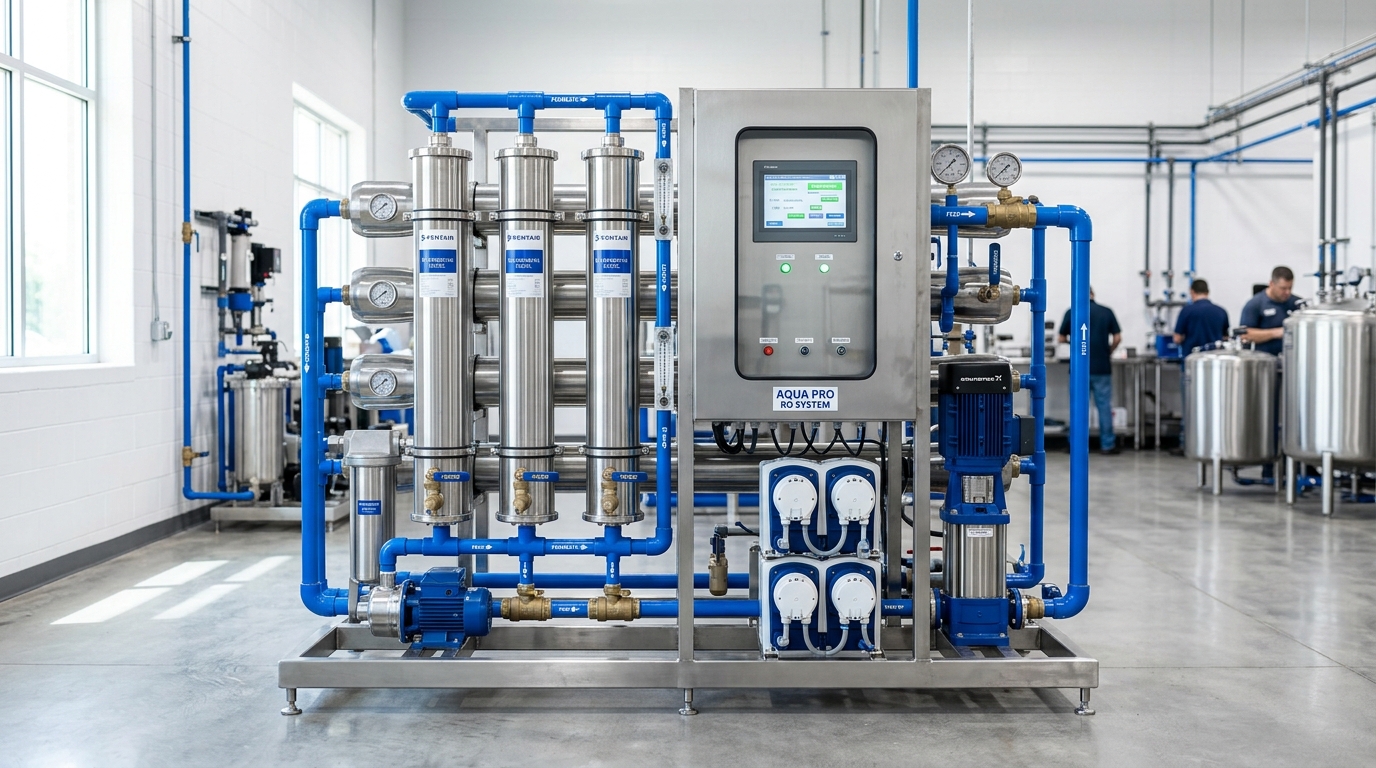
Reverse osmosis operates on a pressure-driven membrane separation principle. Water is forced at 40–80 PSI through a semipermeable polyamide thin-film composite (TFC) membrane with pores of approximately 0.0001 microns — small enough to reject 95–99% of dissolved solids including hardness minerals, heavy metals (lead, arsenic, chromium), nitrates, fluoride, sodium, and many pharmaceuticals. A standard RO system for residential use includes sediment pre-filtration, activated carbon pre-treatment (to protect the membrane from chlorine), the RO membrane, and a post-carbon polishing filter. Systems produce a concentrate (reject) stream at a typical ratio of 1:3 (product:waste) for standard membranes, though high-efficiency membranes can achieve 1:1 ratios.

For scale protection in a commercial or industrial context, softening upstream of an RO system is often the optimal approach — hardness ions are the primary cause of scaling on RO membranes (calcium carbonate and calcium sulfate scale), so softening pre-treatment extends membrane life and reduces chemical antiscalant dosing. AMPAC USA designs integrated softener-RO systems for industrial process water, food service, and pharmaceutical applications where both scale control and high purity output are required.

Q: Does reverse osmosis remove hardness minerals?

A: Yes. RO membranes reject 95–99% of dissolved calcium and magnesium, effectively softening water. However, the very low mineral content of RO water (near 0 TDS) may require remineralization for drinking quality preferences.

Q: Which system wastes more water — softener or RO?

A: Traditional RO systems reject 2–4 gallons of concentrate per 1 gallon of product water. Water softeners use water for backwash regeneration (30–50 gallons per cycle). Both have waste streams; high-efficiency RO membranes and demand-initiated softener controls minimize waste.

Q: Can I use a water softener and RO together?

A: Yes — this is a recommended combination for high-hardness water feeding an RO system. Softening upstream of RO prevents calcium carbonate and sulfate scaling on the RO membrane, extending its life significantly.

Q: Is softened water safe to drink?

A: Softened water is safe for most people. However, the added sodium (exchanged for hardness minerals) may be a concern for individuals on low-sodium diets. Bypassing the softener for a cold drinking water line or using RO for drinking water addresses this.

Q: How long do RO membranes last?

A: With proper pre-filtration and water chemistry management, RO membranes typically last 2–5 years in residential use. Commercial membranes with proper antiscalant treatment can last 3–7 years. Pre-filters require replacement every 6–12 months.

Q: What contaminants does RO not remove?

A: RO has limitations with certain dissolved gases (CO₂, H₂S, radon) and some low-molecular-weight organics. Very small organic molecules below the membrane rejection threshold may pass through. Carbon post-filtration addresses taste and odor compounds.

Water Softeners vs. Reverse Osmosis: Technical Comparison

Water softeners and reverse osmosis systems address fundamentally different water quality problems, though they are often compared because both are whole-home or point-of-use treatment technologies. A water softener uses ion exchange resin — typically sulfonated polystyrene beads charged with sodium ions — to swap calcium (Ca²⁺) and magnesium (Mg²⁺) ions that cause scale formation. The process does not reduce total dissolved solids (TDS); it replaces divalent cations with sodium, which some individuals on sodium-restricted diets must account for (approximately 35 mg of sodium per grain of hardness removed per gallon).

Reverse osmosis operates on a pressure-driven membrane separation principle. Water is forced at 40–80 PSI through a semipermeable polyamide thin-film composite (TFC) membrane with pores of approximately 0.0001 microns — small enough to reject 95–99% of dissolved solids including hardness minerals, heavy metals (lead, arsenic, chromium), nitrates, fluoride, sodium, and many pharmaceuticals. A standard RO system for residential use includes sediment pre-filtration, activated carbon pre-treatment (to protect the membrane from chlorine), the RO membrane, and a post-carbon polishing filter. Systems produce a concentrate (reject) stream at a typical ratio of 1:3 (product:waste) for standard membranes, though high-efficiency membranes can achieve 1:1 ratios.

For scale protection in a commercial or industrial context, softening upstream of an RO system is often the optimal approach — hardness ions are the primary cause of scaling on RO membranes (calcium carbonate and calcium sulfate scale), so softening pre-treatment extends membrane life and reduces chemical antiscalant dosing. AMPAC USA designs integrated softener-RO systems for industrial process water, food service, and pharmaceutical applications where both scale control and high purity output are required.

Q: Does reverse osmosis remove hardness minerals?

A: Yes. RO membranes reject 95–99% of dissolved calcium and magnesium, effectively softening water. However, the very low mineral content of RO water (near 0 TDS) may require remineralization for drinking quality preferences.

Q: Which system wastes more water — softener or RO?

A: Traditional RO systems reject 2–4 gallons of concentrate per 1 gallon of product water. Water softeners use water for backwash regeneration (30–50 gallons per cycle). Both have waste streams; high-efficiency RO membranes and demand-initiated softener controls minimize waste.

Q: Can I use a water softener and RO together?

A: Yes — this is a recommended combination for high-hardness water feeding an RO system. Softening upstream of RO prevents calcium carbonate and sulfate scaling on the RO membrane, extending its life significantly.

Q: Is softened water safe to drink?

A: Softened water is safe for most people. However, the added sodium (exchanged for hardness minerals) may be a concern for individuals on low-sodium diets. Bypassing the softener for a cold drinking water line or using RO for drinking water addresses this.

Q: How long do RO membranes last?

A: With proper pre-filtration and water chemistry management, RO membranes typically last 2–5 years in residential use. Commercial membranes with proper antiscalant treatment can last 3–7 years. Pre-filters require replacement every 6–12 months.

Q: What contaminants does RO not remove?

A: RO has limitations with certain dissolved gases (CO₂, H₂S, radon) and some low-molecular-weight organics. Very small organic molecules below the membrane rejection threshold may pass through. Carbon post-filtration addresses taste and odor compounds.

Water Softeners vs. Reverse Osmosis: Technical Comparison

Water softeners and reverse osmosis systems address fundamentally different water quality problems, though they are often compared because both are whole-home or point-of-use treatment technologies. A water softener uses ion exchange resin — typically sulfonated polystyrene beads charged with sodium ions — to swap calcium (Ca²⁺) and magnesium (Mg²⁺) ions that cause scale formation. The process does not reduce total dissolved solids (TDS); it replaces divalent cations with sodium, which some individuals on sodium-restricted diets must account for (approximately 35 mg of sodium per grain of hardness removed per gallon).

Reverse osmosis operates on a pressure-driven membrane separation principle. Water is forced at 40–80 PSI through a semipermeable polyamide thin-film composite (TFC) membrane with pores of approximately 0.0001 microns — small enough to reject 95–99% of dissolved solids including hardness minerals, heavy metals (lead, arsenic, chromium), nitrates, fluoride, sodium, and many pharmaceuticals. A standard RO system for residential use includes sediment pre-filtration, activated carbon pre-treatment (to protect the membrane from chlorine), the RO membrane, and a post-carbon polishing filter. Systems produce a concentrate (reject) stream at a typical ratio of 1:3 (product:waste) for standard membranes, though high-efficiency membranes can achieve 1:1 ratios.

For scale protection in a commercial or industrial context, softening upstream of an RO system is often the optimal approach — hardness ions are the primary cause of scaling on RO membranes (calcium carbonate and calcium sulfate scale), so softening pre-treatment extends membrane life and reduces chemical antiscalant dosing. AMPAC USA designs integrated softener-RO systems for industrial process water, food service, and pharmaceutical applications where both scale control and high purity output are required.

Frequently Asked Questions

Q: Does a water softener purify water?

A: No. A water softener only removes hardness (calcium and magnesium) via ion exchange. It does not remove chlorine, heavy metals, nitrates, bacteria, or most other contaminants. For purification, RO or additional filtration is needed.

Q: Does reverse osmosis remove hardness minerals?

A: Yes. RO membranes reject 95–99% of dissolved calcium and magnesium, effectively softening water. However, the very low mineral content of RO water (near 0 TDS) may require remineralization for drinking quality preferences.

Q: Which system wastes more water — softener or RO?

A: Traditional RO systems reject 2–4 gallons of concentrate per 1 gallon of product water. Water softeners use water for backwash regeneration (30–50 gallons per cycle). Both have waste streams; high-efficiency RO membranes and demand-initiated softener controls minimize waste.

Q: Can I use a water softener and RO together?

A: Yes — this is a recommended combination for high-hardness water feeding an RO system. Softening upstream of RO prevents calcium carbonate and sulfate scaling on the RO membrane, extending its life significantly.

Q: Is softened water safe to drink?

A: Softened water is safe for most people. However, the added sodium (exchanged for hardness minerals) may be a concern for individuals on low-sodium diets. Bypassing the softener for a cold drinking water line or using RO for drinking water addresses this.

Q: How long do RO membranes last?

A: With proper pre-filtration and water chemistry management, RO membranes typically last 2–5 years in residential use. Commercial membranes with proper antiscalant treatment can last 3–7 years. Pre-filters require replacement every 6–12 months.

Q: What contaminants does RO not remove?

A: RO has limitations with certain dissolved gases (CO₂, H₂S, radon) and some low-molecular-weight organics. Very small organic molecules below the membrane rejection threshold may pass through. Carbon post-filtration addresses taste and odor compounds.

Scroll to Top