
Reverse osmosis does its job almost too well. The same membrane process that removes lead, arsenic, PFAS, and nitrates also strips out calcium, magnesium, and potassium – the beneficial minerals that give water its taste and contribute to your dietary mineral intake. Understanding how to remineralize reverse osmosis water correctly is the step that takes an RO system from “technically pure” to truly complete.
Why RO Water Loses Its Minerals
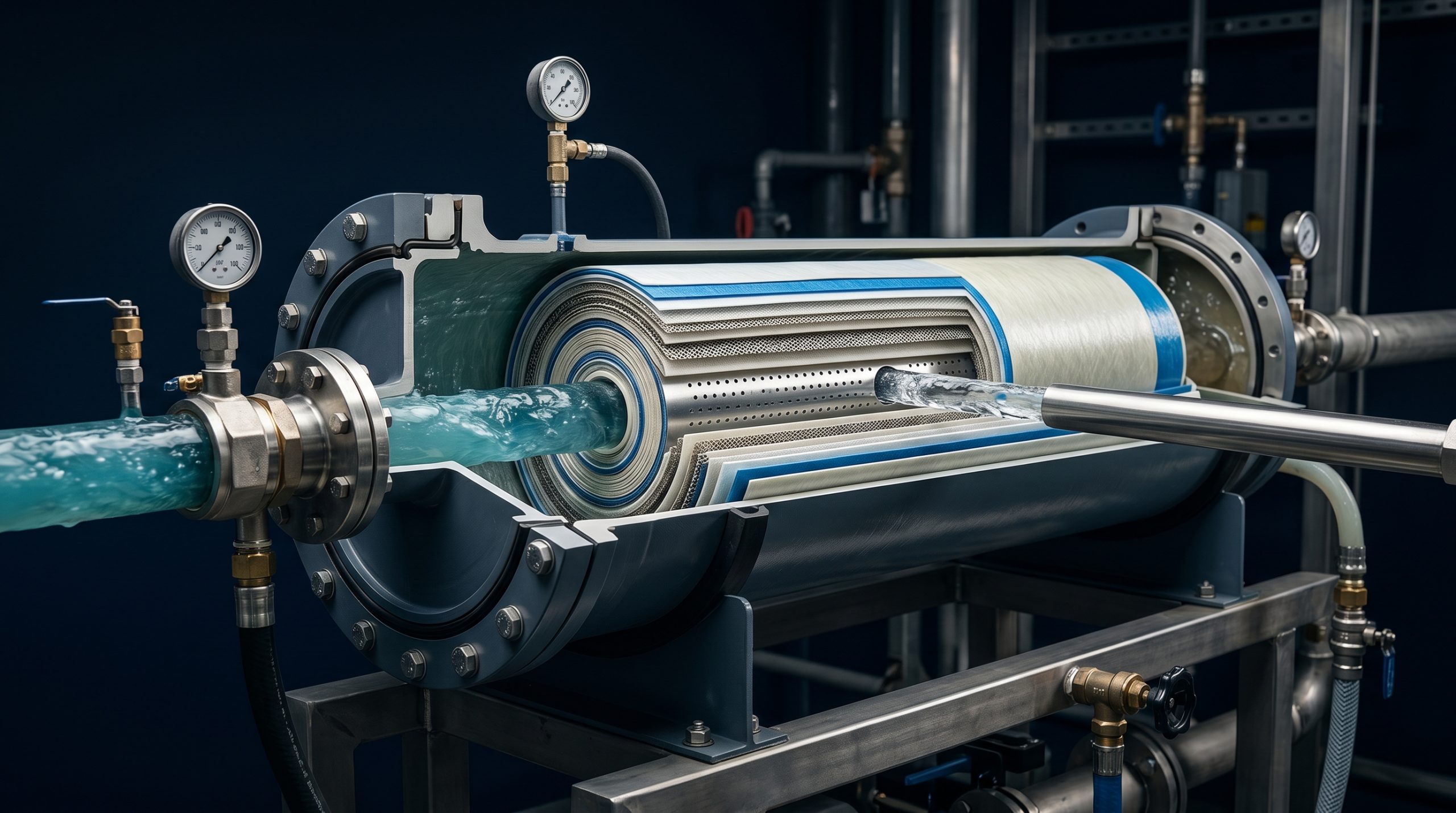
RO membranes reject contaminants based on molecular size and ionic charge, not chemical identity. Calcium (Ca²⁺) and magnesium (Mg²⁺) are divalent cations – they have the same size and charge profile as many contaminants. A well-functioning RO membrane rejects 95-99% of them along with everything else dissolved in the water.
The result: RO permeate with very low TDS (typically 10-50 ppm vs. 150-500 ppm for typical tap water). This water is:
- Slightly acidic (pH 6.0-6.8, from dissolved CO₂ without mineral buffering)
- Described by many people as “flat” or “hollow” in taste
- Missing the mineral contribution that water normally provides to diet
Does Remineralized RO Water Actually Matter for Health?
For most adults in developed countries with varied diets, the short answer is: somewhat. Water typically contributes 5-20% of daily calcium and magnesium intake. Most of the rest comes from food. If your diet is mineral-rich (dairy, leafy greens, nuts, legumes), you’re probably getting adequate minerals regardless of whether your water is remineralized.
That said, the World Health Organization has reviewed the evidence and published guidance suggesting that long-term consumption of very low-TDS water may carry increased risk of mineral deficiency symptoms, particularly in populations where diet is limited or in children with high mineral demands.
For most practical purposes, remineralization matters more for two reasons: taste and pH balance. Low-TDS acidic water tastes noticeably flat and can be corrosive to teeth enamel over time at consistently low pH. Remineralization addresses both.
Method 1: Inline Remineralization Cartridge (Most Common)
A post-RO remineralization cartridge installs in the filter housing after the RO membrane, typically as the last stage before the faucet. The cartridge contains mineral media – usually calcite (calcium carbonate) or a calcite/magnesium oxide blend – that slowly dissolves into the water as it flows through.
What it adds: Calcium, magnesium (if blended), carbonate alkalinity
pH result: Raises from ~6.5 to 7.0-8.5 depending on contact time and media composition
TDS added: 50-150 ppm typically
Cost: $20 – $50 per cartridge, replaced every 6-12 months
Effort: Zero – passive process, no manual mixing
This is the standard approach for home RO systems and is what most multi-stage RO systems include when they advertise a “remineralization stage.” It’s reliable, convenient, and produces water in the 7.0-8.5 pH range with naturally balanced mineral content.
Method 2: Alkaline Filter Cartridge
Similar to calcite cartridges but often blended with additional media (maifan stone, tourmaline, ORP-enhancing ceramics). These cartridges raise pH, add minerals, and in some cases claim to improve oxidation-reduction potential (ORP). The additional media beyond calcite/magnesium has limited scientific evidence for distinct benefits, but the cartridges do work for their primary remineralization function.
Cost and convenience are similar to standard calcite cartridges.
Method 3: Mineral Concentrate Drops
Concentrated mineral solutions added directly to water at the time of use. Popular options: ConcenTrace Trace Mineral Drops (sea mineral concentrate), Volvic water minerals, or custom-blended solutions for specific applications.
Advantages: Precise control over mineral levels; can target specific minerals (useful for aquariums, specialty brewing, hydroponic applications)
Disadvantages: Manual addition every time you fill a glass or container; requires attention to dosing

Best for: coffee enthusiasts who want specific brewing profiles (e.g., matching the water chemistry of a specific origin region), aquarium hobbyists, and hydroponic growers who need precise EC control.
Method 4: Blending with Hard Tap Water
In systems where partial RO blending is feasible, combining RO permeate with a controlled volume of untreated hard water achieves a target TDS. This approach is used in some food and beverage processing operations and large-scale water systems but is less practical for residential use where you’d be reintroducing the contaminants you installed the RO system to remove.
Not recommended for residential drinking water where the feed water contains lead, PFAS, or other priority contaminants.
Method 5: Baking Soda (for pH Only)
Sodium bicarbonate (baking soda) raises water pH without adding calcium or magnesium. If your only goal is reducing water acidity, 1/8 teaspoon per gallon of RO water raises pH to approximately 7.5-8.0. This doesn’t address mineral content – it only addresses pH.
Relevant for specific applications (certain cooking methods, some health-focused preferences) but not a comprehensive remineralization solution.
Which Minerals to Restore and at What Level
For general drinking water, a practical target is 75-150 ppm TDS after remineralization, pH 7.0-8.5. A calcite remineralization cartridge running at manufacturer-specified flow rates will put you in this range without active monitoring.
For specific applications:
- Coffee (Specialty Coffee Association guidance): Target 50-175 ppm temporary hardness, 10-85 ppm magnesium for best extraction. Many serious home baristas use custom mineral blends.
- Aquariums: Species-specific. Tropical freshwater fish typically 100-250 ppm TDS; cichlids 250-450 ppm; soft-water tetras 50-150 ppm.
- Hydroponics and cannabis: Start with 0-50 ppm RO base water, add nutrients to reach 700-2,500 ppm EC target depending on growth stage. Cal-Mag supplementation is mandatory.
- Cooking and baking: Standard remineralized RO water at 75-150 ppm is functionally identical to most culinary applications.
Does a Remineralization Stage Come Standard with RO Systems?
It depends on the system and configuration. Many entry-level 4-stage RO systems do not include remineralization. 5-stage, 6-stage, and higher systems often include an alkaline or calcite stage as the final cartridge. When comparing systems, check whether the remineralization stage is included or is an optional upgrade.
For homes where drinking RO water is the primary use case, the minimal additional cost (~$30-50 cartridge plus housing) makes remineralization a worthwhile addition to any system that doesn’t already include it.
AMPAC USA’s residential RO systems are available with optional alkaline remineralization stages – delivering both the contaminant removal of reverse osmosis and the mineral-balanced water quality that supports good taste and long-term health.
Related: If you need a system with remineralization built in, see AMPAC USA alkaline water store reverse osmosis systems. For replacement filters including alkaline stages, see the AP5K-ALK replacement filter kit.
Related: If you need a system with remineralization built in, see AMPAC USA alkaline water store reverse osmosis systems. For replacement filters including alkaline stages, see the AP5K-ALK replacement filter kit.
Related Articles
- Whole House Reverse Osmosis System for Commercial & Industrial Water Treatment
- Cannabis Water Treatment: Why Commercial Grows Use Reverse Osmosis
- Brackish Water Reverse Osmosis Systems: What They Are and When You Need One
- Conserving Commercial Reverse Osmosis Water in COVID19 Times
Frequently Asked Questions
Why is remineralizing RO water important for health?
RO water removes up to 99% of impurities but also essential minerals like calcium and magnesium. Remineralization is crucial because long-term consumption of demineralized water can lead to electrolyte imbalance and reduced mineral intake. It restores these vital minerals, enhancing taste, balancing pH, and supporting overall physiological needs.
What specific minerals do remineralization filters add back to RO water?
High-quality remineralizing RO systems reintegrate a strategic blend of essential minerals. These typically include calcium (Ca²⁺) for bone health, magnesium (Mg²⁺) for metabolic functions, potassium (K⁺) for hydration, and bicarbonates (HCO₃⁻) to balance pH and support digestion. Sodium (Na⁺) is also added in controlled concentrations to maintain electrolyte balance.
How do RO remineralization filters integrate into an existing system?
RO remineralization filters are typically placed as the final stage in a reverse osmosis system. They function through contact-based media, such as calcite or Corosex, which slowly release minerals into the purified water as it passes through. This design ensures the water exiting the system maintains an optimal mineral balance and a refreshing taste.
What is the ideal pH range for remineralized RO water?
The design of AMPAC USA’s remineralization systems ensures that the water exiting the RO system maintains an optimal pH balance, ideally between 6.5 and 8.5. This range is crucial for both taste and health benefits, as it transforms sterile RO water into nutritionally beneficial and refreshing hydration.
What materials are commonly used in RO remineralization filter cartridges?
Common materials found in RO remineralization filter cartridges include calcite (calcium carbonate), which raises water pH and adds calcium, and Corosex (magnesium oxide), which enhances magnesium content and pH. Dolomite is also used as a mineral blend providing both calcium and magnesium, while some cartridges utilize ceramic or volcanic media for sustained mineral infusion.
How do you remineralize reverse osmosis water at home?
The remineralisation of water starts with a post-RO mineral cartridge or alkaline filter installed after the membrane stage – as tap water flows through it, calcium, magnesium, and trace minerals are added back before the water reaches your tap. A remineralize water filter is the simplest option for most homeowners; mineral drops work too but require manual dosing each time you fill a container.
What is a remineralizing reverse osmosis water filtration system?
A remineralizing reverse osmosis water filtration system pairs a standard multi-stage RO unit with an added mineral or alkaline cartridge, so the same system that removes contaminants and heavy metals also restores beneficial minerals before the water leaves the faucet. This differs from a plain RO system, which produces demineralized water unless a remineralization stage is added.
Tell us which system you run and what you want in the glass. We will point you to the post-filter or alkaline option that fits your unit.
Related: Alkaline RO drinking water filter | 5-stage RO drinking water filter | Replacement filters