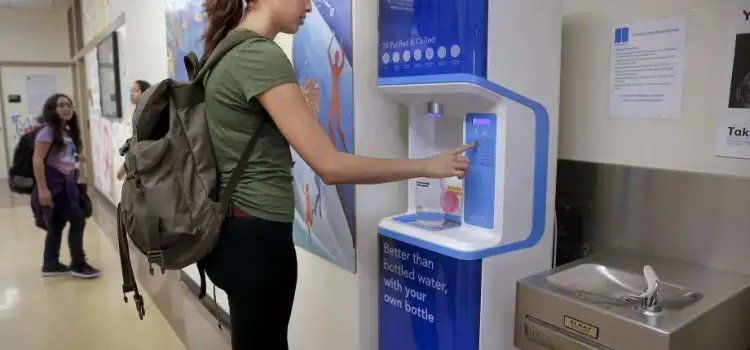

Water coolers installed in public places deliver filtered, temperature-controlled drinking water at the point of use, eliminating dependence on single-use plastic bottles and reducing microbial contamination risks associated with stagnant tap outlets. Modern units combine sediment pre-filtration, activated carbon, and UV disinfection to meet EPA and WHO drinking-water standards. Studies consistently show that accessible public hydration stations increase daily water intake and reduce heat-related illness in high-footfall environments.
Public places like libraries, malls, bus stations, railways stations, cinema, airports, etc. are widely visited and accessed by the members of the public in general. People who shop around in the malls, enjoy a movie in the cinema, or simply read books/journals in the library often feel thirsty and that thirst can only be quenched by a glass of sparkling clean and pure water!
The children who play in the alleys of airports, railway stations often get tired and demand a glass of cold or semi-cold water. Similarly, elderly people also need water from time to time. Young adults need to refresh themselves more often too.
Hence, we see a huge necessity of water coolers installed in public places. As a thumb rule, it is the responsibility of the municipal authorities to make available such water coolers at the public places. The water coolers available these days come in wide variety and are loaded with numerous features, which are well customizable as per the need of the locations. Places like offices and libraries make- do with medium capacity water coolers and malls, cinemas, schools etc. need ‘big boys’ to serve the thirst purposes!
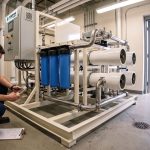
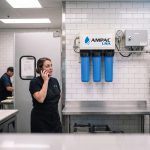
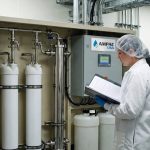
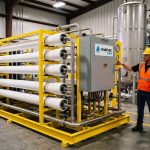
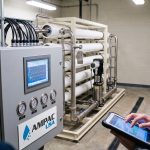
For last twenty years, AMPAC USA has been designing, developing and manufacturing some world-class water cooler-cum- purifier systems that have extended great benefits to the society and humans from all walks of life. Not only that these water coolers are available in various sizes and capacities, these machines are well-equipped with components that assure a free and smooth flow of fresh water round the clock!
For more information on the water purification systems of AMPAC USA, kindly visit the official website or call 24×7 toll-free number +1 (877) 611-8530 now!
Why Public Water Coolers Are a Public-Health Infrastructure Priority
Access to clean drinking water in public spaces — airports, schools, hospitals, parks, and transit hubs — directly affects population health outcomes. The World Health Organization estimates that globally, over two billion people lack access to safely managed drinking water, and even in developed nations, aging distribution infrastructure creates localized contamination risks at the tap. Point-of-use (POU) water coolers address this last-meter problem by treating water at the dispensing point rather than relying solely on distribution-line integrity.
Filtration Technologies Used in Commercial Water Coolers
A properly specified public water cooler integrates multiple treatment barriers:
- Sediment pre-filter (5-20 um): Removes particulate matter, rust, and suspended solids that cause turbidity and accelerate downstream filter wear.
- Granular activated carbon (GAC) or carbon block: Adsorbs chlorine, chloramines, and organic compounds including many PFAS precursors, improving taste and odour while reducing disinfection by-products (DBPs).
- UV-C disinfection (254 nm): Provides a chemical-free kill step against bacteria, viruses, and protozoa at the dispense point, critical in high-traffic locations where biofilm formation is a risk.
- Reverse osmosis (optional): Required in areas with elevated TDS, nitrates, or heavy metals; reduces hardness to prevent scale and protects mechanical components.
Environmental and Economic Case
A single high-capacity public cooler serving 200 users per day displaces approximately 73,000 single-use plastic bottles per year. At an average plastic bottle cost of $1.50, this represents over $109,000 in annual consumer savings per unit deployed. Municipalities and facility operators increasingly factor life-cycle cost analysis — capital, maintenance, and filter replacement — against the direct and indirect costs of bottled water distribution.
Maintenance and Compliance Standards
NSF/ANSI 42 (aesthetic effects) and NSF/ANSI 53 (health effects) certifications are the baseline for public-use cooler filtration components in the United States. Regular sanitisation cycles, filter change tracking, and water-quality monitoring logs are required under most municipal procurement contracts to demonstrate ongoing compliance.
Frequently Asked Questions
What are the primary benefits of installing water coolers in public spaces?
Public water coolers provide immediate access to filtered, temperature-controlled drinking water, significantly reducing reliance on single-use plastic bottles and minimizing microbial contamination risks. They consistently increase daily water intake among the public, helping to prevent heat-related illnesses in high-footfall environments.
What purification technologies do modern public water coolers utilize?
Modern public water coolers typically integrate multi-stage purification systems, including sediment pre-filtration to remove particulates, activated carbon for chemical and taste improvement, and UV disinfection to eliminate bacteria and viruses. These advanced systems are engineered to meet stringent EPA and WHO drinking-water standards, ensuring safe and clean hydration.
Who typically bears the responsibility for providing public drinking water stations?
As a general rule, municipal authorities are responsible for ensuring the availability of public water coolers in common areas. Additionally, operators of high-traffic facilities such as airports, schools, hospitals, and transit hubs often take on this responsibility to support public health and convenience.
How do public water coolers support overall public health infrastructure?
Public water coolers are a critical component of public health infrastructure by providing reliable access to clean, safe drinking water, which is fundamental to population well-being. They actively promote hydration, reduce the spread of waterborne diseases, and mitigate heat-related health issues, especially in densely populated areas.
What factors should be considered when selecting a water cooler for high-traffic public areas?
For high-traffic public areas, prioritize units with robust, multi-stage filtration (sediment, carbon, UV), appropriate capacity for continuous demand, and durable components ensuring round-the-clock operation. AMPAC USA, with over 20 years of experience, designs customizable systems that meet diverse needs, from medium-capacity units for libraries to ‘big boys’ for malls and airports.
Related Articles
- Epidemics caused by contamination of drinking water supplied by public water supply systems in terms of current legislation
- Review of perchlorate occurrence in large public drinking water systems in the United States of America
- Car Wash Water Filtration: Spot-Free RO Systems Sizing and Cost Guide
- Solar-Powered Water Purification: The Complete Off-Grid Solutions Guide 2026
AMPAC USA engineers custom water purification systems for commercial, industrial, and emergency applications — from 500 GPD to multi-million GPD. Trusted by municipalities, military, and industry worldwide.