Epidemics caused by contamination of public water supply systems occur when treatment or distribution failures allow pathogens — including Cryptosporidium, Giardia, E. coli O157:H7, Legionella, and norovirus — to reach consumers at infectious doses; the 2000 Walkerton, Canada outbreak (seven deaths, 2,300 ill from E. coli/Campylobacter) and the 1993 Milwaukee Cryptosporidium outbreak (403,000 ill) remain landmark cases defining regulatory reform. Multi-barrier protection — source water protection, coagulation-filtration, disinfection, and distribution system integrity — combined with real-time monitoring and rapid response protocols, is the globally accepted framework for epidemic prevention under WHO guidelines and the U.S. Safe Drinking Water Act.
- Central Institute for Supervising and Testing in Agriculture, Brno, Czech Republic
Abstract:
Objectives. This paper describes and comments on contemporary legislation concerning prevention of epidemics caused by contaminated drinking water from public water supplies in the Czech Republic. Methods. Suggestions are made for removing existing legislative shortcomings, clarifying diction of existing laws and expanding sanctions and penalties for health injury caused by providers and operators of public drinking water. Results. The author reflects on improving legislation concerning the compensation of victims of contaminated water with reference to the aftermath of a local epidemic in the Dejvice District of Prague. Conclusion. The issues raised should be addressed since better legislation can significantly contribute to the limitation of water-borne epidemics and their consequences.
The post Epidemics caused by contamination of drinking water supplied by public water supply systems in terms of current legislation appeared first on Facts About Water.
Source: Water Feed
Waterborne Disease Outbreaks: Epidemiology, Causation, and Legislative Response
Waterborne disease outbreaks (WBDOs) via public water supply represent a category of public health emergency with potential for rapid, large-scale morbidity. Unlike foodborne outbreaks that cluster around specific consumption events, WBDOs affect all users of a distribution system simultaneously, compress the exposure-to-onset timeline, and overwhelm local healthcare infrastructure. The CDC Waterborne Disease and Outbreak Surveillance System (WBDOSS) has documented over 1,000 WBDOs in the United States since 1971, with drinking water systems accounting for approximately 45% of all reported cases.
Primary Causative Agents and Their Treatment Implications
Regulatory and epidemiological data identify distinct pathogen profiles for different outbreak types:
- Cryptosporidium parvum: The single most common cause of large WBDOs in filtered surface water systems. Chlorine resistant; requires UV irradiation (at least 3 mJ/cm2) or ozonation for inactivation. The Milwaukee 1993 outbreak resulted from a treatment failure at a filtered plant serving 800,000 people.
- E. coli O157:H7 and Campylobacter: Associated with unchlorinated or under-chlorinated groundwater systems and distribution system intrusion events. The Walkerton outbreak resulted from heavy rainfall mobilising agricultural runoff into an inadequately monitored well.
- Legionella pneumophila: Not typically a treatment failure pathogen; colonises warm distribution system segments, cooling towers, and premise plumbing. Requires water management programmes (WMPs) under ASHRAE 188 and CDC Model Aquatic Health Code frameworks.
- Norovirus and hepatitis A: Associated with groundwater contamination and sewage intrusion into distribution systems; both are inactivated by standard chlorination practices when residuals are maintained.
Legislative Frameworks and Their Limitations
The U.S. Safe Drinking Water Act (SDWA) and its amendments establish a comprehensive legal framework for public water system regulation, including the Surface Water Treatment Rule, the Long-Term 2 Enhanced Surface Water Treatment Rule (LT2ESWTR), and the Ground Water Rule — each developed in direct response to documented outbreak events. However, legislative coverage has historically lagged outbreak identification by years to decades. Small systems (serving fewer than 10,000) have extended compliance timescales and reduced monitoring frequency, creating systematic vulnerability gaps. In the EU, the revised Drinking Water Directive (2020/2184) introduced a risk-based approach — water safety plans (WSPs) modelled on WHO guidelines — as a more dynamic alternative to prescriptive MCL compliance.
Early Warning and Response Systems
Modern outbreak prevention infrastructure includes continuous turbidity monitoring (a sentinel indicator for filtration failure), online pathogen detection using quantitative PCR or flow cytometry at water treatment plants, enhanced distribution system sampling protocols, and epidemiological syndromic surveillance linking emergency department visits with service area geography. Utilities serving large populations increasingly integrate automated anomaly detection into SCADA systems to flag treatment deviations in real time.
Frequently Asked Questions
What was the largest waterborne disease outbreak from a public water supply?
The 1993 Milwaukee Cryptosporidium outbreak is the largest documented WBDO in U.S. history, with approximately 403,000 people falling ill and at least 69 deaths among immunocompromised individuals. It was caused by Cryptosporidium oocysts passing through a malfunctioning conventional filtration plant on the Milwaukee River intake.
Why is Cryptosporidium particularly difficult to eliminate from drinking water?
Cryptosporidium oocysts are highly resistant to chlorine-based disinfection at practical doses. Effective inactivation requires UV irradiation at a minimum fluence of 3 mJ/cm2, ozonation, or chlorine dioxide. The EPA LT2ESWTR mandated additional Cryptosporidium treatment for higher-risk surface water systems based on source water monitoring data.
How do distribution system failures cause waterborne disease outbreaks?
Distribution system intrusion events — caused by pressure transients, main breaks, cross-connections, or back-siphonage — can allow sewage or soil contamination to enter treated water. Even with effective plant-level treatment, loss of disinfectant residual in aging pipe networks creates vulnerability windows between treatment and the consumer tap.
What is a Water Safety Plan and how does it prevent outbreaks?
A Water Safety Plan (WSP) is a systematic, risk-based framework developed by the WHO that identifies hazards and hazardous events throughout the water supply chain — from catchment to consumer — and implements proportionate control measures. WSPs are now mandated under the EU Drinking Water Directive and are voluntarily adopted by progressive utilities worldwide.
Are small public water systems more likely to cause waterborne disease outbreaks?
Yes. CDC surveillance data consistently shows that groundwater systems and systems serving fewer than 1,000 people account for a disproportionate share of reported WBDOs. Contributing factors include reduced monitoring frequency, reliance on unchlorinated groundwater, fewer trained operators, and older infrastructure without redundant treatment barriers.
What regulations were passed in response to major U.S. waterborne disease outbreaks?
The Surface Water Treatment Rule (1989) was strengthened by the Interim Enhanced SWTR (1998) following the Milwaukee outbreak. The Long-Term 2 ESWTR (2006) mandated Cryptosporidium-specific treatment based on source water monitoring. The Ground Water Rule (2006) addressed the Walkerton-type vulnerability in wells. Each represented a direct legislative response to outbreak-documented gaps.
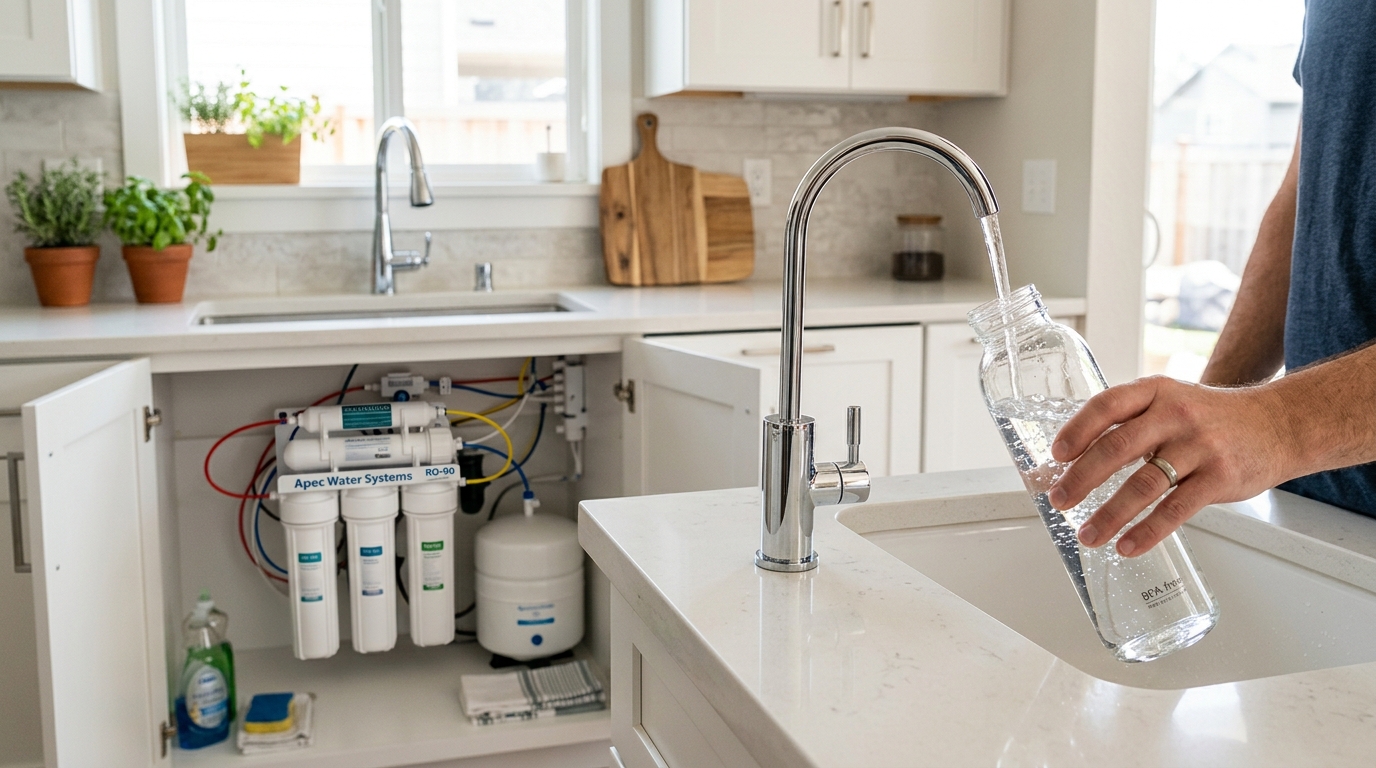
Can reverse osmosis systems at the point of use protect against all waterborne pathogens?
RO membranes with nominal pore sizes of 0.0001 um provide effective removal barriers against protozoa (Cryptosporidium: 4 um), bacteria (E. coli: 1-3 um), and viruses (norovirus: 38 nm) due to size exclusion and electrostatic rejection mechanisms. RO is one of the most robust point-of-use protective technologies against a broad-spectrum pathogen threat.
AMPAC USA engineers custom water purification systems for commercial, industrial, and emergency applications — from 500 GPD to multi-million GPD. Trusted by municipalities, military, and industry worldwide.