
In short: Roughly 49% of tribal homes across the United States lack access to reliable water sources, clean drinking water, or basic sanitation, compared to well under 1% of homes nationwide, according to Indian Health Service data. On the Crow Reservation in Montana, more than 39% of household wells tested unsafe for lifetime consumption due to uranium, arsenic, manganese, or nitrate contamination. The federal government has identified billions of dollars in unmet infrastructure need, and even fully funded pipeline projects take years to build. For families waiting on that infrastructure, point-of-use treatment systems are one of the few tools that can start protecting drinking water today, not a decade from now.
This isn’t a hypothetical problem tucked away in a policy report. It’s happening in specific communities, with names and well logs and documented contamination levels, right now, in one of the wealthiest countries on earth.
How Widespread Is the Reservation Water Crisis, Really?
It’s more widespread than most people realize, and the gap between tribal and non-tribal households is stark. IHS data puts the share of tribal homes without reliable access to clean water or basic sanitation at roughly 49%, compared to a fraction of a percent for the U.S. as a whole. An earlier 2007 IHS Sanitation Deficiency System report had already flagged that more than 13% of tribal homes lacked basic water and sanitation access, so the direction of the trend over nearly two decades has not been reassuring.
The Indian Health Service tracks this formally through its Sanitation Deficiency System, an inventory of exactly which homes and communities need water, sewer, or solid waste facilities. As of a 2018 GAO review, roughly a third of tracked homes had no deficiency at all, which means the remaining two-thirds carried some level of documented gap, from needing a connection to an existing system up to having no safe water source whatsoever.
What’s Actually in the Water on Reservations Like Crow?
The contamination isn’t abstract. On the Crow Reservation in eastern Montana, a peer-reviewed community-engaged risk assessment found that more than 39% of household wells tested unsafe for lifetime consumption because of uranium, manganese, arsenic, and nitrate, sometimes in combination. A separate finding from the same research put coliform bacteria contamination, a marker of fecal contamination, at over 40% of wells as well. Two different contamination problems, both above 40%, in the same water supply.
Some of that is geology. The Bighorn and Little Bighorn River watersheds sit on aquifers naturally prone to elevated uranium, manganese, and arsenic. But researchers studying the area also point to past uranium mining upstream and decades of phosphate fertilizer application, which itself often contains uranium, as compounding factors. This isn’t purely a story about bad luck with local bedrock. It’s a mix of natural mineral load and decades of upstream land use that nobody living on the reservation had control over.
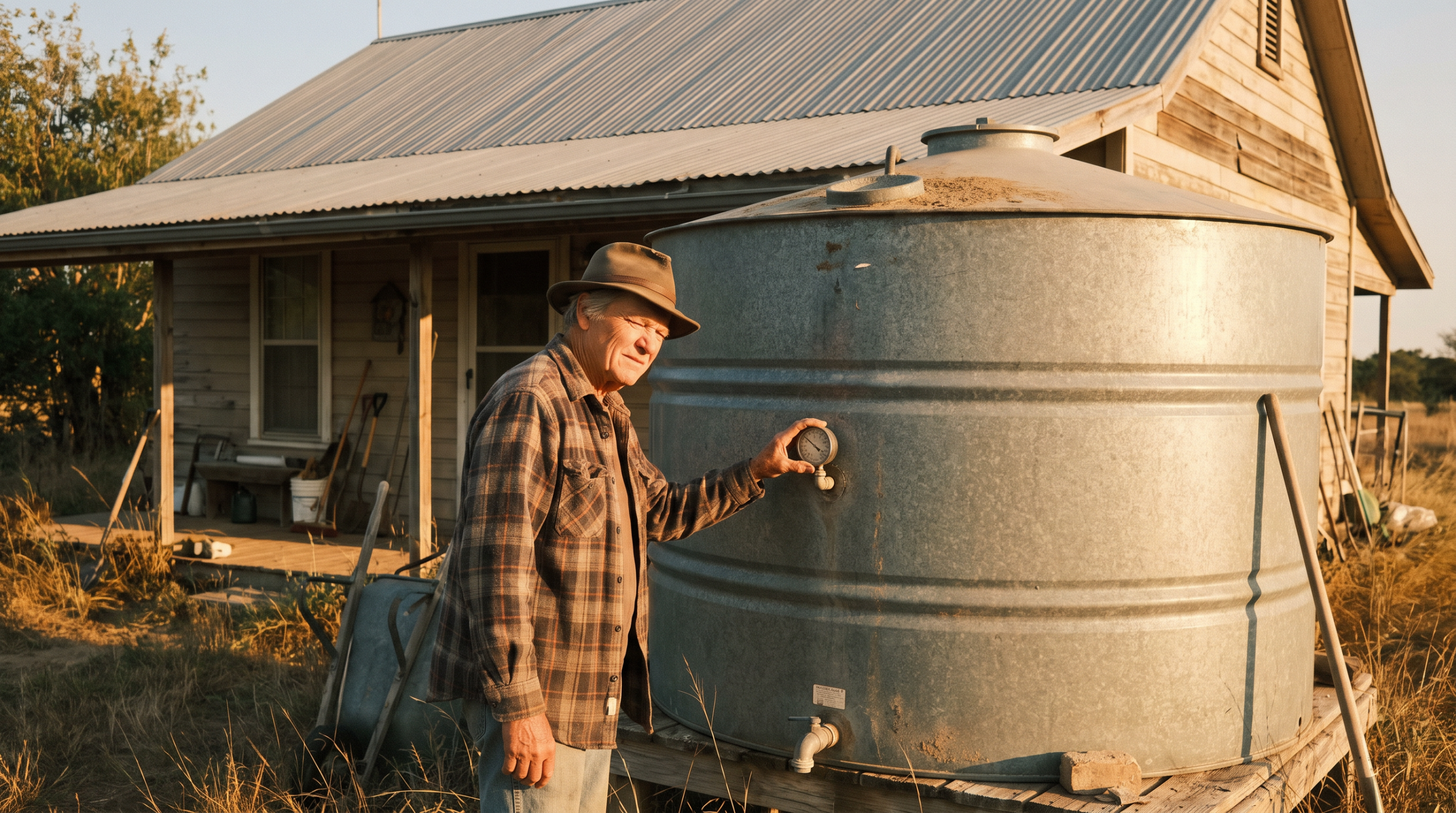
And here’s the detail that matters most for what happens next: researchers found that 95% of Crow households studied were not using any water treatment technology at all. Not because people don’t care about what’s in their water, but because the deteriorating utility infrastructure and the cost of home treatment put it out of reach for most families.
Why Hasn’t Federal Funding Closed the Gap?
Because the identified need has consistently outpaced what gets appropriated and spent, and because pipeline infrastructure, even when funded, takes years to plan, permit, and build.
The numbers tell the story. Back in fiscal year 2016, IHS estimated $3.2 billion in water infrastructure need to fix existing sanitation deficiencies in Indian homes, and EPA separately identified another $2.4 billion in tribal drinking water infrastructure needs projected over the following 20 years. That’s over $5 billion in documented need from just those two agencies, years ago, before accounting for inflation, population growth, or aging systems failing faster than they can be replaced.
More recent funding has moved in the right direction. In FY 2025, EPA allocated roughly $112.7 million specifically for tribal drinking water infrastructure, part of a broader push that included close to $300 million across drinking water and wastewater grants for tribal and rural communities, with a meaningful share coming through the Infrastructure Investment and Jobs Act. That’s real money, and it’s making a real difference in specific communities. But measured against a multi-billion-dollar backlog that keeps growing as pipes age and populations shift, it’s a partial answer, not a closed gap. GAO’s own review flagged something else worth noting too: even where money exists, coordination gaps between IHS, EPA, and tribal governments slow down how fast projects actually get built.
Why Isn’t Municipal-Style Infrastructure a Fast Fix Here?
Because reservation water systems face a combination of factors that don’t show up together this severely almost anywhere else in the country: remote geography, small and dispersed populations that make per-household infrastructure costs high, legal and jurisdictional complexity around tribal versus federal versus state authority, and, in many cases, source water that’s naturally difficult to treat.
A new water main in a mid-sized American city serves thousands of households per mile of pipe. A rural reservation system might serve a handful of homes spread across miles of unpaved road, over land with layered jurisdiction that can turn a straightforward construction permit into a multi-agency negotiation. None of that makes the problem impossible to solve. It does mean that “just build the pipeline” isn’t a same-year answer, even with funding secured.
What Can Point-of-Use Treatment Actually Fix While Infrastructure Catches Up?
Point-of-use and point-of-entry treatment can address the specific contaminants already identified in well testing, uranium, arsenic, nitrate, manganese, and bacterial contamination, at the household level, without waiting for a municipal pipeline that may still be years from construction.
This is the practical middle step. Reverse osmosis systems are specifically effective at reducing uranium, arsenic, and nitrate, the exact contaminants showing up in Crow Reservation well testing and in similar patterns across other tribal communities relying on groundwater. A residential reverse osmosis system installed under a single kitchen sink, or a larger point-of-entry unit treating an entire household’s water supply, doesn’t fix a contaminated aquifer. But it does mean a family isn’t drinking water carrying a documented uranium or arsenic load while they wait for infrastructure funding to work its way through IHS, EPA, and tribal utility planning processes that can stretch across years.
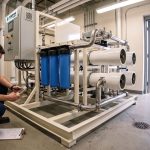
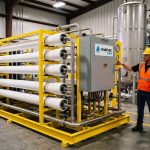
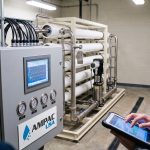
This is the space AMPAC USA has worked in for decades: reverse osmosis systems built to treat exactly the kind of source-water challenges documented in these communities, high mineral content, heavy metals, and bacterial contamination in groundwater that was never going to be simple to treat. It’s not a policy fix, and it’s not a replacement for the infrastructure investment these communities are still owed. But for a household whose well already tested unsafe, it’s the difference between drinking treated water this month and drinking it whenever a pipeline eventually reaches their address.
What Would Actually Close This Gap for Good?
Sustained, adequately scaled federal investment that matches the documented backlog, faster interagency coordination between IHS, EPA, and tribal governments, and continued deployment of point-of-use treatment as a bridge, not a permanent substitute, for the municipal infrastructure these communities are entitled to.
None of those three pieces works alone. Funding without coordination stalls in permitting. Coordination without funding has nothing to build. And point-of-use treatment without eventual infrastructure investment leaves families managing an individual filter for a problem that a functioning public water system should have solved generations ago. The honest picture is that this gap took decades of underinvestment to create, and it’s not closing in one funding cycle. But treating a household’s water today doesn’t have to wait on any of that getting fixed first.
Frequently Asked Questions
How many tribal homes in the U.S. lack access to clean water?
Roughly 49% of tribal homes lack access to reliable water sources, clean drinking water, or basic sanitation, according to Indian Health Service data, compared to less than 1% of U.S. homes overall.
What contaminants have been found in reservation well water, like on the Crow Reservation?
A peer-reviewed community risk assessment found more than 39% of Crow Reservation household wells tested unsafe for lifetime consumption due to uranium, manganese, arsenic, and nitrate, with a separate 40%+ of wells also showing coliform bacteria contamination.
How much federal funding is needed to fix tribal water infrastructure?
IHS identified an estimated $3.2 billion in water infrastructure need in fiscal year 2016 alone, and EPA separately projected an additional $2.4 billion in tribal drinking water infrastructure needs over the following 20 years. Actual annual appropriations, including roughly $112.7 million from EPA in FY 2025, have historically fallen short of that documented backlog.
Can a home water filter really fix contamination like uranium or arsenic in well water?
Reverse osmosis treatment is specifically effective at reducing uranium, arsenic, and nitrate from drinking water at the point of use. It doesn’t remediate the contaminated aquifer itself, but it does remove those contaminants from the water a household actually drinks and cooks with.
Why can’t municipal water systems just be built faster on reservations?
Remote geography, small and dispersed populations that raise per-household infrastructure costs, layered tribal/federal/state jurisdiction, and difficult source water all slow construction timelines, even after funding is secured. That’s part of why point-of-use treatment fills a real gap in the meantime.
Sources: Indian Health Service, Sanitation Deficiency System annual reports; U.S. Government Accountability Office (GAO-18-309); International Journal of Environmental Research and Public Health / PMC, “Community Engaged Cumulative Risk Assessment of Exposure to Inorganic Well Water Contaminants, Crow Reservation, Montana”; PMC, “Our Relationship to Water and Experience of Water Insecurity among Apsáalooke (Crow Indian) People, Montana”; U.S. EPA, FY 2025 tribal funding announcements and Drinking Water Infrastructure Grants Tribal Set-Aside Program.
AMPAC USA engineers custom water purification systems for commercial, industrial, and emergency applications — from 500 GPD to multi-million GPD. Trusted by municipalities, military, and industry worldwide.