
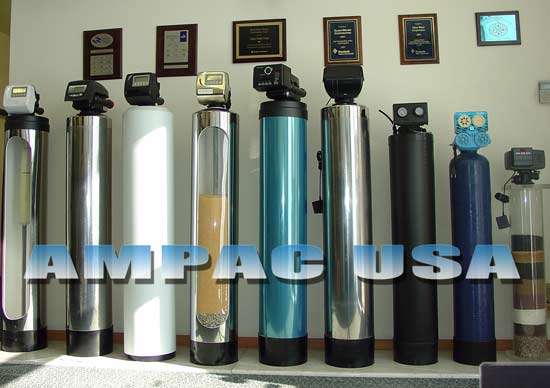

Water Softener Regeneration Cycle is super important for modern water treatment. At AMPAC USA, we build solutions that give homes, businesses, and industries safe, clean water. Our systems are designed to pull out the most contaminants and last a long time.
Every water softener needs to regenerate eventually. Want to know why? You should understand how a softener actually works. It does what it says: it softens water. Hard water, as you know, causes a lot of headaches, like poor cleaning, appliance build-up, and unhealthy skin and hair. A water softener gets rid of those hardness minerals, like calcium and magnesium. What you get is soft water that makes good suds and feels great on your skin.
The magic behind water softening is called ion exchange. Softeners use resin beads, usually charged with sodium. When these resins meet hard water, they swap their sodium or potassium ions for the magnesium and calcium ions. Naturally, over time and many exchange cycles, these resins get loaded up with too many hardness minerals. When that happens, they need to regenerate so they can keep doing their job effectively. That’s the regeneration process.
To regenerate, the softener flushes brine water over the resins. This separates the magnesium and calcium from the resins and sends them down the drain. How often this happens depends on how much water you use. Usually, you don’t have to start it yourself; regeneration should happen automatically. The control valve is the part that knows when to regenerate and makes it happen. You can program the control valve to trigger regeneration in a couple of ways.
One way is time-based. This means regeneration kicks off automatically after a set time interval. A water filtration pro typically sets this interval. An expert will figure out the right regeneration frequency based on your water usage, water quality, and tank size. Another method uses a sensor to track how much water has gone through the system. Instead of time, this method triggers regeneration after a specific amount of water has been processed. The frequency here will change with each cycle depending on your actual needs. For some situations, this method might be a better fit.
If your water starts acting hard again- you see it in your appliances or less suds- it could be a regeneration problem. In these cases, check if your softener’s brine tank looks empty. Also, look for any blockages in your drain line; that can stop the softener from regenerating properly. Frequent power outages can mess with the softener’s time settings too. Try resetting it and see if your water quality improves. If these steps don’t fix things, don’t wait. Get in touch with a water filtration expert or your machine’s manufacturer right away.
Related Articles
- Best Water Softener Salt: A Complete Guide to Choosing the Right Option
- How Long Does a Water Softener Last? Understanding Lifespan, Maintenance & Replacement
- The Real Impact of Using a Water Softener: An In-Depth Analysis!
- How To Pick The Right Water Softener For Your Home?
Frequently Asked Questions
Why is regeneration necessary for a water softener?
Water softeners require regeneration because their resin beads, which trap hardness-causing minerals like calcium and magnesium through ion exchange, eventually become saturated. Regeneration flushes these trapped minerals, restoring the resin’s capacity to soften water effectively. Without this process, the softener can no longer remove hard water ions, leading to issues like scale buildup and inefficient cleaning.
How does a water softener’s regeneration cycle actually work?
During regeneration, the water softener introduces a concentrated brine solution (saltwater) to the resin tank. This solution reverses the ion exchange process, forcing the trapped calcium and magnesium ions off the resin beads and replacing them with sodium or potassium ions. The displaced hard water minerals are then flushed out of the system as wastewater, preparing the resin for the next softening cycle.
What mechanisms initiate the regeneration process in a water softener?
The regeneration process is automatically initiated by the water softener’s control valve, which can be programmed using two primary methods. Time-based regeneration occurs at preset intervals, determined by a water filtration professional based on usage patterns and water quality. Alternatively, meter-based regeneration triggers after a specific volume of water has been processed, ensuring efficiency based on actual demand.
How frequently should a commercial or industrial water softener regenerate?
The ideal regeneration frequency for commercial and industrial water softeners depends on several factors, including raw water hardness, daily water usage volume, and the system’s tank size. AMPAC USA engineers, with direct field experience from offshore rigs to food & beverage plants, program the control valve for optimal efficiency, ensuring consistent soft water while minimizing salt and water waste.
What are the consequences if a water softener fails to regenerate?
If a water softener fails to regenerate, its resin will remain saturated with hardness minerals, leading to the return of hard water throughout the system. This results in issues such as mineral buildup in pipes, appliances, and industrial equipment, reduced cleaning effectiveness, and increased soap consumption. Regular, proper regeneration is crucial for maintaining water quality and extending system longevity.
AMPAC USA engineers custom water purification systems for commercial, industrial, and emergency applications — from 500 GPD to multi-million GPD. Trusted by municipalities, military, and industry worldwide.