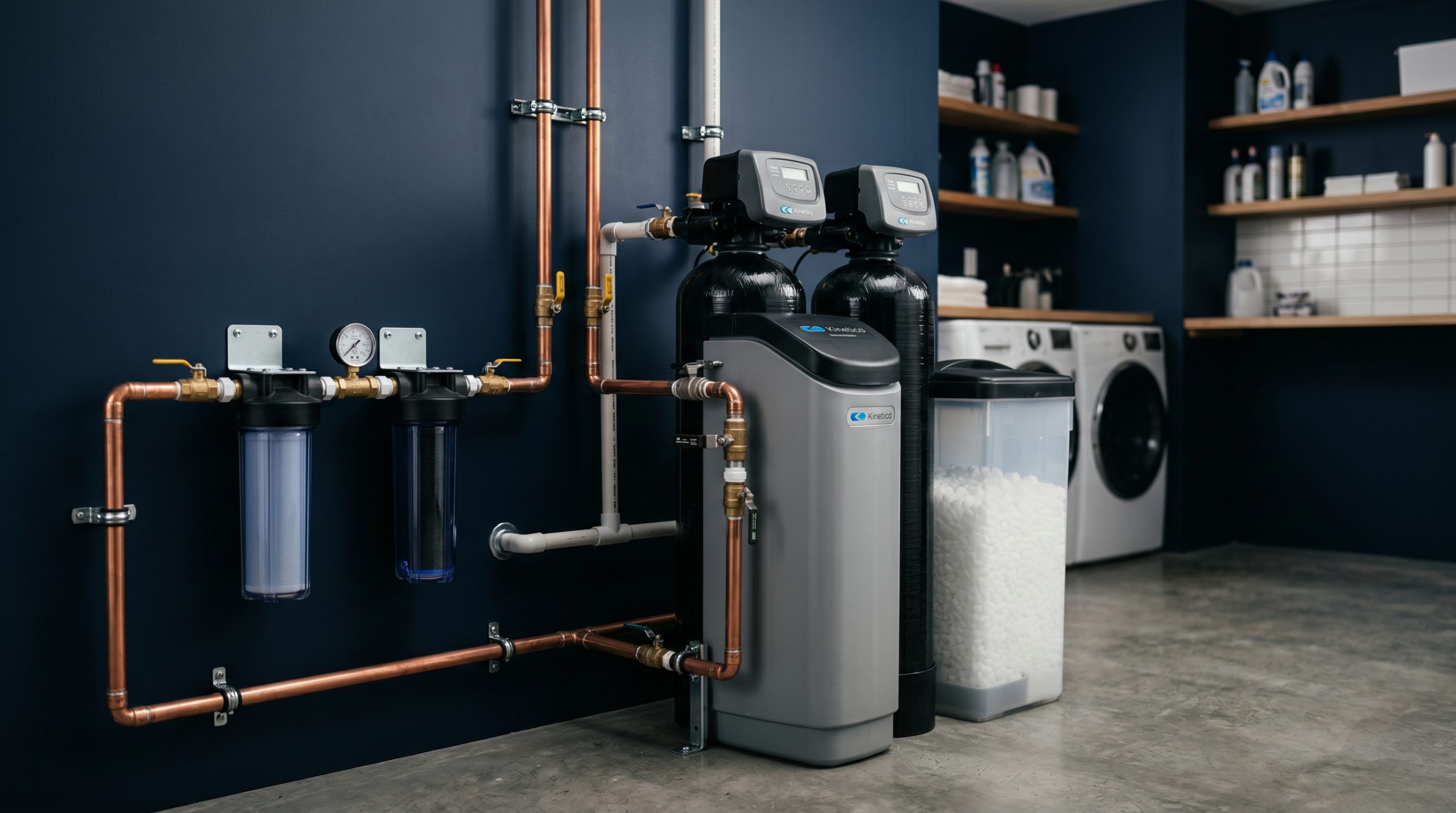

If you rely on a water softener to protect your appliances and plumbing from hard water damage, you’re probably wondering, “how long does a water softener last?” This question is essential for homeowners and business owners who want to avoid unexpected repairs and ensure continuous access to soft, scale-free water.
In this blog, we’ll walk you through the average lifespan of a water softener, factors that affect it, maintenance tips to extend its life, and signs that it’s time for a replacement. We’ll also recommend high-performance water treatment systems from AMPAC USA to keep your water quality at its best.
How Long Does a Water Softener Last on Average?
The average water softener lifespan ranges from 10 to 15 years, depending on the brand, model, usage, and maintenance. Entry-level models may wear out sooner, while high-quality systems can last even longer when properly cared for. If you’re using city water with moderate hardness, your softener will likely have a longer life compared to well water systems, which may have more iron or sediment.
Factors That Impact How Long a Water Softener Lasts
Several variables determine how long a water softener lasts, including:
-
Water Hardness Level: The harder your water, the more work your softener must do.
-
Usage Volume: Larger households or commercial settings demand more cycles, which can lead to earlier wear.
-
Quality of the Softener: Cheaper, low-end units may only last 7–10 years.
-
Regular Maintenance: Lack of maintenance shortens the system’s lifespan significantly.
-
Salt and Resin Quality: Poor quality salt or resin can clog or wear out your system prematurely.
Signs Your Water Softener Needs Replacement
You may be asking again, how long does a water softener last when it starts showing issues. Here are some signs your softener might be on its last leg:
-
Soap no longer lathers easily
-
Limescale returns on faucets and appliances
-
Water has a strange taste or smell
-
Salt levels remain the same despite usage
-
Water pressure decreases
-
You notice resin beads in the water supply
If your unit is older than a decade and showing any of these symptoms, it might be time to consider a new system.
Tips to Extend the Life of Your Water Softener
To ensure your water softener lasts as long as possible, follow these maintenance tips:
-
Use high-purity salt to minimize buildup and bridging
-
Clean the brine tank annually
-
Inspect and clean the resin bed periodically
-
Install a pre-filter to block sediment and iron from damaging the resin
-
Schedule professional servicing every 2-3 years
These steps not only improve performance but also push your softener’s lifespan toward the higher end of the range.
When to Replace vs. Repair a Water Softener
While minor issues like salt bridges or motor malfunctions can be fixed, repeated failures and aged components typically justify replacement. If your softener is over 10 years old and the cost of repair is more than half the price of a new unit, it’s more cost-effective to upgrade.
Best Water Softening & Filtration Solutions from AMPAC USA
If you’re in the market for a reliable and long-lasting water treatment system, AMPAC USA offers advanced solutions engineered for residential, commercial, and industrial needs.
Here are a few top-rated systems you can explore:
-
Commercial Reverse Osmosis 1200 GPD | 4500 LPD
Ideal for commercial applications requiring high-purity water, this system integrates softening and RO for full-scale water conditioning. -
Portable Reverse Osmosis System
A compact, easy-to-deploy system for on-the-go water purification—great for small offices, field operations, or emergency use. -
Wall Mount RO System 1000 GPD
Built to conserve space while delivering efficient filtration and softening. -
Residential RO Systems
These systems are designed specifically for homes, providing softened and purified water for drinking and cooking. -
Water Store Equipment (Softener + RO)
For entrepreneurs and water store operators, this equipment includes both softening and RO modules to deliver high-quality bottled water.
Final Thoughts: How Long Does a Water Softener Last?
To summarize, how long does a water softener last depends largely on the unit’s quality, your water conditions, and how well you maintain it. Most systems can serve you reliably for 10–15 years. If your unit is aging or showing signs of decline, it may be time to invest in a replacement—and AMPAC USA offers top-tier solutions built to last.
Visit AMPAC1.com today to explore water treatment systems that combine cutting-edge technology with durable construction.
Frequently Asked Questions
What are the primary factors that determine a water softener’s lifespan?
A water softener’s lifespan, typically 10 to 15 years, is primarily influenced by water hardness, usage volume, and the unit’s initial quality. Harder water and higher usage demand more work from the system. Additionally, consistent maintenance and the quality of salt and resin used significantly impact how long the system performs optimally.
What are the key indicators that my water softener needs to be replaced?
Signs your water softener is failing include the return of limescale on fixtures, soap no longer lathering easily, or a noticeable decrease in water pressure. Other indicators are a strange taste or smell in your water, static salt levels despite usage, or finding resin beads in your water supply. If your system is over a decade old and exhibits these symptoms, replacement is likely necessary.
How can I maximize the operational life of my water softener system?
To extend your water softener’s life, prioritize regular maintenance. This includes using high-purity salt to prevent buildup, cleaning the brine tank annually, and periodically inspecting the resin bed. Installing a pre-filter is also crucial to protect the system from sediment and iron, ensuring consistent performance and longevity.
Does the type of water source impact how long a water softener lasts?
Yes, the water source significantly impacts a softener’s lifespan. Systems treating city water with moderate hardness generally last longer. Conversely, well water, often containing higher levels of iron or sediment, forces the softener to work harder and can lead to earlier wear, potentially shortening its operational life. Pre-filtration is especially critical for well water applications.
What role does salt quality play in a water softener’s longevity?
Salt quality is crucial for a water softener’s longevity and efficiency. Using low-purity salt can lead to bridging in the brine tank, excessive sludge buildup, and premature wear on internal components. AMPAC USA recommends using high-purity salt to ensure optimal regeneration cycles, prevent clogging, and extend the overall life of your water treatment system.
Related Articles
- Best Water Softener Salt: A Complete Guide to Choosing the Right Option
- Biden-Harris Administration Announces $3 Billion for Lead Pipe Replacement to Deliver Clean Drinking Water
- The Real Impact of Using a Water Softener: An In-Depth Analysis!
- Understanding New PFAS Rules For Water
Conclusion
Most water softeners last somewhere between 10 and 15 years, but that range swings a lot based on water hardness, how much water your household actually runs through it, and the quality of salt you’re using. Skimping on salt or letting the resin bed foul is one of the fastest ways to shorten a unit’s life, while regular tank cleaning and correct sizing for your household can push it toward the long end of that range. If you’re seeing declining performance, it’s worth checking your salt choice before assuming the whole unit needs replacing — see our guide to choosing water softener salt. Contact our team at info@ampac1.com or (909) 548-4900 if you’re not sure whether to repair or replace your current system.
AMPAC USA engineers custom water purification systems for commercial, industrial, and emergency applications — from 500 GPD to multi-million GPD. Trusted by municipalities, military, and industry worldwide.