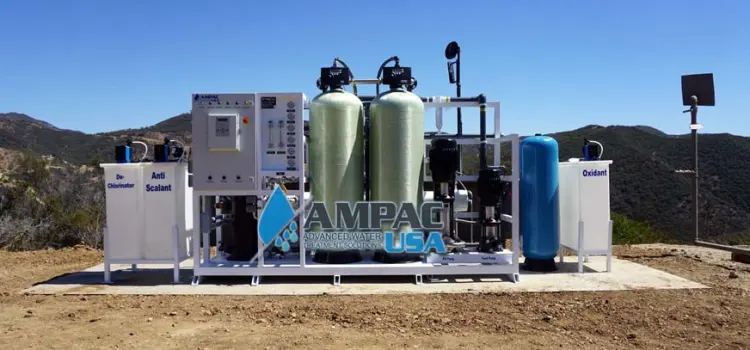

Every factory, food plant, and processing facility generates it. Most operators know they need to treat it. What they’re less sure about is exactly what makes it hazardous, which regulations apply, and which treatment approach fits their operation.
Three thousand industrial facilities were penalized by the EPA under the Clean Water Act in the past five years alone. Most violations weren’t intentional. They came from operators who didn’t fully understand their effluent or chose the wrong treatment path.
This guide answers the questions we hear most often. No fluff, no jargon walls — just direct answers.
Quick Reference: Industrial Wastewater at a Glance
| Question | Short Answer |
|---|---|
| What is industrial wastewater? | Water used in manufacturing, processing, or cooling that picks up contaminants before discharge |
| Who regulates it? | EPA under the Clean Water Act (40 CFR), enforced via NPDES permits |
| Can it be discharged untreated? | No. Federal and state discharge limits apply to all industrial effluent |
| What’s the most common treatment? | Multi-stage: physical separation + biological treatment + reverse osmosis polishing |
| Can it be recycled? | Yes. Many facilities now recover 60–80% of treated effluent for reuse |
What Is Industrial Wastewater?
Industrial wastewater is any water that contacts a manufacturing or industrial process and picks up contaminants as a result. It’s distinct from municipal sewage (residential/commercial waste) and stormwater runoff.
Industries generate it in several ways:
- Process water — directly contacts raw materials, intermediates, or products (food processing, chemical manufacturing)
- Cooling water — absorbs heat from equipment; picks up thermal load and sometimes chemicals
- Wash water — cleans equipment, floors, or product; carries residual chemicals and organics
- Boiler blowdown — concentrated dissolved solids purged from steam systems
The chemical and biological makeup of each stream is completely different. A brewery’s wastewater is mostly sugars and yeasts. A circuit board plant’s contains copper, tin, and harsh solvents. That’s why treatment is never one-size-fits-all.
What Contaminants Does Industrial Wastewater Contain?
This varies by industry, but these are the most common categories:
Suspended Solids (TSS)
Physical particles — grit, fibers, organic matter — that don’t dissolve. If discharged untreated, they settle in waterways and form oxygen-depleting sludge. The EPA’s typical TSS discharge limit under NPDES permits is 30 mg/L for secondary-treated effluent, though industrial limits vary by sector.
Biodegradable Organics (BOD/COD)
Proteins, fats, carbohydrates, and other carbon compounds. High BOD/COD depletes dissolved oxygen in receiving water bodies, killing aquatic life. Food and beverage plants routinely generate wastewater with BOD levels of 2,000–10,000 mg/L — far above the typical 30 mg/L discharge standard.
Heavy Metals
Cadmium, chromium, lead, mercury, nickel, zinc. These come from metal finishing, electroplating, mining, and semiconductor manufacturing. They’re highly toxic at low concentrations and persist in the environment. The EPA’s categorical pretreatment standards set metal-specific discharge limits for direct industrial dischargers.
Inorganic Compounds
Nitrogen, phosphorus, sulfates, chlorides. Excess nitrogen and phosphorus trigger algal blooms that suffocate aquatic ecosystems — a process called eutrophication.
Toxic Organics
Solvents, pesticides, dioxins, PCBs. Heavily regulated under EPA’s Priority Pollutant list. Many are carcinogenic and bioaccumulate in the food chain.
Oil and Grease
Common in petroleum refining, food processing, and mechanical workshops. Oil sheens block oxygen transfer at water surfaces, and even small concentrations are toxic to aquatic organisms.
Pathogens
Bacteria, viruses, and parasites are present in food processing and animal-related industry wastewater. Standard treatment must achieve at least 2-log reduction before discharge.
What Regulations Govern Industrial Wastewater Discharge?
The primary federal framework is the Clean Water Act (CWA), administered by the EPA. Here’s how the permit structure works in practice:
NPDES Permits (Direct Dischargers)
Any facility discharging directly to a river, lake, or coastal water needs a National Pollutant Discharge Elimination System (NPDES) permit under 40 CFR Part 122. These permits specify technology-based effluent limits (TBELs) and water quality-based effluent limits (WQBELs) for each facility.
Permits are renewed every 5 years. Violating permit limits carries civil penalties of up to $64,618 per day per violation as of 2024 (EPA CWA Civil Penalties).
Pretreatment Program (Indirect Dischargers)
If you discharge to a publicly owned treatment works (POTW — city sewer), you fall under the National Pretreatment Program (40 CFR Part 403). You must meet categorical pretreatment standards specific to your industry category before the effluent reaches the municipal system.
State Standards
Many states set standards stricter than federal minimums. California’s SWRCB, New York’s SPDES program, and Texas’s TPDES program all have industry-specific rules that can override the federal floor.
Key EPA Effluent Guidelines by Industry
The EPA publishes effluent guidelines for 59 industrial categories — from pulp and paper to iron and steel — under 40 CFR Parts 405–471. These set the technology-based discharge limits your facility must meet.
Source: U.S. EPA, National Pollutant Discharge Elimination System (NPDES), 40 CFR Part 122; EPA Effluent Guidelines, 40 CFR Parts 405–471.
How Is Industrial Wastewater Treated?
Treatment happens in stages. Most industrial facilities need at least two, and many need three or four:
Stage 1: Primary Treatment (Physical Separation)
Removes gross solids and suspended matter. Methods include:
- Screening and grit removal — catches large debris
- Sedimentation / clarification — lets suspended solids settle out
- Dissolved air flotation (DAF) — forces fine solids and oils to the surface for skimming
- Equalization — buffers flow and concentration peaks before downstream treatment
Stage 2: Secondary Treatment (Biological)
Breaks down dissolved organic compounds using microorganisms. This is where BOD and COD get reduced to permit-compliant levels. The two main systems:
Membrane Bioreactor (MBR) — Combines biological treatment with ultrafiltration membranes in a single unit. Produces very high-quality effluent (TSS < 1 mg/L, turbidity < 0.2 NTU). Best for food processing, breweries, hotels, and any operation with high organic load and limited space.
Dynamic Sequencing Batch Reactor (SBR) — A flexible, time-controlled biological system that handles equalization, aeration, and clarification in one tank. Works well for variable flow rates and general industrial effluent.
Stage 3: Tertiary Treatment (Advanced Polishing)
For stricter discharge limits or water reclamation, a third stage strips remaining dissolved contaminants:
- Industrial Reverse Osmosis — Removes dissolved salts, heavy metals, and trace organics to near-potable quality. Typically used for effluent with TDS under 5,000–8,000 mg/L after secondary treatment. The recovered permeate can be reused in the process, and the concentrate is handled separately.
- Activated carbon adsorption — Strips trace organics and some metals from polished effluent
- UV disinfection / ozone — Destroys pathogens without adding chemicals
Stage 4: Sludge Management
Every treatment stage generates sludge. That sludge must be dewatered, stabilized, and disposed of properly — by land application, incineration, or certified landfill. Sludge handling is often overlooked in cost estimates, and it matters.
Which Treatment System Fits My Industry?
| Industry / Wastewater Type | Typical Contaminants | Recommended System |
|---|---|---|
| Food & Beverage, Breweries | High BOD/COD, suspended solids, fats | MBR + RO polishing |
| Oil & Gas, Petroleum Refining | Hydrocarbons, oil/grease, heavy metals | Crude Oil Separation + SBR |
| Metal Finishing, Electroplating | Heavy metals, cyanide, acidic pH | Chemical precipitation + RO |
| Textile, Dye Manufacturing | Color, BOD, salts, surfactants | MBR + advanced oxidation + RO |
| Pharmaceutical Manufacturing | Trace organics, APIs, solvents | MBR + activated carbon + RO |
| Hotels & Resorts (greywater) | Soaps, low organic load | Greywater Treatment + RO for reuse |
| General Industrial / Mixed | Varies | SBR as primary biological stage |
Can Industrial Wastewater Be Recycled?
Yes — and increasingly, it has to be. Water scarcity regulations in many U.S. states (especially California, Texas, and Arizona) now push industrial facilities toward zero-liquid-discharge (ZLD) or near-ZLD operations.
The typical water reclamation pathway:
- Secondary biological treatment removes bulk organics
- Industrial RO systems polish the effluent to process-reuse quality
- Recovered water feeds back into cooling towers, boiler makeup, or washdown systems
- Concentrate stream undergoes evaporation or crystallization (for ZLD)
Facilities that have moved to water reclamation report 30–60% reductions in municipal water purchases. At scale, that’s significant. For large food and beverage manufacturers, it often recovers the capital cost of the treatment system within 3–5 years.
What Are the Consequences of Non-Compliance?
Short answer: significant. The EPA and state environmental agencies take industrial discharge violations seriously, and enforcement has increased steadily since 2020.
Regulatory consequences:
– Civil penalties up to $64,618/day per violation (2024 adjusted figure)
– Criminal penalties for willful violations — up to $50,000/day and imprisonment under CWA Section 309(c)
– Facility shutdown orders
– Mandatory corrective action plans with EPA oversight
Operational consequences:
– Permit revocation, which can halt production
– Increased insurance premiums and liability exposure
– Reputational damage — EPA enforcement actions are public record
Source: U.S. EPA, Clean Water Act Enforcement; 33 U.S.C. § 1319.
How Do I Know What Treatment System I Need?
Start with a wastewater characterization study. You can’t design the right system without knowing what you’re working with. At minimum, you need:
- Flow rate (gallons per day, peak vs. average)
- BOD, COD, TSS, pH
- Heavy metals panel (if applicable to your process)
- Oil and grease (if petroleum or food processing)
- TDS and conductivity
From there, a treatment design can be specified. For facilities discharging to a POTW, your local pretreatment coordinator will tell you which parameters matter most and what limits apply.
AMPAC’s engineering team designs industrial wastewater treatment systems for operations across manufacturing, food processing, oil and gas, and hospitality. If you have effluent characterization data, we can recommend the right system configuration.
Talk to our wastewater engineers →
FAQ Summary (Schema-Ready)
Q: What is industrial wastewater?
A: Industrial wastewater is water that has been used in a manufacturing or industrial process and collected contaminants — including suspended solids, heavy metals, oils, and organic compounds — before discharge or treatment.
Q: Is industrial wastewater regulated in the US?
A: Yes. The Clean Water Act (CWA) requires all industrial facilities to meet effluent discharge standards. Direct dischargers need NPDES permits; indirect dischargers to city sewers must meet pretreatment standards under 40 CFR Part 403.
Q: What is the difference between industrial wastewater and sewage?
A: Sewage is residential and commercial wastewater processed by municipal treatment works. Industrial wastewater comes from manufacturing and processing operations and typically contains far more hazardous contaminants — heavy metals, industrial chemicals, and high-strength organics.
Q: What happens to industrial wastewater after treatment?
A: Treated effluent is either discharged to a receiving water body (under NPDES permit), discharged to the municipal sewer system (under pretreatment standards), or reclaimed for process reuse within the facility.
Q: Can reverse osmosis treat industrial wastewater?
A: Yes, but RO is typically used as a tertiary polishing step after primary and secondary treatment reduce the load. RO works well on effluent with TDS under 5,000–8,000 mg/L and produces permeate suitable for process reuse. See AMPAC’s industrial RO systems.
Q: What is zero-liquid discharge (ZLD)?
A: ZLD is a treatment approach where no liquid effluent leaves the facility. All wastewater is treated and either recycled back into the process or reduced to solid waste. It’s mandated in some water-stressed regions and adopted voluntarily in others for sustainability goals.
Q: How much does industrial wastewater treatment cost?
A: Capital costs vary widely — from $50,000 for small MBR units to $5M+ for large multi-stage systems. Operating costs depend on energy, chemicals, and sludge disposal. The only accurate answer starts with an effluent characterization and system sizing study specific to your facility.
References
- U.S. EPA, National Pollutant Discharge Elimination System (NPDES) — epa.gov/npdes
- U.S. EPA, Effluent Guidelines — 40 CFR Parts 405–471 — epa.gov/eg
- U.S. EPA, National Pretreatment Program — 40 CFR Part 403 — epa.gov/npdes/npdes-pretreatment-program
- U.S. EPA, Clean Water Act Civil Penalties — epa.gov/enforcement/clean-water-act-settlement-penalties-policy
- Clean Water Act, 33 U.S.C. § 1251 et seq., Section 309(c) criminal provisions
- World Bank, “Industrial Wastewater Treatment, Pollution Prevention and Control,” ESG General EHS Guidelines (2007, updated 2019)
Updated May 2026. Original post: August 2019.
AMPAC USA engineers custom water purification systems for commercial, industrial, and emergency applications — from 500 GPD to multi-million GPD. Trusted by municipalities, military, and industry worldwide.