

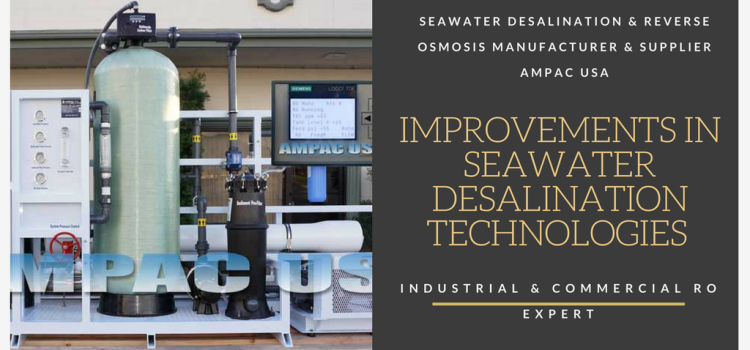

Seawater Desalination Technology Improvements are huge for modern water treatment. Here at AMPAC USA, we build top-tier systems that give you safe, clean water for homes, businesses, and industries. Our systems remove tons of contaminants and they’re built to last.
For a while, people worried about how sustainable seawater desalination really was. It’s a great option for many countries, but it hasn’t always been kind to the environment or your wallet. Desalination plants worldwide have been dumping salty RO water back into the ocean, which is bad for marine life. Plus, the electricity a plant uses in a year could light up 10,000 homes. And don’t even get us started on maintenance costs and air pollution. Clearly, it was time for companies to invest in R&D for greener, cheaper tech. Here are some cool ideas that have popped up lately:
- Better Membranes:
People are suggesting ways to make membranes super efficient, with ultra permeability. Graphene sieves are a big deal here. Also, adding anti-scaling elements to the membrane itself can stop buildup and make it last longer. Smart, right? - Smarter Wastewater Management:
Many industries already do this, but seawater desalination plants really need it. The brine-rejected reverse osmosiswater-is extra salty and super harmful to marine life. It needs treatment to balance the salt levels before it’s released. Otherwise, the plants and animals nearby could disappear. - New Processes:
There’s also talk about improving the RO method by using forward osmosis, electrodialysis, or pressure reverse osmosis. These are still in research, but studies show a lot of promise. They could completely change how desalinationworks today. - Solar Powered Plants:
This is the best green answer to the plant’s huge electricity use. It takes a big investment, and we haven’t seen large-scale projects yet, but it’s a step toward building self-sufficient, sustainable plants. That’s probably why many plants are already putting solar panels on their buildings.
These are some truly innovative solutions for the desalination industry’s current problems. Today, there are 18,500 plants worldwide, and that number keeps growing. If we don’t find good answers soon, we’ll still be struggling with water scarcity. AMPAC USA is a top manufacturer and distributor of water treatment systems globally. We’ve been providing reverse osmosis and seawater desalination technologies for homes, businesses, and industries for 30 years.
Related Articles
- 6 Key Benefits of Using Seawater Desalination
- Seawater Desalination Process: Steps, How It Works & Key Benefits
- Need for Potential Seawater Desalination Technologies
- Solar Desalination vs. Traditional RO Systems: Which Is Better for Water Purification?
Frequently Asked Questions
How are modern desalination technologies addressing environmental concerns?
Modern desalination addresses environmental concerns primarily through improved wastewater management and reduced energy consumption. Innovations include treating highly concentrated brine before discharge to protect marine ecosystems and developing energy-efficient processes, such as solar-powered desalination, to lower the carbon footprint. AMPAC USA engineers systems with these considerations for sustainable water purification.
What new membrane technologies are improving desalination efficiency?
Significant improvements in desalination membrane technology include the development of ultra-permeable materials like graphene sieves, which enhance water flux and separation efficiency. Additionally, membranes are being engineered with anti-scaling elements to prevent fouling, extending their operational lifespan and reducing maintenance needs. AMPAC USA integrates advanced membrane solutions for maximum contaminant removal and long-term reliability.
Is solar power a viable solution for reducing desalination energy costs?
Yes, solar power is a highly viable and increasingly adopted green solution for reducing the substantial electricity consumption of desalination plants. Utilizing solar energy significantly lowers operational costs and decreases reliance on fossil fuels, thereby mitigating air pollution and environmental impact. AMPAC USA explores and implements energy-efficient designs, including options for renewable energy integration, to provide sustainable water purification systems.
Beyond traditional reverse osmosis, what advanced desalination processes show promise?
Beyond traditional reverse osmosis, promising advanced desalination processes include forward osmosis, electrodialysis, and pressure reverse osmosis. These methods are currently in research stages but demonstrate immense potential to improve efficiency, reduce energy demands, and change the way desalination is performed. AMPAC USA stays at the forefront of water treatment innovation, evaluating and incorporating proven advancements to deliver cutting-edge systems.
What improvements are being made in managing brine waste from desalination plants?
Improvements in brine waste management focus on treating the rejected RO water to reduce its high salt concentration before release. This crucial wastewater management prevents severe harm to marine life and ecosystems, which are threatened by the hyper-saline discharge. AMPAC USA designs systems with comprehensive wastewater management considerations, ensuring environmentally responsible operation and compliance.
AMPAC USA engineers custom water purification systems for commercial, industrial, and emergency applications — from 500 GPD to multi-million GPD. Trusted by municipalities, military, and industry worldwide.
