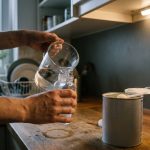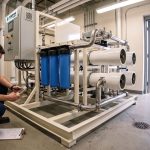


Home water filtration systems come in all shapes and sizes, from simple pitcher filters and faucet attachments to whole-house RO systems that treat every water outlet. But for truly clean, clear water, free of lead, chlorine, bacteria, and those pesky emerging contaminants, a 5-stage reverse osmosis under-sink system is your best bet. It’s the most complete and dependable solution for your home.
Home Water Filtration Systems Can Give Your Home Clean, Clear Water
No matter where you’re from or how you live, one thing’s for sure: you need pure water at home. Untreated or contaminated water can be a real problem, carrying nasty stuff. Depending on your local environment, soil conditions, and a bunch of other things we can’t control, your water supply might have chemicals, particles, tiny organisms, or even radiation that isn’t good for you. People recognized the need for pure water ages ago. For years, we’ve had countless ways to make water healthy and safe to drink. From simple boiling to super-advanced machines, there’s serious tech out there for water purification.
Let’s look at some of these methods and see how each one helps get rid of water impurities.
Distillation: This is a classic, time-tested method, used for generations. You boil the water, send the steam to a condenser, and it turns back into pure water. Boiling gets rid of a lot of impurities. But it’s not perfect; some stubborn chemicals just don’t go away with boiling alone.
Sediment Purification: If your water has a lot of particles, this method works great. You push raw water through a sediment filter. The filter catches particles, letting clean water pass through. Sediment purification is awesome for particles, but it doesn’t do much for chemicals or really tiny impurities. When you pair it with another advanced system designed for chemicals, you get a much more complete filtration setup.
Carbon Adsorption: What sediment purification misses, carbon adsorption picks up. It uses activated carbon, which doesn’t just block big organics and particles, it traps the tiny ones too. We choose the filter material based on your water’s specific purification needs.
Ultra Violet Systems: UV rays are tough on germs and organics in water. A typical UV system either kills these unwanted contaminants or makes them completely harmless. UV is definitely excellent for organics, but it’s not very good at removing particles from water.
Candle or Ceramic Purification: Here’s another traditional method. Candle purification holds back unwanted chemicals, letting pure water through. It’s really affordable, but ceramic purification isn’t your top choice if you want the absolute purest water from your system.
Reverse Osmosis: 8 Benefits of Installing a Home Water Filtration System
Frequently Asked Questions
What is the most effective home water filtration system for comprehensive purification?
For truly clean, clear water free of lead, chlorine, bacteria, and emerging contaminants, a 5-stage reverse osmosis (RO) under-sink system is the most comprehensive and reliable solution available for residential use. This advanced system treats every water outlet, ensuring high-purity water for drinking and cooking. AMPAC USA’s expertise in commercial RO systems translates to robust residential solutions.
What types of contaminants can a 5-stage reverse osmosis system remove?
A 5-stage reverse osmosis system is designed to remove a broad spectrum of contaminants. This includes common impurities like lead, chlorine, and bacteria, as well as dissolved solids, heavy metals, chemicals, particles, and emerging contaminants. The multi-stage process ensures that even microscopic impurities are effectively filtered out, providing superior water quality.
How does distillation compare to other water purification methods for home use?
Distillation is a traditional method that purifies water by boiling and condensing the vapor, effectively removing many impurities and particles. However, it is less effective at eliminating certain stubborn chemicals that do not evaporate with water. For a broader range of contaminant removal, multi-stage filtration systems like reverse osmosis offer a more comprehensive solution than distillation alone.
What are the limitations of sediment purification for drinking water?
Sediment purification is highly effective at removing physical particles such as dirt, rust, and sand from water. While excellent for improving water clarity, it is far from comprehensive when it comes to eliminating dissolved chemicals, bacteria, viruses, or other minute impurities. For safe drinking water, sediment purification is best utilized as a pre-treatment stage within a more advanced filtration system.
Why is pure water essential for home health?
Pure water is critical for home health because untreated or contaminated water can carry a deadly combination of chemicals, particles, organisms, and even radiations. These contaminants, influenced by environmental factors and soil conditions, pose significant health risks. Utilizing advanced filtration systems ensures your household has access to water free from harmful substances, safeguarding well-being.
AMPAC USA engineers custom water purification systems for commercial, industrial, and emergency applications — from 500 GPD to multi-million GPD. Trusted by municipalities, military, and industry worldwide.