
Published July 2017
By Kelly A. Reynolds, MSPH, PhD
If you read On Tap often, you know we talk about Legionella a lot. It’s a repeated topic, especially with waterborne outbreaks still happening and new rules for prevention in healthcare. On June 2, the Department of Health and Human Services, Centers for Medicare and Medicaid Services (CMS) sent out a memo that will definitely make more people aware of Legionella risks and push for better prevention.
Source: Water Conditioning & Purification Online
What the CMS Legionella Directive Means for Healthcare Water Systems
The 2017 Centers for Medicare & Medicaid Services memo changed everything for how healthcare facilities handle water safety. For the first time, CMS clearly said that all Medicare and Medicaid certified healthcare facilities, like hospitals, long-term care facilities, assisted living centers, and dialysis clinics, need to build and use water management programs. These programs must specifically work to cut down the risk of Legionella growth and spread.
Legionella pneumophila causes Legionnaires’ disease, a serious type of pneumonia. It kills 10-15% of people in the general population, and even more patients with weak immune systems in healthcare settings. We’ve seen outbreaks linked to hospital water systems, cooling towers, and hot tubs all over the U.S. Healthcare related Legionellosis cases make up a huge chunk of all reported cases every year.
The CMS directive matches ASHRAE Standard 188, which gives the technical steps for water management programs. Following ASHRAE 188, facilities must find all water system parts where Legionella can grow. They need to set control limits for temperature, disinfectant levels, and pH. They also have to put monitoring and response plans in place, and keep records to show they’re always following the rules. If they don’t comply, they could lose their Medicare/Medicaid certification. That’s a financial and operational problem no healthcare facility wants.
How Legionella Grows in Building Water Systems
Legionella loves warm, still water between 77°F and 113°F (25°C – 45°C). That’s the same temperature range you find in many building hot water systems. The bacteria stick to scale, sediment, and biofilm inside pipes, cooling towers, hot water tanks, and decorative water features. So, you need both physical cleaning and chemical treatment to really control it.
Healthcare facilities have extra challenges. Their water systems are complicated, with long pipe runs, different temperature zones, and patients who are super sensitive to respiratory infections. Rooms that aren’t used much, with faucets that rarely run, create stagnant water. That’s perfect for Legionella to multiply. Water outlets right where patients are, like ice machines, respiratory therapy gear, and patient room sinks, can expose people. Water management plans must specifically deal with these spots.
AMPAC USA Water Treatment Solutions for Healthcare Legionella Control
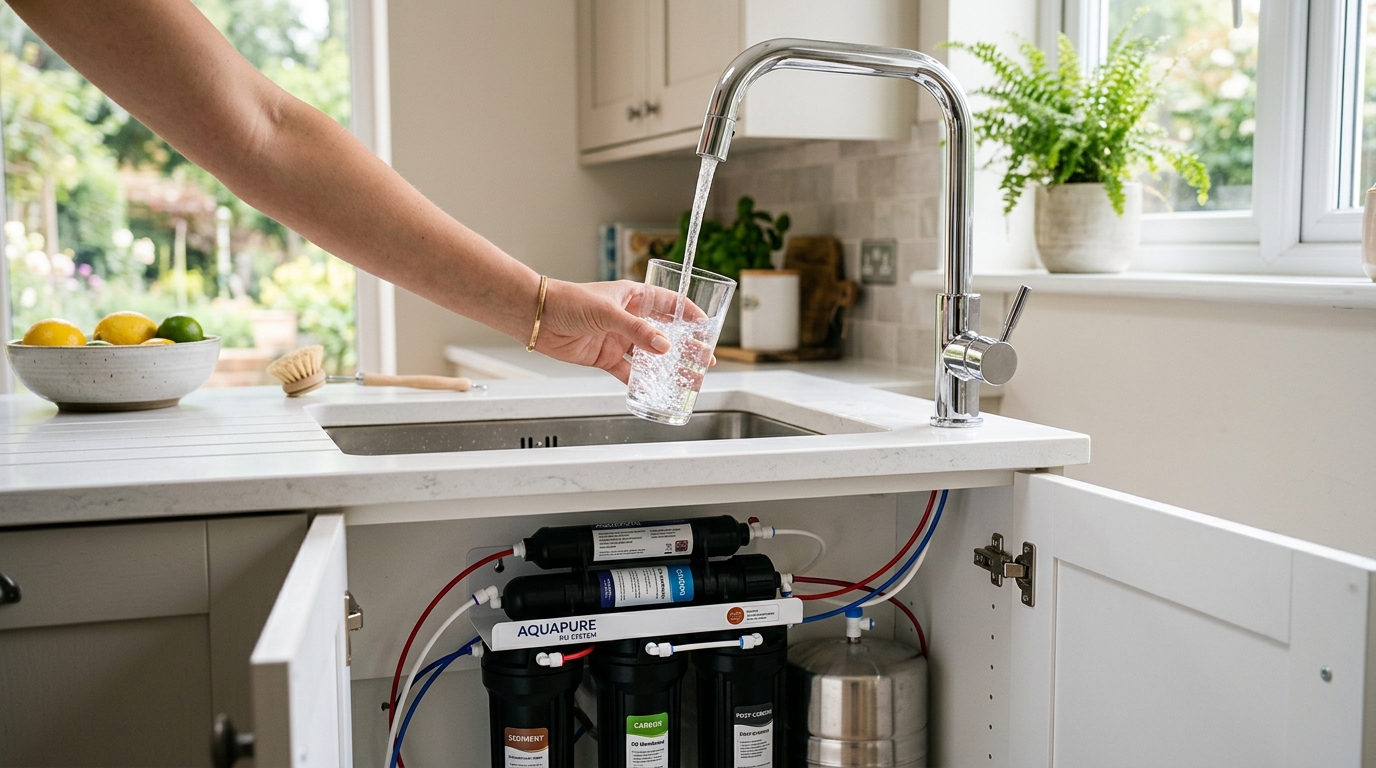
AMPAC USA offers water treatment systems that tackle many risk factors in healthcare water management programs. Our systems include point-of-use filters that block Legionella at individual taps with 0.2-micron absolute ratings. We also have ultraviolet (UV) disinfection systems that constantly kill Legionella and other germs throughout water lines, plus extra treatment systems for hot water recirculating loops. These solutions work with chemical disinfection and create physical barriers to stop germs from reaching patients.
If healthcare facilities are doing water system risk assessments under ASHRAE 188, AMPAC USA’s engineering team can look at their current water treatment setup. We’ll suggest integrated solutions that handle both Legionella control and overall water quality. Our systems are built to keep disinfecting effectively, even when water isn’t moving as much in parts of the system during busy times. Want to learn more? Head to www.ampac1.com.
Related Articles
- Legionella growth potential of drinking water produced by a reverse osmosis pilot plant
- Occurrence of Legionella spp. in Water-Main Biofilms from Two Drinking Water Distribution Systems
- Comparison of Database Search Methods for the Detection of Legionella Pneumophila in Water Samples Using Metagenomic Analysis
- The Case for Universal Screening of Private Well Water Quality in the U.S. and Testing Requirements to Achieve It: Evidence from Arsenic
Frequently Asked Questions
What are the CMS requirements for Legionella prevention in healthcare facilities?
The Centers for Medicare and Medicaid Services (CMS) federally requires all Medicare- and Medicaid-certified healthcare facilities to implement Water Management Programs (WMPs). These programs must identify potential Legionella proliferation points and establish control limits for factors like water temperature and disinfectant residuals, aligning with ASHRAE Standard 188.
Which types of healthcare facilities must comply with CMS Legionella directives?
The CMS directive applies to all Medicare- and Medicaid-certified healthcare facilities. This includes hospitals, long-term care facilities, assisted living centers, and dialysis clinics, all of which must develop and implement specific water management programs to mitigate Legionella risk.
What water conditions promote Legionella growth in healthcare settings?
Legionella bacteria thrive in building water systems, particularly in hot water systems, cooling towers, and decorative fountains. Optimal growth occurs in water temperatures ranging from 77-113°F, making proper temperature control and consistent disinfection critical for prevention.
What is Legionnaires’ disease and its risk to patients?
Legionnaires’ disease is a severe form of pneumonia caused by the bacterium Legionella pneumophila, with a case fatality rate of 10-15% in the general population. This risk is significantly higher for immunocompromised patients receiving care in healthcare settings, underscoring the importance of robust prevention strategies.
How do AMPAC USA water treatment systems help prevent Legionella in healthcare?
AMPAC USA provides commercial water treatment systems, including advanced UV disinfection and point-of-use filtration, specifically engineered to help healthcare facilities comply with CMS directives. These robust systems effectively reduce Legionella proliferation and lower the risk of Legionellosis for vulnerable patient populations.
AMPAC USA engineers custom water purification systems for commercial, industrial, and emergency applications — from 500 GPD to multi-million GPD. Trusted by municipalities, military, and industry worldwide.