

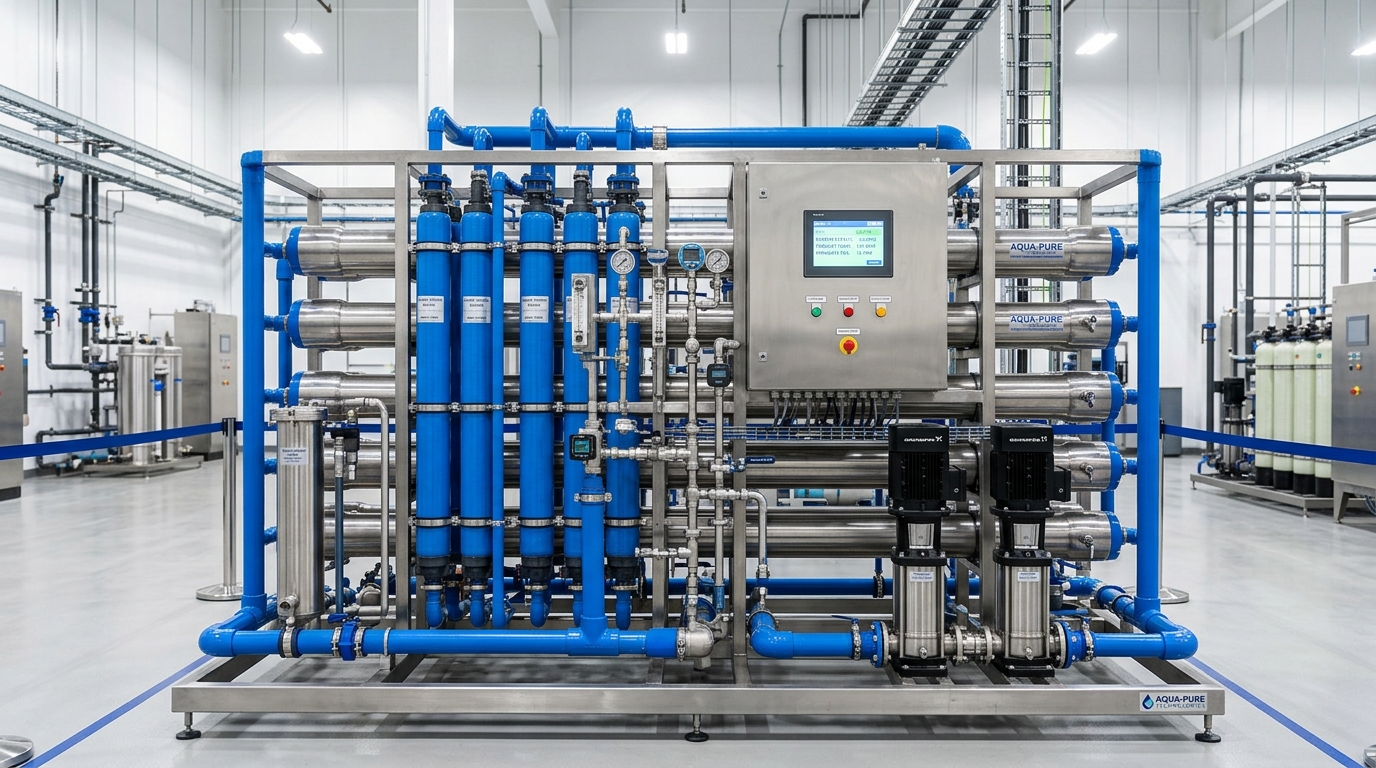

Quick Answer: Copeptin is a stable peptide. It’s released with vasopressin, an antidiuretic hormone, when your body is stressed by osmosis or dehydration. Studies show that if you’re a healthy adult who’s a little dehydrated, drinking more water each day significantly lowers your plasma copeptin levels. These levels are a good marker for how well hydrated you are. Advanced water treatment, like reverse osmosis, offers great ways to tackle water quality issues in this area. Here at AMPAC USA, we build our commercial and industrial systems to handle these specific water treatment needs, and they come with certified, documented performance.
Published online: June 3 2017 European Journal of Nutrition (IF 3.239). Guillaume Lemetais · Olle Melander · Mariacristina Vecchio · Jeanne H. Bottin ·
Sofa Enhörning · Erica T. Perrier
Abstract
PURPOSE:
Differences in plasma copeptin levels between individuals are linked to things like developing type 2 diabetes, worsening kidney disease, and cardiovascular problems. We wanted to see if 24-hour urine osmolality connected with plasma copeptin. Also, could drinking more water daily actually change circulating plasma copeptin levels?
METHODS:
This was a forward-looking study, all done at one research center. We included 82 healthy adults, averaging 23.6 years old, with an average BMI of 22.2 kg/m2, and half were women. We split them into groups based on how much fluid they usually drank daily: arm A (50-80% of EFSA recommendations), arm B (81-120%), and arm C (121-200%). After an initial visit, people in arms A and B started drinking more water to match arm C for six weeks straight.
RESULTS:
At the start, plasma copeptin showed a strong, positive link with 24-hour urine osmolality (p = 0.002) and 24-hour urine specific gravity (p = 0.003). It didn’t connect with plasma osmolality (p = 0.18), 24-hour urine creatinine (p = 0.09), or total fluid intake (p = 0.52). Over the six weeks, copeptin significantly dropped from 5.18 (3.3;7.4) to 3.90 (2.7;5.7) pmol/L (p = 0.012). During that time, urine osmolality and urine specific gravity also went down, from 591 ± 206 to 364 ± 117 mOsm/kg (p < 0.001) and from 1.016 ± 0.005 to 1.010 ± 0.004 (p < 0.001) respectively.
CONCLUSIONS:
At the study’s start, copeptin levels in the bloodstream were positively linked to how concentrated the urine was over 24 hours in young, healthy people who drank different amounts of fluid. Plus, this study is the first to show that drinking more water for six weeks actually lowers circulating copeptin.
CLINICAL TRIAL REGISTRATION NUMBER:
NCT02044679.
KEYWORDS:
Copeptin; Fluid intake; Hydration; Urine osmolality; Water intake
Effect of increased water intake on plasma copeptin in healthy adults
The post Effect of increased water intake on plasma copeptin in healthy adults appeared first on Facts About Water.
Source: Water Feed
Frequently Asked Questions
What is copeptin and what does it indicate?
Copeptin is a stable peptide co-released with vasopressin (antidiuretic hormone) in response to osmotic stress and dehydration. It serves as a reliable biomarker for adequate hydration, with higher plasma concentrations indicating potential hypohydration. Research links inter-individual variation in copeptin to conditions like type 2 diabetes mellitus and cardiovascular events.
How much does increased water intake reduce plasma copeptin levels?
A 6-week prospective study involving healthy adults demonstrated a significant reduction in plasma copeptin levels with increased water intake. Participants saw their median copeptin decrease from 5.18 pmol/L to 3.90 pmol/L. This was accompanied by a reduction in urine osmolality from 591 ± 206 to 364 ± 117 mOsm/kg, indicating improved hydration.
What health conditions are associated with elevated plasma copeptin?
Elevated plasma copeptin levels are associated with several significant health conditions. These include an increased risk of incident type 2 diabetes mellitus, the progression of chronic kidney disease, and a higher incidence of cardiovascular events. Maintaining adequate hydration is a practical step to help manage copeptin levels and support overall health.
How does water quality impact hydration and copeptin levels?
Access to high-quality, purified water is fundamental for effective hydration, which directly influences copeptin levels. Advanced water treatment technologies, such as reverse osmosis, are crucial for addressing water quality challenges that could impede proper hydration. AMPAC USA’s commercial and industrial systems are engineered to provide certified, purified water, supporting optimal health and hydration needs.
Who participated in the study on water intake and copeptin levels?
The prospective study involved 82 healthy adults, with an average age of 23.6 ± 2.9 years and a BMI of 22.2 ± 1.5 kg/m², with 50% female participants. Subjects were stratified by their habitual fluid intake, and those with lower intake increased their water consumption over a 6-week period to observe the effects on circulating copeptin and other hydration markers.
AMPAC USA engineers custom water purification systems for commercial, industrial, and emergency applications — from 500 GPD to multi-million GPD. Trusted by municipalities, military, and industry worldwide.