

Reverse Osmosis is inarguably the most preferred technology for water purification used at homes, offices, commercial units and much more. The biggest reason for its popularity is its ability to remove a comprehensive range of impurities which other purification systems are quite limited at. Some technologies such as distillation, sediment filtration, etc. while being quite effective in their own ways, are confined to decontaminating just a certain set of impurities. This is where Reverse Osmosis is so powerful, it eradicates contaminants such as chemicals, particles, organisms, metal bits and a lot more. It is this quality combined with cost-effectiveness and convenience that has made R O a must have for every home.
Reverse Osmosis was executed in the lab in the 1950s when the scientists decided to examine the outcomes of reversing the naturally occurring Osmosis phenomenon. Simply put, Osmosis is a process which turns a low concentration solution into a high concentration one when it is passed through a semi-permeable membrane. Now when this process is about-faced, what comes out is the exact opposite. This discovery opened doors for devising a purification system that turns salty or contaminated water into a form which is fit for drinking. As indicated by the above explanation, the semi-permeable membrane has an important role to play in the process.
A semi-permeable membrane is a medium which will let some molecules go through while blocking the others. In order to understand it better, take the example of a net screen which allows air to pass barring other unwanted particles.
Some of the performance parameters of membranes which are worth considering:
- Permeate Flow Rate: Decides the purity level
- Stabilized Salt Rejection & Minimum Salt Rejection: Govern the system’s ability to desalinate
- Recovery Rate: Is often customized according to water condition in order to ensure increased permeate flow while restricting salty content’s condensation.
- Passage Rate: The ability to allow pure water to pass in sufficient volume
Besides the above, there are several other factors which come into play according to your unique requirements.
The selection of the right membrane for your reverse osmosis system depends entirely on the condition of your water supply. Some supplies have more metallic content while some have chemical, it is such factors which will help in deciding what kind of membrane to go for. In summation, it is highly essential to get a detailed analysis or testing of your water condition before choosing the components of your R O system, especially the membrane.
Frequently Asked Questions
What is the primary function of a semi-permeable membrane in a reverse osmosis system?
The semi-permeable membrane is the technological heart of every RO system, responsible for removing dissolved contaminants with 90-99% efficiency. It acts as a selective barrier, allowing purified water molecules to pass while blocking impurities under pressure.
What types of contaminants can a reverse osmosis membrane effectively remove?
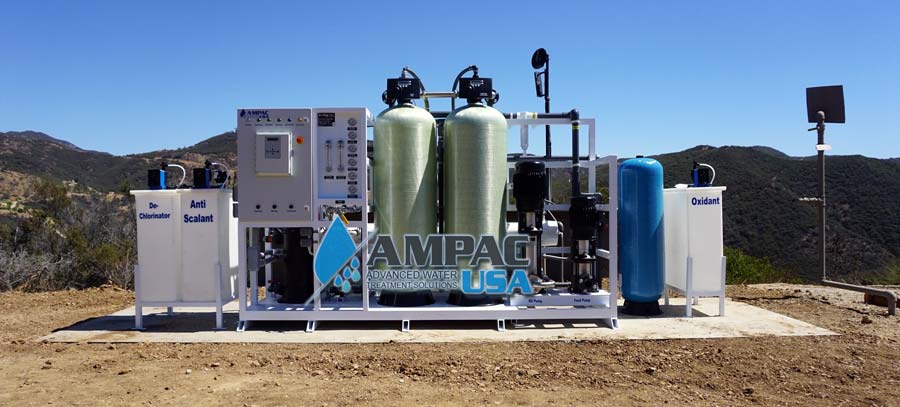
Reverse osmosis membranes are highly effective at eradicating a comprehensive range of impurities, including chemicals, particles, organisms, and metal bits. This broad contaminant removal capability makes RO systems, like those engineered by AMPAC USA, ideal for diverse water quality challenges.
What are modern reverse osmosis membranes made of?
Modern reverse osmosis membranes are typically thin-film composite (TFC) structures. These advanced membranes consist of three distinct layers, engineered to provide superior contaminant rejection and durability for commercial and industrial applications.
What are the key performance parameters for an RO membrane?
Key performance parameters for RO membranes include Permeate Flow Rate, which determines the purity level, and Stabilized & Minimum Salt Rejection, which govern the system’s ability to desalinate. The Recovery Rate is also a crucial factor, often customized by AMPAC USA engineers according to specific water conditions.
When was the reverse osmosis process first discovered or developed?
The reverse osmosis process was first executed in a laboratory setting in the 1950s. Scientists explored reversing the naturally occurring osmosis phenomenon, leading to the discovery that contaminated or salty water could be purified into a form fit for drinking.
Related Articles
- How Long Does a Reverse Osmosis Membrane Last? When to Replace It
- The Effectiveness of Reverse Osmosis Membrane Filtration To Improve Drinking Water
- Reverse Osmosis System Maintenance Guide: Service Intervals and Procedures
- How Reverse Osmosis Works: The Complete Technical Guide | AMPAC USA
Conclusion
The membrane is really the whole system in miniature — its flow rate, salt rejection, and recovery rate determine almost everything about how well your water comes out the other side, which is why picking the right one starts with actually testing your water supply rather than guessing. A membrane chosen for a source high in metals won’t necessarily perform the same against a chemical-heavy supply, so that testing step isn’t optional if you want consistent results. AMPAC USA specs reverse osmosis systems around your specific water analysis rather than a one-membrane-fits-all approach. Contact our team at info@ampac1.com or (909) 548-4900 to get your water tested and matched to the right membrane.
AMPAC USA engineers custom water purification systems for commercial, industrial, and emergency applications — from 500 GPD to multi-million GPD. Trusted by municipalities, military, and industry worldwide.