Home Products Industries Applications Solutions Support Insights Contact Us
Back to Blog
Feb 17, 2021·8 min read
What-is-a-Mobile-Water-System-and-How-is-it-Beneficial_

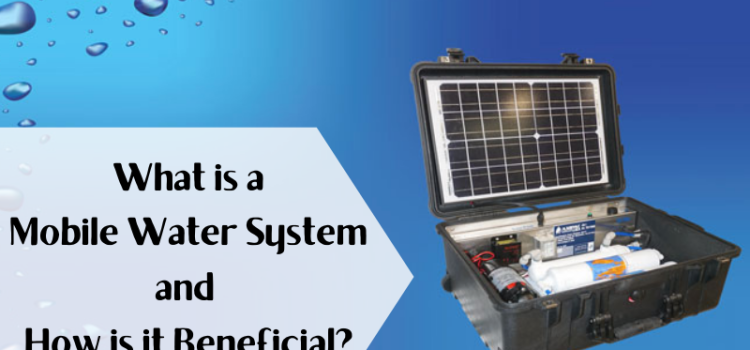
What is a Mobile Water System and How is it Beneficial?

Quick Answer: Mobile water treatment systems are self-contained, trailer or container-mounted units that can treat surface water, groundwater, or even seawater to drinking water standards at any location. They are used in disaster response, military operations, remote construction sites, and emergency municipal water supply. Capacities range from 1,000 GPD to 100,000+ GPD in a single mobile unit.

Mobile reverse osmosis systems or mobile water systems are a technological invention that have proven their worth. If you haven’t heard of them then read on to know what is a mobile water system and how is it beneficial. 

What is a Mobile Water System?

As the name suggests, a mobile water system or a mobile reverse osmosis system is a water purification system that allows you to purify water at any location. The system would be compact, effective, and easily portable. 

Benefits of Mobile Water Systems

  • Great in Emergency Situations

One of the key benefits of mobile water systems is that they are great for emergency situations like disasters, floods, fire, earthquakes, droughts, wars, etc. They are suitable for both natural disasters and human-made disasters. 

  • Easy Deployment

Another benefit of such systems is easy deployment. Mobile water treatment systems can be deployed quickly and can start the operations within a few minutes after the installation. 

  • Minimal Training

These systems are also good when it comes to operating the systems. You don’t need to hire a technically sound person to operate these systems. Any person with minimal technical skills and knowledge can operate them easily. Anyone can learn to operate them in less than 20 minutes. 

  • Budget-Friendly

Most of the reverse osmosis systems are affordable. They can fit within any budget and ensure that the long term costs of getting pure and 100% contamination-free water is low.

  • Minimal Maintenance

One of the reasons people/companies/institutions prefer these systems is that they need minimal maintenance. The filters and membranes should be changed when needed. The structure would remain the same for years to come. 

  • Chemical-Free

These filters are also free of chemicals as the water is filtered using membranes and other such technologies. So, health-oriented people/institutions prefer them a lot. 

  1. Best for Traveling

These filters are also the best friends of travelers. They can be added to a car, a ship, a boat, or other means of travel. They make water purification on the go a reality. 

  • Single-Use Plastic Reduction

When mobile water filters are used on a large scale, it might help control the sale of single-use plastics that are bad for the environment and add to the pile of plastic present on earth even now! So, these filters help build a sustainable future. 

  • 100% Reliable

Mobile water systems are 100% reliable when it comes to converting water from any source into pure, contamination-free, tasteless, odorless, and colorless water. Trust it once, and you will trust it over and over again. 

Where to Get the Best Mobile Water Systems?

If you are looking for mobile water systems that fulfil every water need, last long, and offer maximum value for money, you can only depend on one brand only- AMPAC USA. We are a leading provider of such systems and have deployed our systems even in remotest parts of the world. All the systems we design, engineer, create and deploy are sturdy and robust. You will get maximum product satisfaction from them. To get more information on how to acquire these systems, and build a custom one for your needs quickly, get in touch with our customer service team. Call 909-548-4900 now!

References:

https://www.water-for-health.co.uk/our-blog/2018/07/5-key-benefits-of-using-a-filter-water-bottle/

https://www.intelgadgets.com/blog/4-reasons-why-you-must-buy-a-portable-water-filter/#:~:text=A%20major%20advantage%20of%20portable,all%20those%20who%20like%20traveling.

https://www.ampac1.com/products/mobile-solar-water-treatment/mobile-water-treatment-systems

What flow rates are available for emergency water treatment?

AMPAC USA's emergency systems range from 1,500 GPD portable units to 50,000+ GPD trailer-mounted systems. Military-specification units are available for forward operating base deployment, producing potable water meeting EPA and WHO drinking water standards from virtually any source.

Are emergency RO systems suitable for disaster relief operations?

Yes. AMPAC USA's emergency systems are used by FEMA, the U.S. military, and international NGOs for disaster relief. They treat flood water, contaminated groundwater, and brackish sources, removing bacteria, viruses, and chemical contaminants to produce safe drinking water on-site.

What power sources can emergency water purification systems use?

AMPAC USA's emergency systems can run on generator power (120/240V or 480V 3-phase), solar panels with battery backup, or vehicle power take-off (PTO). Low-power models consume as little as 0.5 kW, making them viable for off-grid deployment.

How durable are military-grade water purification systems?

AMPAC USA's military systems are built to MIL-SPEC standards with stainless steel frames, powder-coated components, and UV-resistant materials. They are designed to operate in temperatures from -20°F to 120°F and are vibration-tested for transport in military vehicles.

Related Articles

Conclusion

This post highlighted how emergency and military-grade water purification systems provide safe drinking water rapidly in the most challenging field conditions. For organizations requiring deployable water treatment capability, AMPAC USA engineers portable and trailer-mounted systems built to perform wherever they are needed. Contact our team at info@ampac1.com or (909) 548-4900 to discuss your emergency water treatment requirements.

Mobile Water Treatment: Design, Applications, and Capabilities

Mobile water treatment systems provide potable water production capability without permanent infrastructure — a critical requirement in emergency response, remote industrial operations, military deployments, and developing community water projects. Modern containerized mobile treatment units integrate the complete treatment train (pre-filtration, coagulation/flocculation if needed, reverse osmosis, disinfection, storage, and distribution pumping) in an ISO shipping container or trailer format that can be transported by truck, rail, or air freight and operational within hours of deployment.

The technology core of most mobile units is reverse osmosis, which handles the widest range of source water quality: from slightly turbid river water to brackish groundwater (up to 10,000 ppm TDS) to seawater (30,000+ ppm TDS) depending on membrane selection and operating pressure. Pre-treatment requirements vary with source water: surface water from rivers and lakes typically requires coagulation, multi-media filtration, and cartridge filtration before the RO stage; groundwater may require only cartridge filtration and antiscalant dosing. Post-treatment UV disinfection ensures microbiological safety of product water regardless of feed water condition.

AMPAC USA mobile RO systems are designed for challenging field environments: stainless steel construction, weather-resistant enclosures, automatic control systems with remote monitoring, generator compatibility, and flexible inlet/outlet connections for rapid hookup to available water sources. Units have been deployed in hurricane response, wildfire emergency water supply, island community water projects, and mining operations in remote locations on every continent. Production capacities range from 500 GPD truck-mounted units to 25,000+ GPD ISO container systems for large emergency deployments.

Frequently Asked Questions

Q: What is a mobile water treatment system used for?

A: Mobile water treatment systems are used for emergency disaster response, military field operations, remote construction and mining sites, temporary event water supply, community water projects in developing regions, and as backup capacity for municipal water systems during infrastructure maintenance.

Q: How quickly can a mobile RO system be deployed?

A: Containerized mobile RO systems can typically be positioned and operational within 2-4 hours of arrival at a site with power and source water available. More complex installations with generator power setup may require 6-12 hours.

Q: What water sources can mobile treatment systems handle?

A: AMPAC USA mobile systems can treat rivers, lakes, ponds, groundwater wells, brackish water, and seawater depending on membrane selection and pre-treatment configuration. Source water quality determines the required pre-treatment complexity and system recovery rate.

Q: How much power does a mobile water treatment system need?

A: Power requirements depend on capacity and source water TDS. A 5,000 GPD brackish water RO system requires approximately 5-10 kW. A seawater system of similar capacity requires 20-40 kW due to higher operating pressure. Most units can run on diesel generators in field conditions.

Q: Can mobile water systems run unattended?

A: AMPAC USA mobile systems include automated control with programmable logic controllers (PLCs), automatic shutdown on quality failure, remote monitoring capability, and alarm systems — enabling semi-unattended operation with periodic operator checks rather than continuous staffing.

Q: What maintenance do mobile water systems require?

A: Regular maintenance includes pre-filter cartridge replacement (monthly or as indicated by pressure differential), membrane CIP cleaning (quarterly or condition-based), UV lamp replacement (annually), and pump and valve service per manufacturer schedule. AMPAC USA provides comprehensive maintenance documentation and spare parts packages for remote deployments.

Q: How do emergency organizations use mobile water treatment?

A: FEMA, military units, and NGOs use mobile water treatment in disaster response (hurricanes, floods, earthquakes) where municipal water infrastructure is damaged. Units can process contaminated surface water to drinking water standards, serving communities of 500 to 50,000 people depending on system capacity.

Scroll to Top