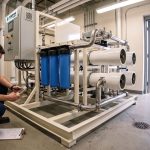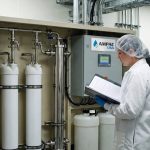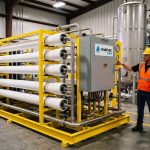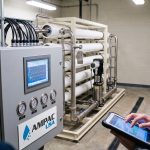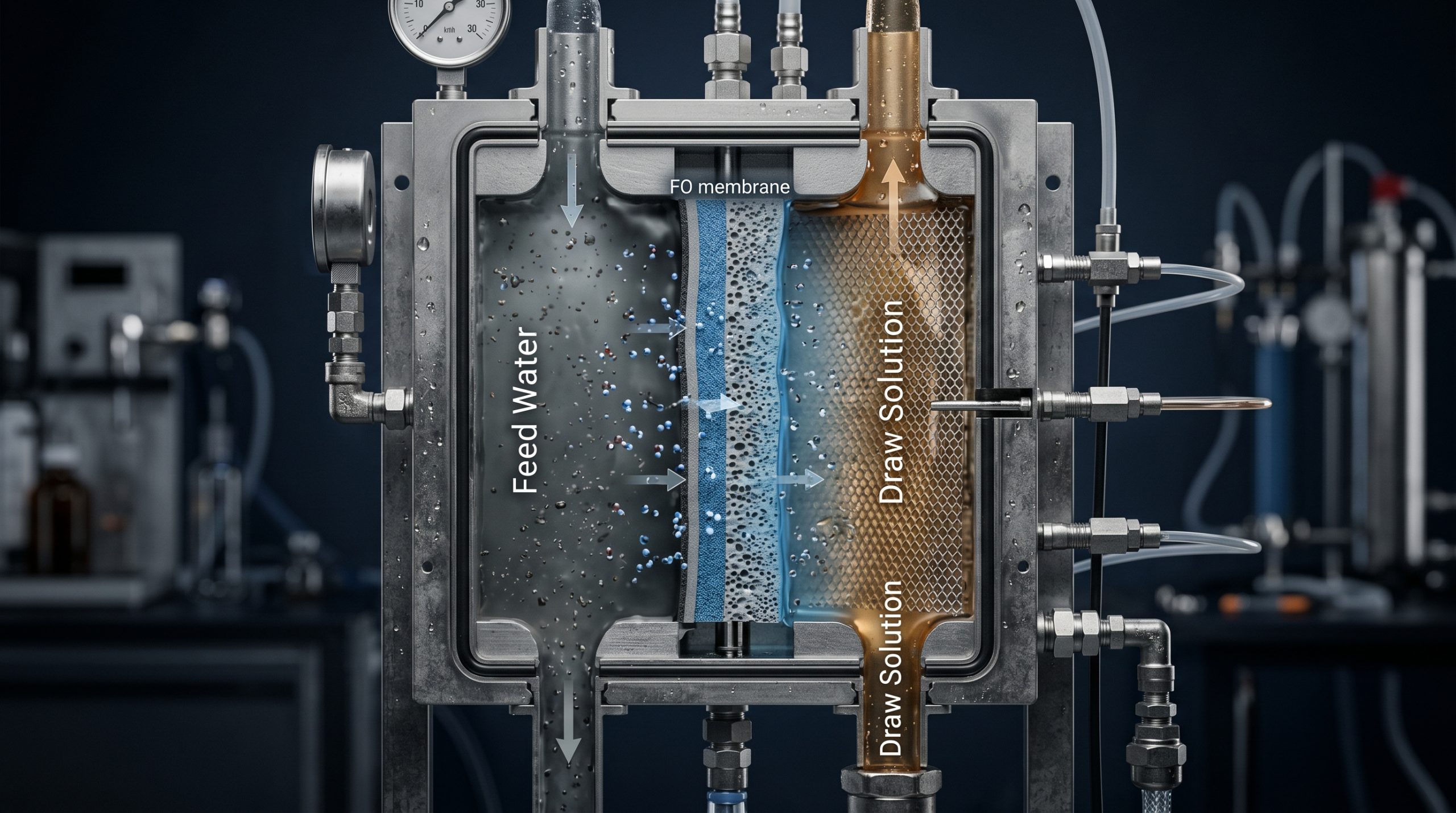

For anyone deeply involved in water treatment, forward osmosis (FO) is no longer merely a buzzword; it is a transformative technology. Unlike conventional reverse osmosis (RO) systems, which push water through membranes with brute hydraulic force—requiring high-pressure pumps and incurring significant energy costs—FO operates differently. It leverages a natural phenomenon: osmotic pressure differentials. This innovative approach gently pulls water through a semi-permeable membrane. The result is a remarkably energy-efficient, adaptable process that is redefining standards for desalination, challenging wastewater treatment, food & beverage processing, and pharmaceuticals. We have observed its effectiveness firsthand.
This article will break down the top 5 benefits of forward osmosis. These are not just theoretical advantages; they are why FO is becoming an indispensable tool in modern water management.
-
Exceptional Energy Efficiency in Water Treatment
A primary advantage of forward osmosis is its energy efficiency. Compared to traditional membrane systems, the difference is substantial. RO systems, for instance, might require 600-1000 PSI or more to push water through the membrane, especially with high TDS feed. FO, however, does not necessitate such massive pumps. It operates with natural osmotic gradients, which represents a significant distinction.
The absence of high-pressure pumps translates to less mechanical stress on components, directly reducing operational costs and significantly minimizing equipment wear. We have observed FO systems operating for years with minimal energy draw. For remote sites or off-grid operations—such as a mining camp in the desert or a military base far from infrastructure—where power is either scarce or incredibly expensive, FO offers a critical solution. It is simply more sustainable. When addressing brackish water treatment or attempting to recover water from incredibly concentrated brines, FO consistently outperforms RO with significantly reduced power dependency.
Read: The Global Perspective: How Commercial RO is Addressing Water Scarcity Challenges
-
Superior Membrane Longevity and Fouling Resistance
Fouling is a persistent challenge for any membrane system. With FO, however, the situation is different. These membranes experience significantly less fouling and scaling compared to their pressure-driven counterparts. This is because the osmotic process is gentle; it does not forcefully compact particles against the membrane surface, preventing the formation of a stubborn cake layer.
This gentler operation means less frequent ‘clean-in-place’ cycles. Membrane cleaning frequency drops dramatically, which directly translates to reduced chemical use—saving costs on consumables—and lower overall maintenance expenses. Indeed, FO membranes have been observed to last two to three times longer than typical RO membranes in challenging applications. This positions FO as a highly effective solution for industries grappling with complex or heavily contaminated feed streams, such as textile dye effluents (with high organic loads), demanding mining wastewater, or viscous food and beverage residues. It manages these challenges more effectively.
-
High Recovery Rates and Versatile Feed Compatibility
FO is exceptionally robust. It can process an astonishingly wide range of feedwater qualities—from highly saline brine (e.g., 50,000+ ppm TDS) to turbid river water loaded with particulates, or even heavily contaminated industrial streams. Conventional RO often struggles with feed exceeding 40,000 ppm TDS, but FO continues to operate effectively.
It consistently achieves higher water recovery rates. We have deployed FO in situations where RO was no longer effective or economical. Furthermore, FO systems are a natural fit for zero-liquid discharge (ZLD) strategies, maximizing water recovery. This results in more usable water and less waste. The process can even extract clean water from highly challenging sources like sludge, leachate, and landfill waste, often with surprisingly minimal pre-treatment. This adaptability makes it ideal for municipal wastewater reuse projects, complex industrial effluent treatment, and efficient agricultural runoff management.
-
Innovative Applications Across Multiple Industries
A key advantage of an AMPAC USA forward osmosis system is its sheer flexibility. It extends far beyond mere water purification. We are observing its deployment in several innovative applications:
- Food and Beverage: Consider concentrating fruit juices, dairy products, or liquid foods. FO achieves this without high heat, preserving delicate flavors and nutrients that traditional evaporation would destroy.
- Pharmaceuticals: For pharmaceutical companies, FO is critical for recovering expensive active pharmaceutical ingredients (APIs) and reclaiming solvents, minimizing waste and maximizing yields.
- Power Plants: In power generation, FO is being integrated into thermal desalination hybrid systems. It aids in recovering valuable water from cooling tower blowdown—a challenging, concentrated waste stream.
- Emergency and Military Use: Portable FO units, sometimes producing 100 GPD or more, provide reliable, safe drinking water from otherwise undrinkable contaminated or saline sources. These units have been deployed in disaster zones and remote military operations where water conservation is paramount.
Its capability to operate with low energy input and perform consistently even in extreme environments positions FO as a leading choice for addressing next-generation water treatment challenges.
Read: The Most Effective Way to Eliminate PFAS and PFOA from Your Drinking Water
-
Minimal Environmental Footprint and Circular Economy Support
From an environmental perspective, FO is a clear winner. It contributes to true sustainability by significantly reducing energy consumption, waste generation, and chemical usage. This offers substantial benefits for the environment and your financial performance.
This means FO perfectly complements brine minimization and water reuse strategies, drastically lowering discharge volumes. It facilitates the development of critical circular economy models, recovering water and concentrating solutes efficiently in a single process. The technology has even been successfully paired with renewable draw solutions and bioprocessing, creating truly closed-loop treatment systems. This integration with green chemistry and zero-waste initiatives is fundamentally transforming how we manage water resources.
Forward Osmosis vs Reverse Osmosis: A Strategic Comparison
To facilitate understanding, a side-by-side comparison is often helpful. Here is a concise breakdown of how FO compares to traditional RO. The data clearly illustrates the differences.
| Feature | Forward Osmosis (FO) | Reverse Osmosis (RO) |
| Energy Requirement | Very Low | High |
| Operating Pressure | <1 bar (osmotic-driven) | 4–80 bar (pump-driven) |
| Membrane Fouling | Low | High |
| Suitable for Harsh Feeds | Yes | Limited |
| Water Recovery Potential | High | Moderate |
| Pretreatment Requirements | Minimal | Extensive |
| Membrane Lifespan | Longer | Shorter |
| Environmental Impact | Low | High |
This table clearly demonstrates the operational and environmental advantages of forward osmosis when compared to traditional reverse osmosis systems. The difference is not merely marginal; it is significant.
Cutting-Edge Innovations in Forward Osmosis
The FO landscape is continually evolving. We are observing significant investment in membrane materials and draw solution chemistry, and the technology is rapidly advancing.
- New Aquaporin-based membranes, for instance, are delivering enhanced selectivity and permeability—resulting in better separation with higher water flux.
- We are also seeing innovative developments like magnetic and switchable draw solutes. These allow for easier, more energy-efficient regeneration, significantly reducing the energy needed to recover the draw solution.
- Hybrid systems are also pushing technological boundaries. Combining FO with processes like membrane distillation or pressure-retarded osmosis (PRO) is unlocking entirely new levels of efficiency and recovery.
Water technology innovators and startups are actively leveraging FO, developing modular, mobile, and low-carbon solutions. These are ideal for new markets and regions requiring flexible, sustainable water treatment.
Read: $3 Billion for Lead Pipe Replacement to Deliver Clean Drinking Water
Real-World Applications: FO in Action
- Desalination in Arid Regions
In regions like the UAE or Saudi Arabia—where water conservation is paramount—countries are piloting FO specifically for brine concentration. This is critical for enhancing overall desalination yield and significantly reducing challenging reject streams. It enables more freshwater production from the same seawater intake.
- Industrial Wastewater Recovery
Textile mills and pharmaceutical manufacturers, confronting some of the most challenging effluents, are utilizing FO. Systems have achieved 95%+ water recovery, even from highly complex wastewater, all while significantly reducing chemical consumption. This represents a substantial advancement.
-
Emergency Response Systems
In our experience, portable FO-based hydration packs are invaluable. Disaster relief agencies and military units use them to quickly convert contaminated river water, floodwater, or even saline sources into safe, potable drinking water in the field. This requires minimal complex setup.
Why Forward Osmosis Is the Future of Water Purification
As global water scarcity intensifies and energy costs continue to rise, forward osmosis is not merely an option—it is a transformative solution. It offers a vital solution for water-stressed regions and industries worldwide.
- Its inherent scalability and natural compatibility with renewable energy sources make it a sustainable choice for future water management.
Frequently Asked Questions
How does Forward Osmosis differ from Reverse Osmosis?
Forward Osmosis (FO) utilizes natural osmotic pressure differentials to draw water through a semi-permeable membrane, unlike Reverse Osmosis (RO) which requires high hydraulic pressure. This fundamental difference makes FO significantly more energy-efficient and less prone to membrane fouling, especially with complex feed streams. AMPAC USA engineers leverage this distinction for sustainable water treatment solutions.
What makes Forward Osmosis more energy-efficient than traditional RO systems?
Forward Osmosis achieves exceptional energy efficiency by operating under natural osmotic gradients, eliminating the need for high-pressure pumps characteristic of Reverse Osmosis. This reduced mechanical stress translates directly to lower operational costs and minimal equipment wear. It’s particularly advantageous for remote installations or treating concentrated brines where power dependency is a critical factor.
How does Forward Osmosis improve membrane longevity and reduce fouling?
Forward Osmosis membranes experience superior longevity and fouling resistance because the gentle osmotic process prevents the compaction of foulants on the membrane surface. This significantly reduces cleaning frequency and chemical usage. FO membranes can last two to three times longer than conventional RO membranes, making them ideal for challenging feed streams like textile effluents or mining wastewater.
What types of challenging water sources can Forward Osmosis effectively treat?
Forward Osmosis is highly versatile, capable of treating a wide range of challenging feedwater qualities, including highly saline, turbid, and heavily contaminated streams. It effectively recovers water from sources like textile effluents, mining wastewater, food and beverage residues, sludge, and even landfill leachate with minimal pre-treatment. This adaptability makes FO suitable for zero-liquid discharge (ZLD) strategies.
Can Forward Osmosis be used for zero-liquid discharge (ZLD) applications?
Yes, Forward Osmosis systems are highly adaptable to zero-liquid discharge (ZLD) strategies, maximizing usable water yield even from difficult sources. Its ability to handle highly concentrated and contaminated feed streams, such as sludge or leachate, makes it an effective technology for recovering water where traditional methods are uneconomical or ineffective, contributing to sustainable water management.
AMPAC USA engineers custom water purification systems for commercial, industrial, and emergency applications — from 500 GPD to multi-million GPD. Trusted by municipalities, military, and industry worldwide.