
Water Quality Science for Cannabis Cultivation: A Field Expert’s View
Every seasoned cannabis grower knows water quality isn’t just a small factor; it’s often the biggest, most controllable thing that impacts how well your plants grow. Bad water chemistry limits everything, even if you’re using great genetics and fancy growing methods. Honestly, many growers miss this crucial starting point. Water touches every part of how your plant takes in nutrients and its overall health.
Here’s the deal: your water’s pH directly decides which nutrients your plant can actually use versus which ones get locked out. Alkalinity- its buffering capacity- determines how hard you’ll have to fight to keep your pH where it needs to be. Hard water, while it gives you calcium and magnesium, can also mess with other nutrients. And don’t forget chlorine and chloramines; these chemicals kill off the good microbes that are super important for living soil and organic media.
Horticultural science clearly shows how water pH affects cannabis nutrient availability. In soil and soilless media, plants usually take in nutrients best when the pH is between 6.0 and 7.0, with 6.5 being the sweet spot. Drop below pH 5.5, and you risk aluminum and manganese toxicity. Go above pH 7.5, and key micronutrients like iron, manganese, zinc, copper, and boron become unavailable. For hydroponic systems- like NFT, DWC, or aeroponics- the ideal range gets much tighter, to pH 5.5-6.2. Why? There’s no soil to buffer, or smooth out, those pH swings. This is where reverse osmosis (RO) water really shines: its near-zero alkalinity makes precise pH adjustment incredibly easy. You won’t be fighting your source water’s natural mineral buffering.
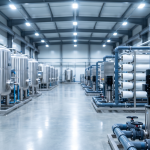
For big commercial cannabis farms, consistency isn’t just nice; it’s a must-have. When your source water’s hardness, alkalinity, and mineral content vary from batch to batch, you’ll get inconsistent product quality, even if you use the same genetics and methods. A commercial RO system gives you a consistent 15-30 ppm TDS baseline water, which completely removes this problem. It lets you build truly repeatable nutrient programs for every single growing cycle. At AMPAC USA, our commercial RO systems for the cannabis industry often include backup systems, continuous automated water quality monitoring, and even optional nutrient injection for fully automated fertigation setups. We’ve seen firsthand how much this improves yield and quality.
Getting Started: Your Water Quality Blueprint
If you’re serious about growing better cannabis, start with a water quality checklist. This isn’t just busywork; it’s your blueprint for success.
- Check pH Levels
Always check your water’s pH. As we talked about, for growing plants, you’re generally aiming for pH 5.5 to 7.0, depending on how you grow. If your source water pH consistently goes above 8.5, you’re probably dealing with high TDS or a lot of alkalinity. That limits nutrient uptake, no matter how good your feed is. On the flip side, if pH drops below 5.5, you have too much hydrogen, which drastically reduces buffering capacity. pH pens are cheap; ignoring pH isn’t.
- Examine the TDS Levels
TDS, or Total Dissolved Solids, is another key measurement. High TDS in your source water means you’re starting with a lot of unwanted salts and minerals. Honestly, the only reliable way to cut down high TDS is with advanced water treatment like reverse osmosis. While general plant research sometimes suggests ideal TDS under 640 ppm, what we’ve found in hydroponic and soilless cannabis growing is that plants are more sensitive to pH changes and salt buildup when initial TDS levels are above 200 ppm. For precision, near-zero TDS from an RO system is the gold standard. It lets you build your nutrient profile exactly how you want it, from scratch.
- Get a Water Test Done
This isn’t optional. Collect a water sample and send it to a professional water analysis laboratory. Make sure you ask for an *irrigation water analysis*- it’s different from a drinking water analysis. The report will tell you everything that impacts your cannabis plants’ health and performance, from mineral content to alkalinity and any potential contaminants. It’s an investment that really pays off.
What’s Next? Refining Your Water Strategy
Once you’ve got your test results, you can really dial in your water quality.
- Protect Important Microbes & Avoid Chlorine Toxicity
City water plants use chlorine and chloramine- usually at 0.5-2.0 mg/L (ppm)- to kill dangerous bacteria. That’s great for drinking water, but these chemicals are terrible for the good microbial communities in your soil or organic media. These microbes are essential; they break down organic matter and make nutrients available to your cannabis plants. On top of that, while plants need a tiny bit of chloride as a micronutrient, too much leads to chlorine toxicity: yellowing, browning, or scorched-looking leaves, even leaf drop. This can be fatal, especially during budding. So, avoid tap water with high chlorine levels if you can, and definitely keep swimming pool runoff away from your precious plants.
- Timing Matters for Nutrient Delivery
Every cannabis grower eventually learns that consistent, measured watering is key. The plant prefers smaller amounts of water over a longer period, rather than one massive drench. And that water needs to be evenly spread above the root base. The real point here is that pristine, consistent water quality from an RO system allows you to perfectly combine water and nutrients without worrying about inherent contaminants throwing off your delicate balance. It enables precise fertigation, ensuring the plant gets exactly what it needs, when it needs it.
How to Ensure Perfect Water Quality for Cannabis Production? Find Your Cannabis Water Treatment Solution.
If you’re serious about perfect water quality for your cannabis operation, AMPAC USA is your partner. We design and build tough reverse osmosis and forward osmosis systems. They’re engineered to give you the precise water quality cannabis production demands, consistently, for years. We’ve installed systems for everything from small-batch growers to huge commercial operations. Visit us here or call us directly at 909-548-4900. Let’s discuss your specific needs and find the ideal system for your success.
Related Articles
- Water Softener vs Reverse Osmosis: Which Do You Need? | AMPAC USA
- Brackish Water Treatment Processes & Solutions by Ampac USA
- Military Water Treatment System- A Complete Guide by Ampac USA
- Water Purification For The Entertainment Industry – RO With AMPAC USA
Frequently Asked Questions
What is the optimal pH range for cannabis cultivation?
For cannabis grown in soil or soilless media, the optimal pH range for nutrient uptake is typically 6.0-7.0, with a sweet spot around 6.5. In hydroponic systems like NFT or DWC, the range tightens to 5.5-6.2, as there’s no soil buffering. AMPAC USA engineers emphasize that precise pH control is critical for nutrient availability.
Why is reverse osmosis (RO) water preferred for growing cannabis?
Reverse osmosis water is preferred because it delivers near-zero TDS (Total Dissolved Solids), providing a clean slate for precise nutrient management. Its near-zero alkalinity also makes pH adjustment incredibly easy, eliminating the battle with source water’s inherent mineral buffering. This consistency is crucial for both small and large-scale cannabis operations, a principle AMPAC USA applies globally.
What water contaminants are harmful to cannabis plants?
Cannabis plants are highly sensitive to contaminants such as chlorine, chloramines, heavy metals, and pathogenic bacteria. Chlorine and chloramines, for instance, inhibit beneficial microbial communities vital for living soil. AMPAC USA’s experience across diverse industrial applications confirms that removing these impurities is foundational for healthy plant development and consistent yields.
What is the ideal TDS level for water used in cannabis cultivation?
The ideal TDS (Total Dissolved Solids) level for water used in cannabis cultivation should aim for 600-1400 ppm *after* nutrients have been added. Starting with near-zero TDS water, such as reverse osmosis water, allows growers to precisely control the nutrient profile without interference from unknown minerals in the source water, ensuring optimal plant health.
What happens if cannabis plants receive water with incorrect pH levels?
Incorrect pH levels directly impact nutrient availability, leading to deficiencies or toxicities. If the pH dips below 5.5, plants risk aluminum and manganese toxicity; conversely, climbing above 7.5 can lock out essential micronutrients like iron, manganese, zinc, copper, and boron. Maintaining the optimal range (e.g., 6.0-7.0 for soil) is vital for overall plant health and yield, a principle AMPAC USA’s field engineers consistently observe.
AMPAC USA engineers custom water purification systems for commercial, industrial, and emergency applications — from 500 GPD to multi-million GPD. Trusted by municipalities, military, and industry worldwide.