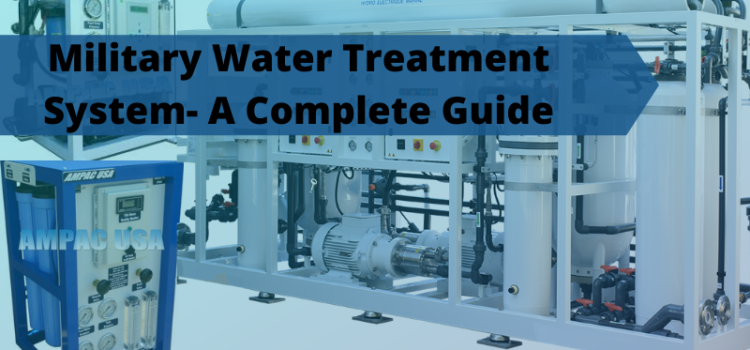

Our military protects us, plain and simple. To do that effectively, its personnel need clean, safe water — no exceptions. Imagine deploying to a remote zone where every local water source is questionable. That’s why a robust military water treatment system isn’t just a convenience; it’s a mission-critical asset, ensuring troops get truly potable water. At AMPAC USA, we’ve spent decades designing these vital systems. This guide breaks down what goes into them and why they’re so crucial.
In challenging terrains and high-risk environments, clean water isn’t just important; it’s a mission-critical resource for any military operation. Think about it: whether troops are deployed in arid deserts, dense jungles, or conflict zones with compromised infrastructure, they absolutely depend on robust, reliable water purification systems. This ensures the health and operational readiness of every soldier. We’ll explore military water treatment systems, their key components, how they work, and the concrete advantages they offer in both combat and disaster relief situations.
The Need for Military Water Treatment Systems
Military operations frequently take place in areas with zero access to safe drinking water. Relying on untreated local sources? That’s a recipe for disaster. It can quickly lead to widespread waterborne illnesses, crippling troop health and overall mission performance. That’s precisely why military water purification units (WPUs) are so vital. These systems are designed to tackle water from contaminated rivers, saline wells, or any other unsafe source—turning it into clean, truly safe drinking water, even under the most demanding field conditions. We’ve seen firsthand how crucial this capability is.
Key Components of a Military Water Treatment System
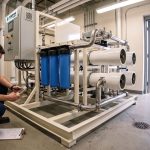
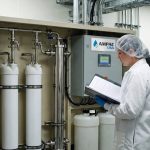
A high-performance military water treatment system isn’t a single magic bullet. It’s a combination of several advanced technologies, all working together for multi-stage purification. Here’s a breakdown of the key components we typically include:
- Pre-Filtration Units
These are the first line of defense. They remove suspended solids, dirt, and any larger debris from raw water sources—think rivers, lakes, or swamps. We typically use robust bag filters and multimedia filters for this primary filtration phase, often targeting particles down to 5-20 microns. This crucial step protects your RO membranes downstream.
- Reverse Osmosis Modules
This is truly the heart of the system. Our reverse osmosis (RO) membranes are incredibly effective at removing almost everything else:
- Dissolved salts (reducing TDS from 35,000 ppm down to 500 ppm or less)
- Heavy metals
- Bacteria and viruses
- Pesticides and chemical pollutants
RO technology is powerful. It ensures that even highly brackish water or pure seawater—water with TDS up to 45,000 ppm—can be reliably converted into potable water that’s absolutely safe for human consumption. We’ve installed hundreds of these systems on offshore rigs and naval vessels, so we know they perform.
- Activated Carbon Filters
Once RO has completed its primary purification, activated carbon filters step in. They absorb any remaining organic contaminants, chlorine, and volatile compounds. This isn’t just about safety; it significantly improves both the taste and odor of the final water—a small but crucial comfort in the field.
- UV and Chemical Disinfection Units
For that final layer of assurance, we use Ultraviolet (UV) light. It’s incredibly effective at inactivating pathogens. Beyond that, chemical disinfectants like chlorine or iodine are often added. This guarantees the water stays germ-free during storage and distribution, preventing any post-treatment contamination.
- Pressure Boosters and Pumps
These are the workhorses. Our military-grade pumps are specifically designed to withstand the harshest environments, from desert heat to arctic cold. They keep water flowing continuously through all treatment stages, even when inlet pressure fluctuates wildly. These robust pumps can handle operating pressures up to 800-1000 PSI for seawater RO.
- Portable Storage Tanks
Once treated, water needs to be stored safely. Our systems often include collapsible, easily transportable tanks. These tanks simply store the purified water, ensuring it’s ready for immediate use in camps, field hospitals, or mobile kitchens.
Types of Military Water Purification Systems
Military water treatment technologies aren’t one-size-fits-all. They vary significantly in capacity, mobility, and specific application. Here are the most common types we encounter in the field:
- ROWPU (Reverse Osmosis Water Purification Unit)
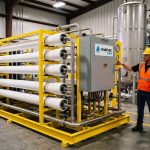
The ROWPU is a standard workhorse, widely deployed by the U.S. Army and NATO forces. These systems are designed to purify water from virtually any source—including sites contaminated with nuclear, biological, or chemical (NBC) agents. We’ve seen models ranging from compact 600 GPD units for small teams to massive 3000 GPD systems for larger operations, all built into rugged trailers or containers for rapid, efficient deployment.
- Mobile Water Purification Trailers
Think of these as complete water treatment plants on wheels. These self-contained systems pack everything: diesel generators, integrated RO units, and heavy-duty wheels built to conquer the most rugged terrain. They’re perfect for forward operating bases (FOBs) and crucial during critical disaster response missions.
- Solar-Powered Water Treatment Units
For remote regions where noise and fuel are concerns, solar-powered units offer a significant advantage. These systems run silently, using efficient solar panels and battery backups to power their RO membranes and UV filters. They provide truly sustainable solutions—critical when fuel logistics are challenging.
- Man-Portable Water Purifiers
Sometimes, you need water on the move. These are compact systems, light enough for individual soldiers or small units to carry. They treat water on-the-go, often using manual pumps, chemical tablets, or even compact RO membranes for personal use. We’ve seen these save lives in deep field operations.
Real-World Military Applications
- Field Deployment
This is a primary application. Military water systems ensure troops get reliable, safe drinking water during extended missions, no matter how remote or hostile the region.
- Disaster Relief and Humanitarian Aid
Armed forces are often the first on the ground after natural disasters. Our military-grade water purifiers become absolutely crucial here, supplying clean water to affected populations and supporting the setup of emergency field hospitals. We’ve been part of countless missions where our systems were critical.
- Mobile Field Hospitals
Preventing cross-contamination and infection in a field hospital is paramount. These facilities must have access to sterile water. Our military systems deliver that: a continuous supply of purified water essential for medical procedures, hygiene, and overall patient safety.
- Amphibious and Naval Operations
For naval forces and marines, fresh water is a constant challenge at sea. They rely heavily on seawater desalination systems onboard ships and landing crafts. These units are specifically designed to convert vast amounts of seawater into fresh, usable water.
Key Benefits of Military-Grade Systems
- Rugged Design
These systems aren’t delicate lab equipment. They are engineered for extreme durability, designed to withstand extreme temperatures (from -20°F to 120°F), constant dust, shock, and vibrations. This ruggedness ensures uninterrupted operation, even in the absolute harshest environments you can imagine.
- Rapid Deployment
Time is always critical in military operations. Our systems are compact, modular, and frequently containerized. This design allows for rapid transport by air, sea, or land, enabling swift water setup exactly where and when it’s needed most.
- Multi-Contaminant Protection
It’s important to note that civilian systems are typically designed for municipal water. But military water purifiers are built for a different threat landscape. They’re specifically engineered to handle a broad spectrum of contaminants, including potential radiological and chemical agents. That’s a non-negotiable requirement in a combat zone.
- Scalable Capacity
Mission requirements change constantly. Therefore, the systems must be adaptable. We design solutions that scale, from individual purification bottles for a single soldier to large-scale ROWPUs producing thousands of gallons per day for an entire base.
- Automated Operation
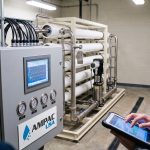
Our modern systems incorporate advanced automation. They come equipped with intuitive touchscreen panels, remote monitoring capabilities, and automated backwash cycles. This significantly reduces the need for constant technical oversight, freeing up personnel for other critical tasks.
Compliance and Standards
Every military water treatment system we build at AMPAC USA is developed in strict compliance with globally recognized standards. We put them through rigorous testing under Department of Defense (DoD) specifications and adhere to critical NSF/ANSI standards. Here’s what we typically aim for:
- TB MED 577: These are the U.S. Army’s essential standards for potable water in field operations.
- MIL-STD-810: This covers environmental engineering considerations and laboratory tests, ensuring systems can truly survive extreme conditions.
- NATO STANAGs: These Standardization Agreements are vital for interoperability among allied forces—meaning our systems integrate seamlessly.
Related Articles
- Brackish Water Treatment Processes & Solutions by Ampac USA
- Water Softener vs Reverse Osmosis: Which Do You Need? | AMPAC USA
- The Relation Between Cannabis Growth and Water Quality- Ampac USA
- Ampac USA- Pre-Treatment Solutions in Reverse Osmosis
Frequently Asked Questions
Why are military water purification units essential for troop deployment?
Military water purification units (WPUs) are mission-critical because they prevent waterborne illnesses, which can cripple troop health and operational readiness in remote or compromised environments. AMPAC USA designs these systems to transform contaminated sources like rivers or saline wells into truly potable water, ensuring continuous support for military operations.
What are the primary components of a military water treatment system?
A high-performance military water treatment system typically integrates pre-filtration units and Reverse Osmosis (RO) modules. Pre-filtration, often using robust bag and multimedia filters, removes suspended solids down to 5-20 microns, protecting the RO membranes. The RO modules then serve as the heart of the system, providing multi-stage purification for truly safe drinking water.
What types of challenging water sources can military water purification systems treat?
Military water purification systems are engineered to treat a wide range of challenging water sources, including contaminated rivers, saline wells, and other unsafe local supplies found in arid deserts, dense jungles, or conflict zones. AMPAC USA’s robust designs ensure these systems can consistently produce clean, safe drinking water even under the most demanding field conditions.
How do military water treatment systems ensure water is truly potable?
Military water treatment systems ensure potability through a multi-stage purification process. This begins with robust pre-filtration units, utilizing bag and multimedia filters to remove suspended solids and debris, typically down to 5-20 microns. Following this, the critical Reverse Osmosis (RO) modules further purify the water, effectively removing dissolved solids, pathogens, and other contaminants to produce truly safe drinking water.
What are the key advantages of deploying AMPAC USA’s military water treatment systems?
Deploying AMPAC USA’s military water treatment systems provides critical advantages by ensuring the health and operational readiness of personnel in any environment. These robust systems deliver truly potable water from challenging sources, preventing waterborne illnesses and supporting mission performance in both combat and disaster relief situations. Our decades of field experience underscore their reliability and effectiveness.
Conclusion
Military water treatment isn’t a nice-to-have — it’s what keeps troops operational when the nearest safe water source is a contaminated river or a saline well in the middle of nowhere. Every system we build starts with pre-filtration down to 5-20 microns before the RO modules take over, and each unit is tested against Department of Defense specifications and NSF/ANSI standards before it ever reaches the field. That combination of ruggedness and compliance is why these systems keep showing up in real deployments, not just spec sheets. Take a closer look at our ROWPU military water purification systems. Contact our team at info@ampac1.com or (909) 548-4900 to discuss a military water treatment system for your deployment.
AMPAC USA engineers custom water purification systems for commercial, industrial, and emergency applications — from 500 GPD to multi-million GPD. Trusted by municipalities, military, and industry worldwide.