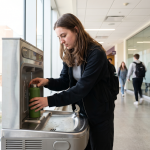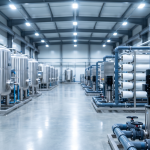
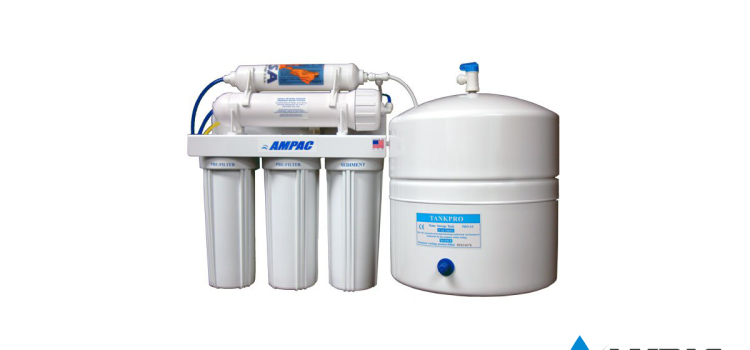

Reverse Osmosis has proven to be a highly effective process for the elimination of contaminants from water. This process which was discovered around 300 years ago finds a variety of applications and is extensively used for household, commercial and industrial requirements. From simple filter systems which provide safe drinking water in our houses to giving a higher quality level of water in industries like Food and Military, reverse osmosis filter systems can be found practically anywhere.
The process which has proven effective for low scale water treatment has various large scale applications too.
The advantages of these systems vary in every industry. The huge systems built to facilitate this process have maximum efficiency and is capable of eliminating up to 99% of total dissolved salts. Because of the structure of its membrane, these systems are widely used for desalination purposes as they are highly effective in preventing salt molecules from passing through. For a large-scale industrial level filter system, no special permit or particular chemicals are required unless there is a requirement of a particular water profile. The systems are very easy to deal with and are hassle free with low maintenance time and costs. Moreover, one of the best reasons to get these systems in place is that these are environment-friendly and almost completely harmless.
These giant systems do come along with a few cons. The systems do need to be made ready for the water treatment and it is done with chemicals and carbon filters. One of these procedures is dechlorination of water as not only they can destroy the membrane, but will also remain in the treated water. Chemicals to clean the membrane, keep it intact and prevent the scaling are important before water treatment to achieve a high level of effectiveness. There are some kinds of water types which cannot be treated and these include water having higher levels of Barium or Silica. These elements cause scaling making the whole process futile. The water also has to be free of any suspended particles which are missed by carbon filters and can block the pores of the membrane. Apart from this, Industrial reverse osmosis systems have a limited range of temperature than other processes. Reverse Osmosis systems being highly efficient at removing maximum contaminants also means that it has a low passage rate. As in the amount of water rejected is much greater in these systems and less acceptance.
Reverse osmosis systems are getting advanced from time to time and will overcome the challenges they face. Though the process has a number of limitations, its advantages outrun those easily. Which is why this process is still in use globally in every industry.
Frequently Asked Questions
How quickly can an emergency water purification unit be deployed?
AMPAC USA's EPRO and mobile RO units can be operational within 30–60 minutes of arrival on-site. Trailer-mounted and skid-mounted systems are pre-plumbed and pre-wired, requiring only connection to a power source and water source. Units treat river water, lake water, or brackish groundwater.
What flow rates are available for emergency water treatment?
AMPAC USA's emergency systems range from 1,500 GPD portable units to 50,000+ GPD trailer-mounted systems. Military-specification units are available for forward operating base deployment, producing potable water meeting EPA and WHO drinking water standards from virtually any source.
Are emergency RO systems suitable for disaster relief operations?
Yes. AMPAC USA's emergency systems are used by FEMA, the U.S. military, and international NGOs for disaster relief. They treat flood water, contaminated groundwater, and brackish sources, removing bacteria, viruses, and chemical contaminants to produce safe drinking water on-site.
What power sources can emergency water purification systems use?
AMPAC USA's emergency systems can run on generator power (120/240V or 480V 3-phase), solar panels with battery backup, or vehicle power take-off (PTO). Low-power models consume as little as 0.5 kW, making them viable for off-grid deployment.
How durable are military-grade water purification systems?
AMPAC USA's military systems are built to MIL-SPEC standards with stainless steel frames, powder-coated components, and UV-resistant materials. They are designed to operate in temperatures from -20°F to 120°F and are vibration-tested for transport in military vehicles.
Related Articles
- Is Reverse Osmosis the Best Way to Filter Water? Complete Comparison
- The Pros and Cons of Reverse Osmosis Filtration Process-Ampac USA
- Pros and Cons of Reverse Osmosis Water & Seawater Desalination
- Whole House Reverse Osmosis System Maintenance: DIY Guide
Conclusion
This post highlighted how emergency and military-grade water purification systems provide safe drinking water rapidly in the most challenging field conditions. For organizations requiring deployable water treatment capability, AMPAC USA engineers portable and trailer-mounted systems built to perform wherever they are needed. Contact our team at info@ampac1.com or (909) 548-4900 to discuss your emergency water treatment requirements.
AMPAC USA engineers custom water purification systems for commercial, industrial, and emergency applications — from 500 GPD to multi-million GPD. Trusted by municipalities, military, and industry worldwide.