
Two houses on the same road, sometimes the same subdivision, can pull water with completely different chemistry from wells a few hundred feet apart. One might have hard water and nothing else worth mentioning. The other could be sitting on naturally occurring arsenic. That’s not a fluke. It’s how groundwater actually works, and it’s the reason a water softener that fixed your cousin’s well two counties over might do nothing for the problem in yours.
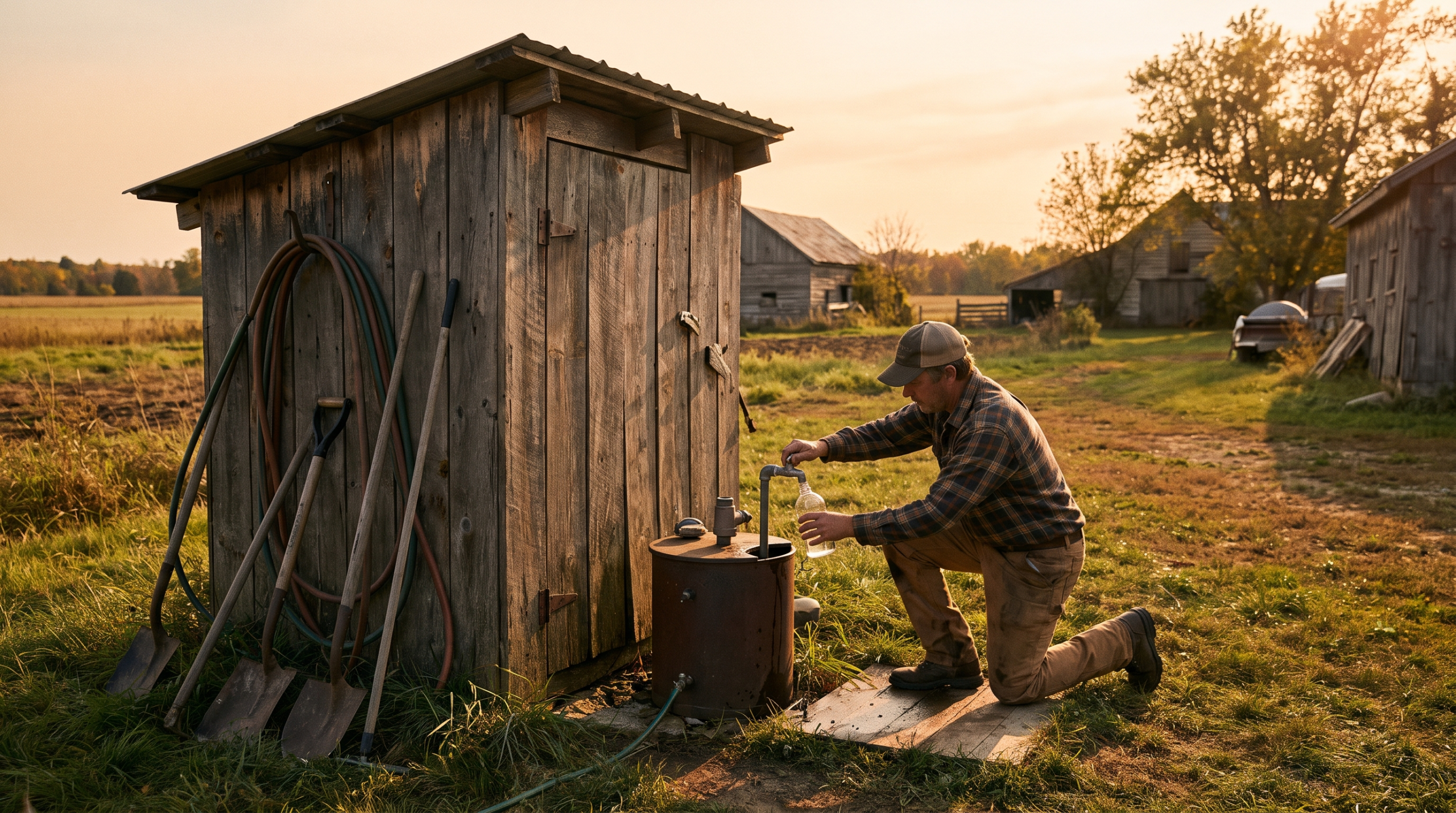
About 43 million people in the U.S., roughly 15% of the population, get their drinking water from a private well, according to the U.S. Geological Survey and EPA. None of those wells are covered by the Safe Drinking Water Act. That law only applies to public water systems serving 25 or more people. If you own a well, testing it, understanding what’s in it, and treating it correctly is entirely on you. Nobody is checking your water for you every quarter the way a municipal utility would.
Why Do Two Nearby Wells Have Different Water Chemistry?
Two wells close together can draw from different rock layers, different depths, or even different aquifers entirely, and each of those sources carries its own mineral and contaminant profile. Groundwater isn’t a single underground lake sitting beneath a neighborhood. It moves through whatever rock, sand, or fractured bedrock happens to be there, and it picks up whatever that material has to offer.
A well drilled into limestone will typically produce harder water, loaded with dissolved calcium and magnesium, than a well pulling from sandstone. A well that taps a fractured granite aquifer in New England or the Southwest has a real shot at naturally occurring arsenic, because arsenic leaches out of certain bedrock formations, not because anything was dumped there. USGS research on West Virginia groundwater found that water quality varied significantly depending on which rock strata a well was drilled into, even within the same general region. Depth matters too. A shallow well is closer to the surface and more exposed to whatever’s happening in the soil above it. A deep well might dodge that but pick up different mineral content from older, more consolidated rock.
What’s Actually the Most Common Problem in Private Wells?
Hard water is the single most common issue, affecting an estimated 40% of private wells nationwide, though it’s a nuisance rather than a health hazard. It shows up as scale buildup on fixtures, dry skin, spotty dishes, and appliances that wear out faster than they should. It’s annoying, not dangerous, and it’s the complaint well owners are most likely to already know they have.
The two contaminants worth actually worrying about are nitrate and arsenic. Nitrate contamination shows up in roughly 10% of wells and is mostly a human fingerprint: agricultural fertilizer runoff, septic system leachate, and animal waste working their way into groundwater. Arsenic, found in about 5% of wells, is almost entirely natural, a product of the rock the water sits in or moves through. A 2,100-well USGS study found that water from roughly one in five private wells contained at least one contaminant at a concentration above a human-health benchmark. That’s not a fringe number. That’s one in five wells tested, nationwide.
Does the Water in My Well Change Throughout the Year?
Yes. Well water chemistry shifts with the seasons, and in some cases the shift is large enough to change what treatment a household actually needs at different times of year. Research on unregulated domestic wells found that arsenic, PFOA, PFOS, and sucralose levels tend to run higher during dry seasons, when there’s less water diluting the aquifer, while bacterial contamination like E. coli tends to spike during wet seasons, when surface runoff has an easier path into shallow groundwater. Nitrate levels can also jump quickly after a heavy rain or a round of irrigation on nearby farmland, since that’s exactly when fertilizer and runoff have the most opportunity to move.
That means a single water test taken once, years ago, tells you what your well looked like on that one day. It doesn’t tell you what’s coming out of the tap during next spring’s thaw or after a dry August.
If My Neighbor’s Water Treatment System Works, Won’t Mine Work Too?
Not necessarily, and this is where a lot of well owners get burned. A water softener solves hardness. It does nothing for arsenic, nitrate, or bacteria. A basic sediment filter solves cloudiness. It does nothing for dissolved minerals or chemical contaminants. If your neighbor’s well has a hardness problem and yours has an arsenic problem, the system that worked for them will leave your actual issue completely untouched, even though both of you technically have “well water treatment” installed.
This is why a real water test, not a guess based on what worked down the street, has to come before any equipment decision. Once you know what’s actually in the water, whether that’s hardness minerals, nitrate, arsenic, or something else specific to your well’s geology and depth, the treatment approach follows from that data rather than from assumption. For households dealing with dissolved contaminants like arsenic or nitrate that a softener can’t touch, a properly sized residential reverse osmosis system is generally what actually removes them, because RO works by filtering at the molecular level rather than just swapping out hardness ions the way a softener does.
Why Does This Matter for Water Equity, Not Just Individual Households?
Because private well owners carry the full cost and full responsibility for water safety that public water system customers don’t, and that burden falls hardest on rural households who often have the least access to testing labs and treatment expertise in the first place. A city resident’s water gets tested, treated, and monitored by a utility, with costs spread across the whole customer base. A well owner pays for their own test, interprets the results largely on their own, and pays for whatever treatment they end up needing, with no regulatory backstop checking their work. In areas with agricultural runoff or naturally arsenic-rich bedrock, that gap isn’t hypothetical. It’s a real health exposure that public water customers a few miles away simply don’t carry.
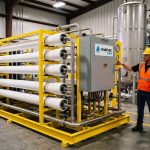
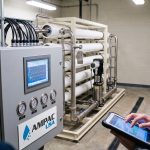
That’s part of why we build reverse osmosis systems sized for individual households as well as larger community and commercial applications. A single-family well doesn’t need industrial-scale equipment, but it does need treatment matched to what’s actually in its water, not a generic setup borrowed from a different well with a different problem.
What Should a Well Owner Actually Do With This Information?
Test first, and test for what your specific well is likely to have, not just the basics. Most state and county health departments publish rough contaminant maps for their area, arsenic-prone bedrock zones, nitrate-heavy agricultural counties, and so on, and that’s a reasonable starting point before you even call a lab. Test annually for nitrate and bacteria, since both can shift fast with weather and season, and test every three to five years for more stable concerns like arsenic and hardness, per standard well-owner testing guidance.
Once results come back, treat what’s actually there. If it’s hardness, a softener is the right tool. If it’s arsenic, nitrate, or other dissolved contaminants, that calls for a different approach entirely, one built to filter at the level those contaminants actually exist at, not just soften the water and call it done.
Here’s the bottom line: your well water isn’t like your neighbor’s because it can’t be. Different rock, different depth, different season, different result. Treating it like every well is the same is how households end up with expensive equipment that solves a problem they don’t have while ignoring the one they do.
Frequently Asked Questions
Why does well water quality vary so much between houses that are close together?
Because nearby wells often draw from different rock layers, depths, or even different aquifers, and each geological formation contributes its own mineral content and contaminant risk. Two wells a few hundred feet apart can have meaningfully different chemistry as a result.
Is my well water automatically tested or regulated like city water?
No. The Safe Drinking Water Act only covers public water systems serving 25 or more people. Private wells, used by roughly 43 million Americans, are entirely the owner’s responsibility to test, treat, and maintain.
What’s the most common problem found in private wells?
Hard water, affecting an estimated 40% of private wells. It’s a nuisance that causes scale buildup and appliance wear, but it’s not considered a health hazard the way nitrate or arsenic contamination can be.
Can well water chemistry change with the seasons?
Yes. Studies of unregulated domestic wells have found arsenic and certain chemical contaminants tend to run higher in dry seasons, while bacterial contamination often rises during wet seasons due to surface runoff. Nitrate can spike quickly after heavy rain or nearby irrigation.
If a water softener worked for my neighbor, will it work for my well too?
Not necessarily. A softener only addresses hardness minerals. It does nothing for arsenic, nitrate, or bacteria. If your well’s issue is different from your neighbor’s, whether due to different depth, geology, or land use nearby, you need a treatment approach matched to what testing actually shows in your water, which for dissolved contaminants often means reverse osmosis rather than a softener alone.
Sources: U.S. Geological Survey (Contamination in U.S. Private Wells; The Quality of the Nation’s Groundwater; West Virginia groundwater study); U.S. Environmental Protection Agency (Private Drinking Water Wells; Safe Drinking Water Act background); Seasonal Variation of Water Quality in Unregulated Domestic Wells (NCBI/PMC).
AMPAC USA engineers custom water purification systems for commercial, industrial, and emergency applications — from 500 GPD to multi-million GPD. Trusted by municipalities, military, and industry worldwide.