

When it comes to water purification, packaged reverse osmosis systems offer a compelling alternative to traditional custom-built RO installations. Businesses across manufacturing, food processing, pharmaceuticals, and hospitality depend on RO systems to maintain compliance, protect equipment, and ensure product quality. The decision between adopting a packaged reverse osmosis system or a traditional RO system can significantly impact operational efficiency, costs, and long-term performance.
Understanding Traditional Reverse Osmosis Systems
A traditional RO system is typically designed as a custom-built installation comprising separate components such as pumps, membranes, pre-treatment filters, and control systems integrated on-site. These systems are often large-scale and tailored for industrial environments where water demand is substantial, requiring complex piping, engineering, and civil work.
Key Characteristics of Traditional RO Systems
- Custom Engineering: Designed specifically for site conditions, water chemistry, and required output.
- Flexibility: Components can be upgraded or modified to meet changing needs.
- High-Capacity Performance: Suited for industries with continuous, large-volume water consumption.
- On-Site Construction: Requires time, skilled labor, and infrastructure for installation.
What Are Packaged Reverse Osmosis Systems?
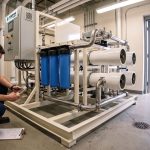
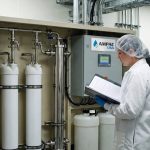
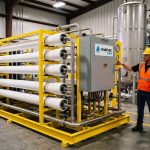
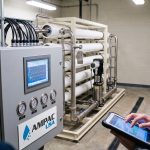
Packaged reverse osmosis systems are pre-engineered, skid-mounted units delivered as a complete solution. Unlike traditional systems assembled piece by piece on-site, packaged RO units are factory-built, tested, and shipped ready for installation. These systems come in compact, modular designs especially attractive to small- and medium-sized businesses with limited space and time. According to EPA WaterSense, packaged treatment systems have become increasingly important for water-efficient operations.
Key Characteristics of Packaged RO Systems
- Plug-and-Play Design: Pre-assembled and factory-tested for immediate use.
- Compact Footprint: Requires minimal floor space.
- Fast Deployment: Reduced installation time compared to traditional RO systems.
- Cost-Efficient: Lower upfront engineering and construction costs.
Packaged vs Traditional RO Systems: Head-to-Head Comparison
Installation and Setup
- Traditional RO: Requires detailed engineering, on-site construction, and significant downtime during setup.
- Packaged RO: Delivered ready-to-use, drastically reducing installation time and disruptions.
Flexibility and Scalability
- Traditional RO: Highly customizable; ideal for businesses expecting evolving water demands.
- Packaged RO: Offers limited customization but can be scaled through modular add-ons.
Cost Considerations
- Traditional RO: Higher upfront investment due to engineering, civil work, and installation.
- Packaged RO: Lower initial investment and reduced installation costs. See our Commercial RO Systems Guide for detailed pricing factors.
Maintenance and Support
- Traditional RO: Often requires specialized technicians familiar with the custom-built design.
- Packaged RO: Simplified maintenance with standardized components, making spare parts more accessible.
Industries Benefiting from Traditional RO Systems
Certain industries demand large-scale, highly customized water treatment solutions, making traditional RO systems the preferred choice:
- Power Generation: For boiler feedwater and cooling tower makeup requiring high volumes of treated water.
- Pharmaceutical Manufacturing: Where ultra-pure water is critical for product integrity. See: Ultra-Pure Water Industries.
- Municipal Water Treatment: Large plants treating millions of gallons per day. See: Water Treatment Plant RO System.
- Food & Beverage Giants: High-demand operations with fluctuating requirements.
Industries Benefiting from Packaged Reverse Osmosis Systems
For businesses where speed, space, and simplicity are critical, packaged reverse osmosis systems deliver unmatched value:
- Hospitality & Resorts: Supplying clean water for kitchens, laundry, and guest services.
- Commercial Establishments: Offices, malls, and complexes needing reliable drinking water solutions.
- Healthcare Facilities: Clinics and small hospitals requiring compact, hygienic systems.
- Remote Sites: Mining, construction, and offshore facilities where quick deployment is crucial.
Making the Right Choice for Your Business
When deciding between packaged reverse osmosis and traditional RO systems, businesses must weigh their water quality needs, budget constraints, available space, and long-term growth plans.
- If your operation requires high-volume water treatment with unique specifications, a traditional RO system offers unmatched flexibility and performance.
- If your business values quick deployment, cost savings, and a compact footprint, a packaged reverse osmosis system is the more practical solution.
Also read: Industrial RO System Components and Water Treatment Chemicals for complementary water treatment insights.
Future Trends in RO System Adoption
The global push for sustainability and water efficiency is driving innovation in both packaged and traditional RO systems. Businesses are increasingly investing in energy recovery devices, smart monitoring systems, modular designs allowing scalability, and eco-friendly membranes improving efficiency while reducing waste.
Conclusion
Both packaged reverse osmosis systems and traditional RO systems serve crucial roles in modern industries. Choosing the right one depends on aligning system capabilities with your operational priorities. A traditional RO system excels in large-scale, complex, and customizable environments. A packaged reverse osmosis system offers simplicity, affordability, and convenience for businesses seeking immediate solutions without compromising water quality.
Investing in the right RO system ensures sustained productivity, regulatory compliance, and operational efficiency — securing your business’s future in a world where water quality has never been more critical.
Frequently Asked Questions
What defines a packaged reverse osmosis system compared to a traditional one?
A packaged RO system is a pre-engineered, factory-built, and tested skid-mounted unit delivered as a complete solution, ready for immediate installation. In contrast, a traditional RO system is custom-built on-site, requiring separate components like pumps and membranes to be integrated individually. AMPAC USA’s packaged systems offer a compact, plug-and-play design for faster deployment.
For what types of businesses are traditional RO systems typically recommended?
Traditional RO systems are ideal for large-scale industrial environments with substantial, continuous water demand, such as offshore oil rigs or municipal water treatment. Their custom engineering allows for precise tailoring to specific site conditions, water chemistry, and high-volume output requirements, often involving complex on-site piping and civil work.
How do packaged RO systems reduce installation time and costs?
Packaged RO systems are delivered as pre-assembled, factory-tested units, drastically reducing on-site engineering, construction, and labor. This ‘plug-and-play’ design minimizes downtime and eliminates the need for complex civil work, offering lower upfront costs and faster deployment compared to traditional, custom-built installations.
What are the space requirements for packaged reverse osmosis systems?
Packaged reverse osmosis systems are designed with a compact footprint, requiring minimal floor space due to their modular, skid-mounted construction. This makes them particularly attractive for small- and medium-sized businesses or facilities with limited available space, unlike the extensive area needed for traditional, custom-built installations.
Which industries commonly benefit from packaged reverse osmosis systems?
Industries such as manufacturing, food processing, pharmaceuticals, and hospitality frequently adopt packaged RO systems. Their compact design, fast deployment, and cost-efficiency make them suitable for businesses needing reliable water purification for compliance, equipment protection, and product quality without extensive on-site engineering.
Conclusion
This post explored how reverse osmosis technology delivers high-purity water across a wide range of residential, commercial, and industrial applications. For businesses and organizations requiring reliable RO purification, AMPAC USA engineers custom systems tailored to your specific water quality requirements and flow demands. Contact our team at info@ampac1.com or (909) 548-4900 to discuss your water treatment needs.
AMPAC USA engineers custom water purification systems for commercial, industrial, and emergency applications — from 500 GPD to multi-million GPD. Trusted by municipalities, military, and industry worldwide.