


The bottled water industry is one of the more counterintuitive success stories in consumer goods. Tap water in most developed countries is safe and nearly free — yet the global bottled water market hit $344.5 billion in 2024 and is projected to reach $379 billion by 2026. People are willing to pay for convenience, perceived quality, and consistency. That demand creates a real business opportunity, but starting a water bottling business has more moving parts than most entrepreneurs expect.
Here’s an honest breakdown of what it takes — costs, equipment, regulations, and the business models that actually work.
Who’s Starting Water Bottling Businesses in 2025-2026?
The most common entry points aren’t national bottled water brands — those markets are dominated by PepsiCo (Aquafina), Nestlé (now BlueTriton — Deer Park, Poland Spring, etc.), and Danone. Successful small and mid-size operators typically fall into one of these categories:
- Private label suppliers producing under grocery chains’, gyms’, or corporate clients’ brand names
- Regional home delivery and office water services (3- and 5-gallon jugs)
- Water vending operations running kiosks in parking lots or inside retail locations
- Specialty/premium bottled water targeting local, sustainable, or alkaline water markets
All of them need the same foundation: a clean water source, a treatment system (almost always built around RO), filling equipment, and regulatory compliance.
Equipment You’ll Actually Need
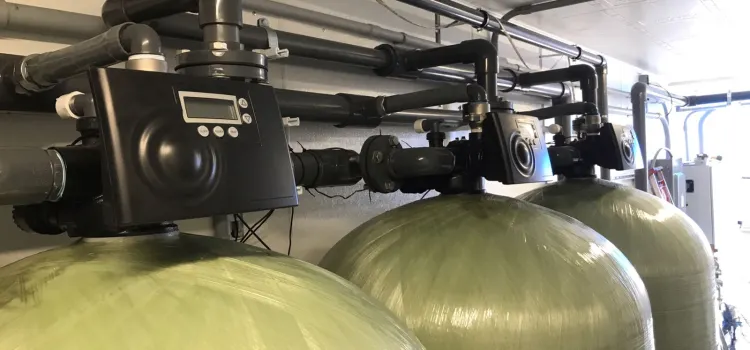
Let’s start with what you’re paying for. The RO water treatment system is the core of the operation — it’s what transforms your source water into product water that meets FDA standards and passes testing.
For small bottling operations (1,000–2,000 bottles per hour), you’ll need an RO plant producing roughly 2,000–3,000 liters per hour. For 20-liter jug operations, scale up to 3,000–5,000 LPH. Commercial-scale systems (10,000+ bottles per hour) require proportionally larger treatment capacity.
Equipment you need beyond the RO system:
- RO water treatment system: $15,000–$100,000 depending on capacity and pre-treatment complexity
- Filling line (automatic): $25,000–$200,000 (entry-level 1,000–2,000 BPH lines start around $15,000–$35,000)
- Capping machine: $15,000–$75,000
- UV sterilizer: $5,000–$20,000 (required for microbiological safety at bottling)
- Labeling system: $5,000–$30,000 (or outsource label application initially)
- Bottle blowing or pre-form sourcing: Buying pre-formed PET bottles simplifies startup; blow molding ($30,000–$150,000) makes sense at scale
Equipment is typically 50–70% of total startup costs. The rest goes to facility, regulatory, and working capital.
Realistic Startup Cost Ranges
Be skeptical of anyone who tells you you can start a water bottling business for $10,000. Here’s what realistic budgets look like by scale:
- Small operation (5,000–20,000 bottles/day): $50,000–$200,000
- Mid-size (20,000–50,000 bottles/day): $200,000–$500,000
- Large commercial (50,000+ bottles/day): $1.2M–$4.5M+
The most commonly cited realistic starting point for a viable small bottling operation — one that can actually generate meaningful revenue — is $150,000–$300,000. Below that threshold, you’re either running at such small volumes that margins don’t support the overhead, or you’re cutting corners on treatment and compliance that will cost more to fix later.
Regulatory Requirements: What the FDA Actually Requires
Bottled water is regulated as a packaged food product under FDA 21 CFR Part 129. Non-compliance doesn’t just result in fines — it can shut down your operation.
Federal requirements:
- FDA facility registration (required for all food manufacturers)
- Good Manufacturing Practices (GMP) compliance — documented procedures, sanitation, employee hygiene, equipment maintenance records
- Standards of Quality (SOQ) — chemical, physical, microbial, and radiological contaminant limits that mirror or exceed EPA drinking water standards
- 6-log pathogen reduction requirement (RO + UV achieves this)
- Source water testing: pH, TDS, hardness, heavy metals, and microbiology — before and after treatment, then monthly microbiological monitoring ongoing
State requirements add another layer: All 50 states regulate in-state bottlers. Critically, 23 states also regulate out-of-state bottlers — meaning if you’re shipping into California, New York, Connecticut, or other regulated states, you need their license before your first case arrives. Licensing and permit costs alone typically run $50,000+ depending on how many states you’re targeting.
Business Models and Profit Margins
The business model you choose significantly affects your margin profile and growth trajectory.
Private label bottling — producing water under a retailer’s or client’s brand — typically generates the highest margins (50%–200%) because you’re selling a production service, not competing on brand. The relationships take time to build, but recurring contract work provides stable revenue.
Own-brand retail runs around 35% net margin for established operations, but requires significant investment in distribution relationships and brand building.
Bulk vending (3 and 5-gallon jugs for home or office) offers recurring subscription revenue with relatively low per-unit production cost, but is geographically constrained to delivery radius.
Sample first-year economics for a small operation: 250 cases per week at average selling price → roughly $130,000 in annual revenue → approximately $46,000 in profit at 35% margin. That’s thin, but it scales. Most small operations reach profitability within 12–18 months.
Keys to Avoiding the Mistakes That Kill New Operations
The failure modes in this business are predictable:
- Undersized RO system. Trying to save money by buying a smaller treatment system than your actual production volume requires leads to capacity constraints and quality inconsistency. Size for where you want to be in year 2, not where you are today.
- Regulatory compliance as an afterthought. Retroactive compliance — building to pass an FDA inspection rather than building right from the start — is always more expensive than doing it correctly upfront.
- No distribution secured before production starts. Equipment and facility are the easy part. Who’s buying your water, and why? Nail the distribution channel first.
- Skipping labeling compliance research. Labels must comply in every state you distribute to, and the requirements vary. A label that’s legal in your home state may not be in a neighboring state you’re shipping to.
AMPAC USA supplies RO treatment systems at every scale — from startup operations to large commercial bottling facilities. Our water store and bottling RO systems are designed around the FDA compliance and throughput requirements that bottling businesses actually face.
Related Articles
- Want To Invest in Water Store Equipment? A Comprehensive Guide on How to Start and Grow Such a Business
- Benefits of Starting a Water Store Reverse Osmosis Business
- RO Water Quality: What TDS, pH, and Conductivity Actually Mean for Your System
- Water Softener vs Reverse Osmosis: Which Do You Need? | AMPAC USA
Frequently Asked Questions
What is the projected growth of the global bottled water market?
The global bottled water market was valued at USD 170 billion in 2014 and is projected to reach USD 280 billion by 2020, according to a report by Zion Market Research. This significant growth indicates a robust and expanding industry with substantial opportunities for new businesses.
What are the primary reasons for the increasing demand for bottled water?
The increasing demand for bottled water is driven by growing public suspicion regarding tap water cleanliness and a rising consumer preference for clean, hygienic, and health-oriented options. Additionally, convenient packaging, its utility in emergencies, and lower recall rates compared to public water systems contribute to its widespread adoption.
What categories of bottled water are available in the market?
The global bottled water market is broadly categorized into four main types: still, functional, flavored, and carbonated bottled water. Still bottled water held over 60% of the overall consumption share in 2014, but functional and flavored varieties are also experiencing significant growth.
Can a new water bottling business compete with established brands?
Yes, a new water bottling business can thrive despite intense competition due to the immense and continuous demand for bottled water. US households alone spend an estimated USD 16 billion annually on bottled water, indicating a vast market with ample opportunity for new players to capture a share.
What kind of water purification is essential for a bottled water business?
For a bottled water business, robust water purification is paramount to ensure product safety and quality, meeting consumer expectations for clean water. This typically involves advanced systems like reverse osmosis (RO), ultrafiltration, and UV sterilization to effectively remove contaminants, dissolved solids, and pathogens. AMPAC USA specializes in designing and manufacturing commercial and industrial RO systems crucial for meeting stringent bottled water standards.
AMPAC USA engineers custom water purification systems for commercial, industrial, and emergency applications — from 500 GPD to multi-million GPD. Trusted by municipalities, military, and industry worldwide.
