

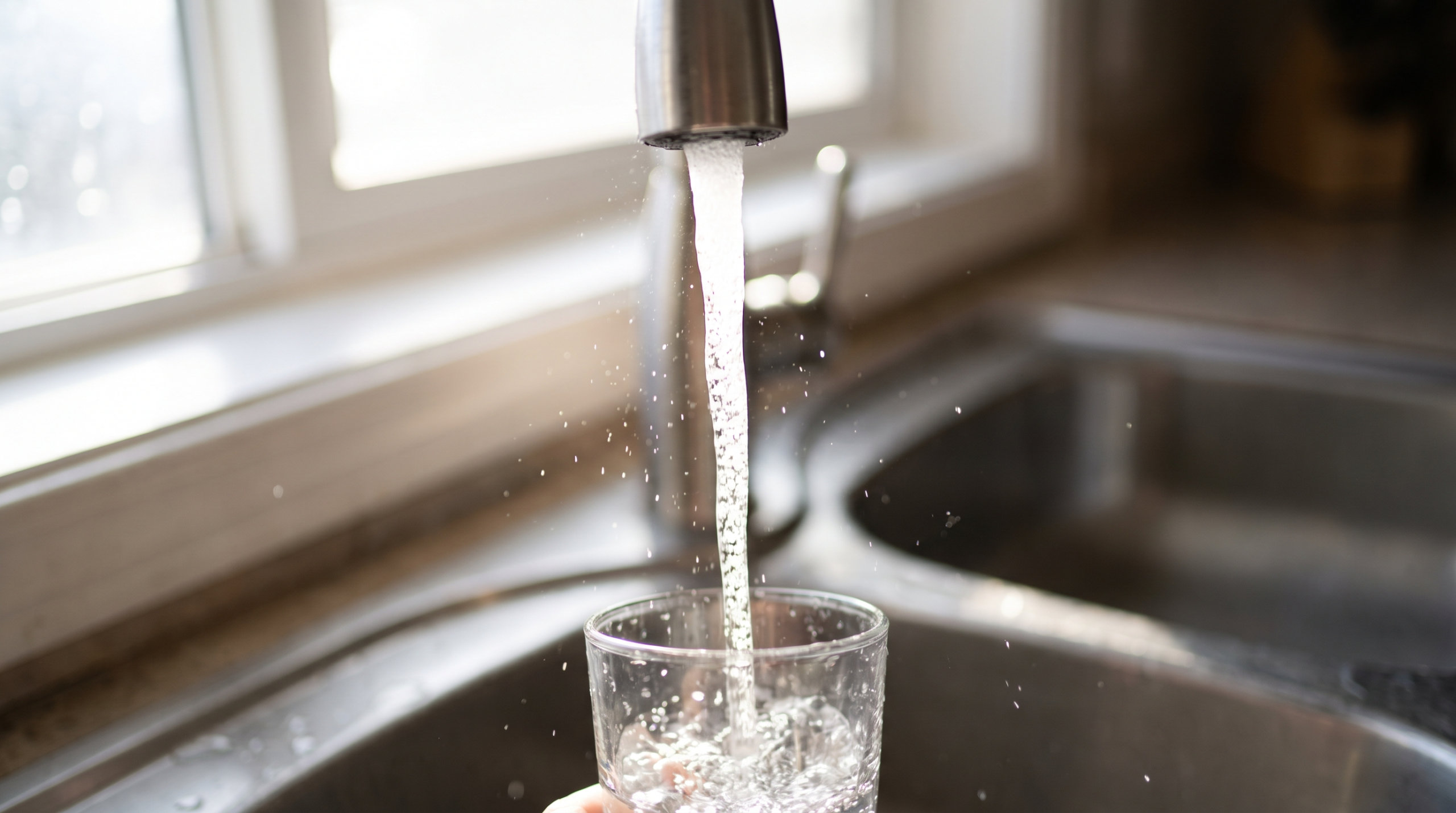

In short: Chlorinating drinking water kills dangerous pathogens, but it also reacts with organic matter already in the water to form disinfection byproducts (DBPs), a group of compounds that includes trihalomethanes (THMs) and haloacetic acids (HAAs). The EPA regulates 11 of them under the Stage 1 and Stage 2 Disinfectants and Disinfection Byproducts Rules, capping total THMs at 80 parts per billion and HAA5 at 60 ppb. But researchers have identified somewhere around 600 to 700 distinct DBPs in treated water, and only a small fraction are subject to any legal limit. Reverse osmosis and activated carbon filtration are two of the few residential and commercial treatment methods proven to meaningfully reduce DBP exposure, including the unregulated compounds nobody is required to test for.
This isn’t a reason to stop disinfecting water. Chlorination is one of the biggest public health wins of the last century, and the alternative (untreated water carrying cholera, typhoid, and other waterborne disease) is far worse than any DBP risk. But “safe” and “zero tradeoff” aren’t the same thing, and it’s worth understanding what’s actually happening chemically every time chlorine hits your tap water.
What Are Disinfection Byproducts, and Why Do They Form?
Disinfection byproducts form when chlorine, chloramine, or other disinfectants react with naturally occurring organic matter (decaying leaves, algae, agricultural runoff) still present in source water after treatment. The chemical reaction that kills bacteria and viruses also breaks down and recombines that organic material into new compounds, some of which carry their own health risks.
Trihalomethanes and haloacetic acids are the two DBP families most studied and most regulated. THMs form when chlorine reacts with humic and fulvic acids, the organic compounds that make water look tea-colored in swamps and reservoirs. HAAs form through a similar pathway but bind differently and, according to toxicological assessments, tend to be more carcinogenic per unit than THMs, particularly the brominated species.
The tradeoff is baked into the process. You cannot chlorinate water without some DBP formation happening; the only real variables are how much organic matter was in the source water to begin with, how much chlorine is used, and how long the water sits in the distribution system before it reaches a tap. Utilities pulling from surface water (rivers, lakes, reservoirs) generally see higher DBP levels than those using groundwater, because surface water carries more organic load.
What Does the EPA Actually Regulate, and What’s the Legal Limit?
The EPA regulates 11 disinfection byproducts under the Stage 1 and Stage 2 Disinfectants and Disinfection Byproducts Rules (DBPR), setting a maximum contaminant level of 80 parts per billion for total trihalomethanes (TTHM) and 60 ppb for the sum of five haloacetic acids (HAA5). These rules apply to community water systems and non-transient non-community systems that add a chemical disinfectant, which covers the overwhelming majority of US public utilities.
Stage 1 came first, in 1998, and Stage 2 followed in 2006, tightening how and where compliance is measured. Instead of averaging DBP levels across an entire system, Stage 2 requires monitoring at the specific points in the distribution network most likely to have the highest concentrations, typically the ends of pipe runs where water sits longest before use. That change alone pushed a lot of utilities to rework their treatment and flushing schedules, because a system that looked compliant under system-wide averaging could still fail at individual monitoring points.
Eleven regulated compounds sounds like a real number until you compare it to what’s actually in the water.
How Many DBPs Are Actually in the Water, Regulated or Not?
Researchers have identified somewhere around 600 to 700 distinct disinfection byproducts in chlorinated drinking water, and only 11 of them carry an enforceable EPA limit. A widely cited review examined 85 DBPs in detail and found 74 fall into the “emerging” category: compounds that show up in treated water, in some cases at meaningful concentrations, with no regulatory ceiling and, for many, limited toxicological data.
Nitrosamines are the group getting the most research attention right now. N-nitrosodimethylamine (NDMA) and related compounds form primarily when utilities use chloramine instead of free chlorine, a disinfectant choice many systems made specifically to reduce THM and HAA formation. It’s a real example of regulatory whack-a-mole: cut one class of byproduct and you can inadvertently raise another. Haloacetonitriles and iodinated THMs are two more emerging groups flagged in recent toxicity research as carrying higher per-unit health risk than some regulated DBPs, even though nobody is required to test for them.
None of this means your tap water is secretly dangerous. It means the list of things utilities are legally required to report is a subset, not the whole picture, of what disinfection actually produces.
What Do We Actually Know About DBP Health Risks?
The strongest epidemiological signal connects long-term DBP exposure to bladder cancer risk, with EPA estimating that somewhere between 2% and 17% of US bladder cancer cases may be attributable to chlorinated drinking water consumption. One cumulative risk analysis put the number even higher in raw terms, estimating around 6,800 bladder cancer cases a year and roughly 828,000 over a lifetime cohort linked to DBP exposure nationally, with haloacetic acids, especially brominated ones, carrying more of that burden than trihalomethanes.
The EPA’s own scientific review has stated that newer cancer data strengthen the evidence for an association between chlorinated water and bladder cancer, and suggest a possible link to colon and rectal cancers as well, concluding that combined health data indicate a need for public health protection beyond what current DBP rules provide. That’s a federal regulator’s own language, not an outside advocacy claim, and it’s part of why the DBP rules have stayed under active review rather than being treated as settled.
To be clear about scale: this is a population-level, long-term exposure risk, not an acute poisoning concern. Nobody gets sick from a glass of tap water because of DBPs. The concern is cumulative exposure over years and decades, which is exactly the kind of risk that’s easy to underweight because nothing about it feels urgent day to day.
Does Boiling or Filtering with a Basic Pitcher Filter Help?
Boiling water does not remove DBPs and can actually concentrate some of them, since water evaporates faster than most THMs at typical boiling temperatures. Basic pitcher-style carbon filters (the kind sold at most grocery stores) offer some reduction of chlorine taste and a portion of THMs, but they aren’t designed or certified for comprehensive DBP removal, and performance varies widely by cartridge age and flow rate.
This is the point where the distinction between “some filtration” and “engineered treatment” starts to matter.
How Do Reverse Osmosis and Activated Carbon Actually Reduce DBP Exposure?
Reverse osmosis and granular or biological activated carbon are the two treatment methods with the strongest published performance data for DBP removal, including compounds outside the regulated list. A five-stage RO process studied for haloacetic acid rejection removed more than 75% of HAAs while recovering 87% of the water treated, and comparative plant-scale research found that ultrafiltration paired with reverse osmosis outperformed ozonation-plus-biological-activated-carbon systems for overall DBP removal. Activated carbon on its own is also effective, particularly for trihalomethanes, and NSF/ANSI Standard 53 certification specifically for THM reduction is the marker to look for if you’re evaluating a carbon-based system.
The two technologies work differently and that’s exactly why pairing them performs better than either alone. Activated carbon adsorbs organic compounds, including many THMs, onto its surface as water passes through. RO physically forces water through a semipermeable membrane fine enough to reject dissolved solids and larger organic molecules, including a majority of haloacetic acids. Neither method is perfect against every one of the 600-plus known DBPs (some smaller, more volatile compounds like certain haloacetonitriles are harder for any single technology to fully capture), but in combination they address both major regulated DBP families and a meaningful share of the emerging, unregulated ones that basic filtration misses entirely.
For homes on municipal water with any chlorination byproduct concern, this is where AMPAC USA’s residential reverse osmosis systems come in: multi-stage filtration built specifically to pair RO membrane rejection with carbon pre- and post-filtration, rather than relying on a single filtration step to catch everything. For facilities that need DBP reduction at real volume, restaurants, healthcare buildings, food and beverage production, hospitality, our commercial reverse osmosis water purification systems apply the same layered approach at a scale that matches actual daily demand instead of a household-sized cartridge trying to do a building’s worth of work.
What Should Someone Do With This Information?
Chlorination is still the right call for public water safety, and nothing here argues otherwise. But if you’re on a surface-water-sourced municipal system, especially one with an older distribution network where water sits longer in pipes before reaching your tap, point-of-use or point-of-entry treatment is a reasonable step, not an overreaction. Checking your utility’s annual Consumer Confidence Report for THM and HAA5 levels is a free first step; most utilities post these publicly, and levels well under the regulatory limit still aren’t zero.
The honest takeaway is that “meets EPA limits” and “removes everything worth removing” are two different standards. The first is a legal floor covering 11 compounds. The second is closer to what a properly specified RO and carbon system is built to do.
Frequently Asked Questions
What’s the difference between trihalomethanes and haloacetic acids?
Both form when chlorine reacts with organic matter in source water, but they’re chemically distinct compound families with different formation pathways. Toxicological assessments generally find haloacetic acids, particularly the brominated species, more carcinogenic per unit than trihalomethanes, though EPA regulates both under the same Stage 1 and Stage 2 rules.
Is my tap water safe if it meets EPA’s DBP limits?
Meeting the 80 ppb TTHM and 60 ppb HAA5 limits means a utility is in legal compliance, but those limits cover only 11 of the roughly 600 to 700 disinfection byproducts researchers have identified in treated water. Compliance doesn’t mean zero DBP exposure, and it says nothing about the unregulated compounds outside that list.
Does chloramine avoid the DBP problem that chlorine causes?
Not entirely, it shifts it. Chloramine typically produces lower levels of THMs and HAAs than free chlorine, which is why many utilities switched to it. But chloramine disinfection is more strongly linked to nitrosamine formation, including NDMA, an emerging DBP class currently unregulated and under active research for its own health risks.
Can reverse osmosis remove all disinfection byproducts?
No single technology removes all 600-plus known DBPs. RO rejects the majority of haloacetic acids and a substantial share of other DBPs through membrane filtration, and performs best when paired with activated carbon pre- and post-filtration, which handles trihalomethanes and other organic compounds RO membranes pass through less consistently on their own.
How do I know what DBP levels are actually in my water?
Your water utility’s annual Consumer Confidence Report (CCR), required by EPA and typically mailed or posted online each year, lists measured TTHM and HAA5 levels for your specific system. If your utility sources from surface water or you’re on an older distribution system, that report is the right starting point before deciding on additional home treatment.
Sources: U.S. EPA Disinfectants and Disinfection Byproducts Rules; Texas Commission on Environmental Quality; Pennsylvania Department of Environmental Protection; Analysis of Cumulative Cancer Risk Associated with Disinfection Byproducts in United States Drinking Water (PMC); AWWA Water Science, Peterson et al., “Disinfection Byproducts: Health Risks, Occurrence, Control, and Implications for Regulatory Revision”; PubMed, “Rejection of haloacetic acids in water by multi-stage reverse osmosis”; National Cancer Institute (DCEG).
AMPAC USA engineers custom water purification systems for commercial, industrial, and emergency applications — from 500 GPD to multi-million GPD. Trusted by municipalities, military, and industry worldwide.