

In short: no, not automatically. Water that sits still in pipes for even a few days starts losing the disinfectant that keeps it safe, and after weeks or months of low use it can grow Legionella, other bacteria, and elevated lead or copper. The CDC’s own guidance says any facility closed or underused for more than three days should flush its water system before people start drinking from it again. This isn’t a rare edge case anymore. Hybrid work schedules, seasonal buildings, and post-pandemic office churn mean a lot more commercial buildings sit half-empty on any given week than they used to, and the water inside them doesn’t know the difference between a long weekend and a permanent office closure.
Every water system, whether it serves an office tower, a seasonal resort, a school, or a warehouse, is designed around water moving. When it doesn’t, the chemistry and biology inside the pipes change fast, and not in a good direction.
Why Does Standing Water Become a Problem So Quickly?
Stagnant water loses its disinfectant residual, drops in temperature into the range where bacteria thrive, and starts reacting with the pipe material itself, all within days rather than months.
Municipal water arrives at a building with a chlorine or chloramine residual meant to keep it safe on the way to the tap. That residual decays over time, and it decays faster in stagnant conditions than in flowing ones. Once it’s gone, there’s nothing left to stop bacteria that were already present in trace amounts from multiplying. At the same time, hot water lines that aren’t being used tend to drift down toward room temperature, and cold lines in warm mechanical rooms can drift up. Both directions can land a pipe segment in the 77°F to 113°F range, which happens to be where Legionella grows best. CDC guidance on building water systems flags exactly this combination: low disinfectant plus favorable temperature plus no flow equals conditions that favor Legionella and other biofilm-associated bacteria.
There’s a third effect that gets less attention: standing water becomes more corrosive. It uses up the corrosion-control chemicals utilities add to keep lead and copper locked into pipe scale. Research on distribution system “water age” found that in simulated stagnation events, lead or copper release from pipe material increased by as much as 440% relative to normal treatment-plant effluent, and field studies across multiple utilities found lead release increased with water age in roughly 13% of tested conditions. The range is wide because plumbing age and material vary a lot building to building, but the direction of risk is consistent: the longer water sits, the less predictable it gets.
How Common Is This Actually, Outside of Pandemic Shutdowns?
More common than most facility managers assume, because “low use” doesn’t require a building to be fully vacant, just underused relative to how its plumbing was designed to run.
The 2020 shutdowns made this visible on a large scale, with reports of Legionella turning up in school plumbing in Ohio and Pennsylvania, and even in some CDC-occupied buildings, after months of low occupancy. But the underlying condition wasn’t unique to a pandemic. Any building with a hybrid work schedule now has entire wings or floors that see a fraction of the water use they were plumbed for. Seasonal properties, resort buildings, vacation properties, agricultural processing facilities that only run part of the year, sit closed for months at a stretch every single year, on a predictable calendar. Renovation projects, mothballed wings, and buildings between tenants all create the same conditions. A 2022 study of reduced-occupancy buildings across 11 U.S. cities during the pandemic found detectable Legionella in a meaningful share of tested sites, underscoring that this isn’t a one-time event tied to a single shutdown, it’s a recurring risk tied to how a building is actually used.
The scale of Legionnaires’ disease nationally backs this up. CDC estimates 8,000 to 18,000 people develop Legionnaires’ disease in the U.S. each year, and a more recent analysis suggests actual cases may run 1.8 to 2.7 times higher than what gets formally reported. Building water systems, not natural water sources, are the dominant source of exposure.
What Does Flushing Actually Fix, and What Does It Miss?
Flushing restores the water in the pipes to match what’s currently coming from the utility, but it doesn’t address contamination generated inside the building’s own fixtures, tanks, or point-of-use equipment.
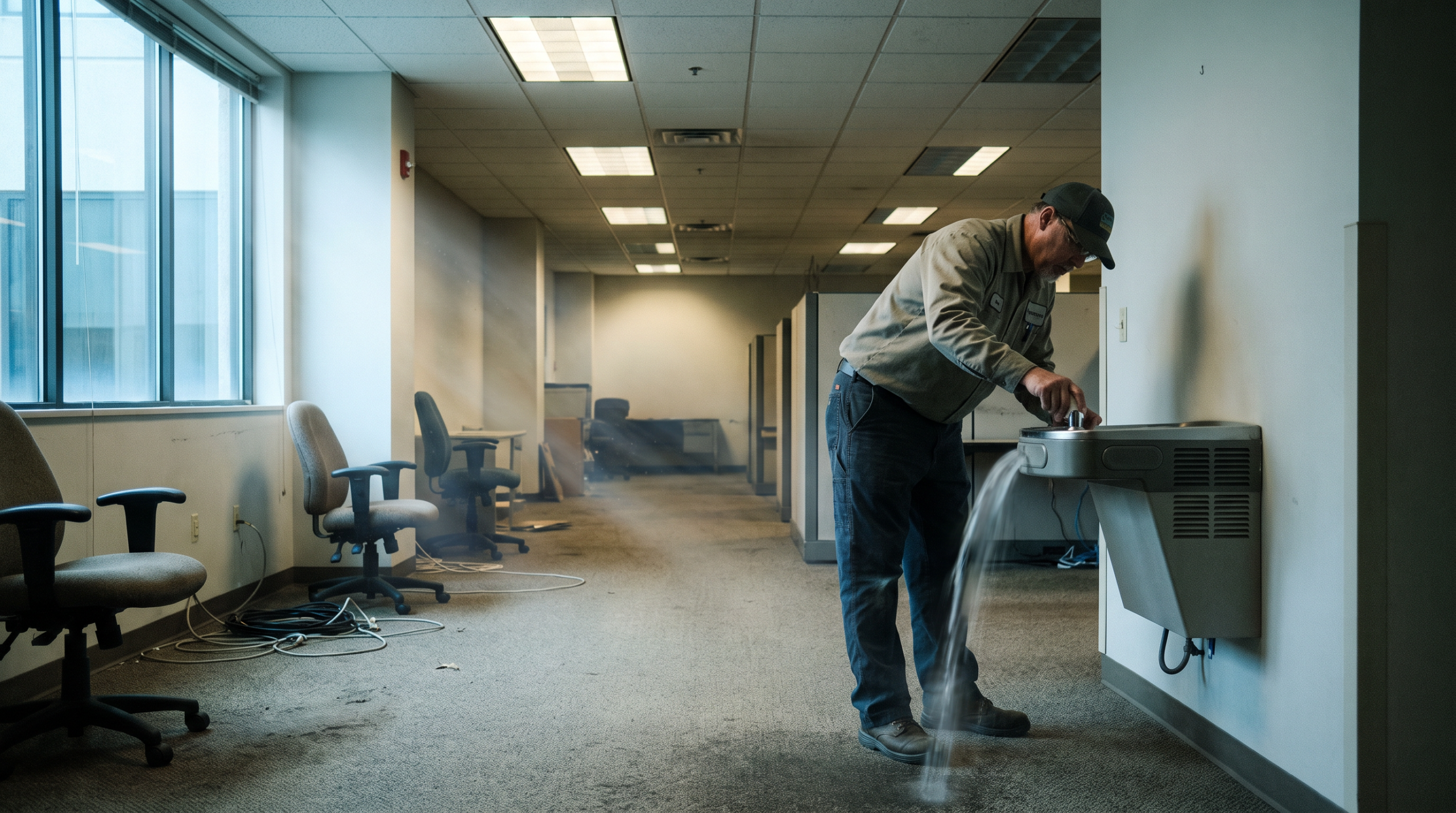
CDC and multiple state health departments converge on the same threshold: if a facility or area has been closed or unused for more than three days, flush all water lines before returning them to service. In most cases this means running every fixture, hot and cold, until water reaches a stable temperature and any discoloration clears, which restores the utility’s original disinfectant residual throughout the building. For buildings that were closed for weeks or months, that flushing needs to be more systematic, covering every branch of the system including rarely used fixtures like eyewash stations, decorative fountains, and outdoor spigots that are easy to forget.
What flushing doesn’t fix is anything happening downstream of the municipal supply, inside cooling towers, hot water tanks, ice machines, or aging fixtures where biofilm has had time to establish itself on interior surfaces. Biofilm is essentially bacteria’s shelter system, and a few minutes of flowing water doesn’t reliably strip it out once it’s established. That’s the gap where point-of-use and point-of-entry treatment earns its place, not as a replacement for flushing, but as a second layer for the water that actually reaches a tap, an ice machine, or a food-prep sink.
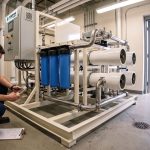
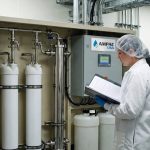
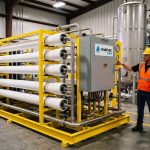
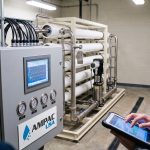
This is where commercial-grade treatment fits into the picture for facilities that reopen on a recurring basis or run large, complex plumbing systems. A properly sized commercial reverse osmosis system removes a broad range of contaminants at the point where water is actually used, giving a building a consistent quality baseline that doesn’t depend entirely on how well the upstream plumbing behaved during a low-use stretch. For facilities managing seasonal shutdowns as a routine part of their calendar rather than a one-time event, that consistency is the whole point.
Who Actually Needs to Worry About This: Just Hospitals and Hotels?
No. Any building with complex plumbing and variable occupancy carries this risk, which in practice covers a much wider range of commercial and institutional properties than the “high-risk facility” list usually implies.
Hospitals and hotels get the most regulatory attention because the consequences of an outbreak there are severe and the populations involved are often more vulnerable. But the physical conditions that grow Legionella don’t check a building’s use category first. Office buildings running hybrid schedules, schools between semesters, government buildings, gyms and recreation centers with fluctuating attendance, manufacturing facilities with seasonal production cycles, and any multi-tenant building where individual floors or suites go dark for weeks at a time all have the same underlying exposure: water sitting still in pipes designed for higher, steadier flow.
Facility managers who only think about this at reopening after an obvious closure are missing the slower version of the same problem: a building that’s technically “open” but running at 40% of its designed water usage every single week, indefinitely. That’s not a flushing event, it’s a standing condition, and it argues for a permanent point-of-use safeguard rather than a one-time remediation checklist.
What Should a Facility Actually Do Before Reopening or Ramping Back Up?
Flush every fixture on every line following current CDC and state health department protocols, verify hot water temperatures and disinfectant residual are back to normal, and add point-of-use treatment for any area where occupancy will stay lower than the building’s original design.
The practical sequence looks like this: flush cold and hot lines at every fixture until temperature and clarity stabilize, pay particular attention to hot water heater temperature (it should be maintained high enough to limit Legionella growth, then tempered at the tap for scald safety), and check that disinfectant residual has returned to normal utility-supply levels before considering the system back to baseline. For any facility that expects to repeat this cycle, whether that’s a seasonal resort reopening every spring or an office running permanent hybrid attendance, it’s worth evaluating whether a standing reverse osmosis system at key points of use makes more sense than repeating a manual flushing protocol as the only line of defense every time occupancy shifts.
AMPAC USA designs and builds commercial and industrial water treatment systems for exactly this kind of variable-use environment, facilities that need dependable water quality regardless of how consistently the building is occupied week to week. Flushing handles the acute event. Treatment handles the ongoing condition. Buildings that treat both as part of normal operations, not just as a one-time reopening task, are the ones that stop rediscovering this problem every time occupancy changes.
Frequently Asked Questions
How long does water need to sit before it becomes a health risk?
CDC and state health guidance generally set the threshold at three days. Beyond that, disinfectant residual can drop enough, and temperatures can drift into a favorable range, for Legionella and other bacteria to start establishing themselves.
Does flushing the pipes completely solve the problem?
Flushing restores the water inside the pipes to match current utility supply, which is the essential first step. It does not remove biofilm that may have built up on interior fixture or tank surfaces over a longer closure, which is why buildings with recurring low-use periods often add point-of-use treatment as a second layer.
Is this only a concern for hospitals, hotels, and large public buildings?
No. Any building with complex plumbing and variable occupancy, including offices on hybrid schedules, seasonal facilities, schools, and multi-tenant buildings, carries the same underlying risk, even if the regulatory attention is concentrated on higher-risk facility types.
What’s the difference between the risk from stagnant water and normal tap water safety?
Municipal water leaving the treatment plant is treated to meet safety standards, but that treatment doesn’t account for what happens after it sits unused inside a specific building’s internal plumbing for days or weeks. The risk described here originates inside the building, not at the utility.
How often should a building with variable occupancy be checking its water system?
There’s no single universal interval since it depends on building size and use pattern, but any closure or low-use period longer than three days should trigger a flush, and facilities with recurring seasonal or hybrid-schedule gaps should build routine flushing and water quality checks into their standing maintenance calendar rather than treating it as a one-time reopening task.
Sources: Centers for Disease Control and Prevention (Reopening Buildings Guidance, Control Legionella); U.S. Environmental Protection Agency (Legionella in the Indoor Environment; Maintaining Building Water Quality); Rhode Island Department of Health (Guidance for Building Flushing After Periods of Low or No Use); Environmental Monitoring and Assessment (Distribution system water age can create premise plumbing corrosion hotspots); medRxiv (Legionella pneumophila occurrence in reduced-occupancy buildings in 11 cities during the COVID-19 pandemic).
AMPAC USA engineers custom water purification systems for commercial, industrial, and emergency applications — from 500 GPD to multi-million GPD. Trusted by municipalities, military, and industry worldwide.