
Short answer: safe tap water is fine for mixing infant formula for most babies. Babies younger than 2 months, premature babies and babies with weakened immune systems need extra steps, mainly boiling the water first. Distilled, purified and nursery water all work, but none of them is required. The real exceptions are private well water and old plumbing, where the water itself needs testing before it goes in a bottle.
Parents get mixed advice on this. One site says distilled water is the only safe choice, another says tap water is fine, and both are partly right. What matters is your baby’s age, where your water comes from and what is actually in it. CDC, AAP, FDA, EPA and the American Dental Association each cover part of the answer, and every source is linked at the end.
Water for baby formula at a glance
| Water type | OK for formula? | What to know |
|---|---|---|
| Tap water (public supply) | Yes, most of the time | Filtered or unfiltered is fine per CDC. Boil it first for babies under 2 months, premature babies and babies with weakened immunity. |
| Distilled water | Yes | Very low in minerals and fluoride. Not required. Bottled water is not sterile unless the label says so. |
| Purified, deionized or demineralized bottled water | Yes | A low-fluoride option per the ADA. Bottled water is not sterile unless the label says so. |
| Nursery water | Yes | Sold for babies, usually with fluoride added, so it is not automatically low-fluoride. |
| Well water, recently tested | Only if the tests pass | Nitrate above 10 mg/L rules it out. Test at least once a year. |
| Well water, untested | No | Use bottled water until you have results. |
Tap water: usually fine, with one age rule
CDC says it is safe most of the time to mix powdered formula with tap water, filtered or unfiltered. AAP agrees unless your water is known to be contaminated. Use cold water from the tap, since CDC advises drinking and cooking only with water that comes out cold.
The age rule is where people get tripped up. For babies younger than 2 months, babies born before 37 weeks and babies with a weakened immune system, CDC and AAP say to boil the water first, then wait about five minutes before mixing. The reason is the powder as much as the water. Powdered formula is not sterile, and a germ called Cronobacter can live in it. Infections are rare but serious, and CDC says very hot water, around 158°F (70°C), is needed to kill it. Some older articles still say “under 3 months” or tell you to cool the water to body temperature before mixing powder. Current CDC, FDA and AAP pages use the 2-month cutoff and the hot-water step.
If your local water may be contaminated, for example during a boil advisory, FDA says to boil it for one minute, or three minutes above 6,500 feet.
Distilled, purified and nursery water
Distilled water is made by boiling water into steam and condensing it, which leaves minerals behind. Purified, deionized and demineralized bottled waters use other methods and end up similar: very low in minerals and fluoride. Nursery water is different. AAP describes it as water marketed for babies with fluoride added, so the label matters.
None of these is required. No CDC, AAP or ADA page says babies need distilled water or that it harms them. The one real difference is fluoride. The ADA says it is safe to mix formula with fluoridated water. Fluoride can cause mild dental fluorosis, a cosmetic change in tooth enamel that only develops while teeth are forming, and the ADA says it does not affect a child’s health. If you would rather limit it, the ADA lists de-ionized, purified, demineralized and distilled water as the low-fluoride options. CDC says parents can use low-fluoride bottled water some of the time, and AAP suggests using safe fluoridated tap water for most feedings with non-fluoridated bottled water now and then.
FDA points out that bottled water is not sterile unless the label says it is, so the handling steps for young babies apply whichever water you pick. We cover distilled water in more depth in our guide on whether distilled water is good for babies.
Well water: test it first
Nobody tests a private well unless the owner does, and the main risk for formula-fed babies is nitrate. EPA says not to mix well water containing more than 10 milligrams per liter of nitrate with infant formula. High nitrate can cause methemoglobinemia, often called blue baby syndrome, which reduces the oxygen carried in a baby’s blood. The Minnesota Department of Health lists bottle-fed babies under 6 months as the highest-risk group.
Boiling does not fix it. EPA says boiling will not reduce nitrate, and the Minnesota Department of Health notes it can concentrate it. CDC recommends that every well owner test for nitrates at least once a year, and EPA advises testing the well and using bottled water to mix formula until you know the result. If your test comes back high, our guide to water filters that remove nitrates explains the treatment options.
Lead in older plumbing
EPA says formula-fed infants can get 40 to 60 percent of their lead exposure from drinking water, because the formula is mixed with it. CDC advises using only cold tap water for drinking and cooking, and boiling will not reduce lead. AAP suggests running the cold tap for 15 to 30 seconds if the water has sat in the pipes for more than six hours. If your home has lead service lines or was built before 1986, test the water and use a filter certified for lead in the meantime.
Do water filters make water safe for formula?
It depends on what the filter is built to do. CDC says most home filters, such as pitcher and fridge filters, are not designed to remove germs. Filters certified to NSF/ANSI 53 or 58 for cyst reduction can remove parasites, and a filter certified for lead reduction helps if lead is the concern. CDC also notes that reverse osmosis systems remove some chemicals, including lead. No filter replaces the boiling step for a baby who needs boiled water.
If a test shows nitrate or lead above safe levels at home, a certified reverse osmosis system is one treatment option. AMPAC USA builds drinking water filters and RO systems for homes. Check the certification listing for the specific contaminant you need to reduce, and retest after installation.
How to prepare powdered formula safely
- Wash your hands and clean the bottle, nipple and any surfaces you will use.
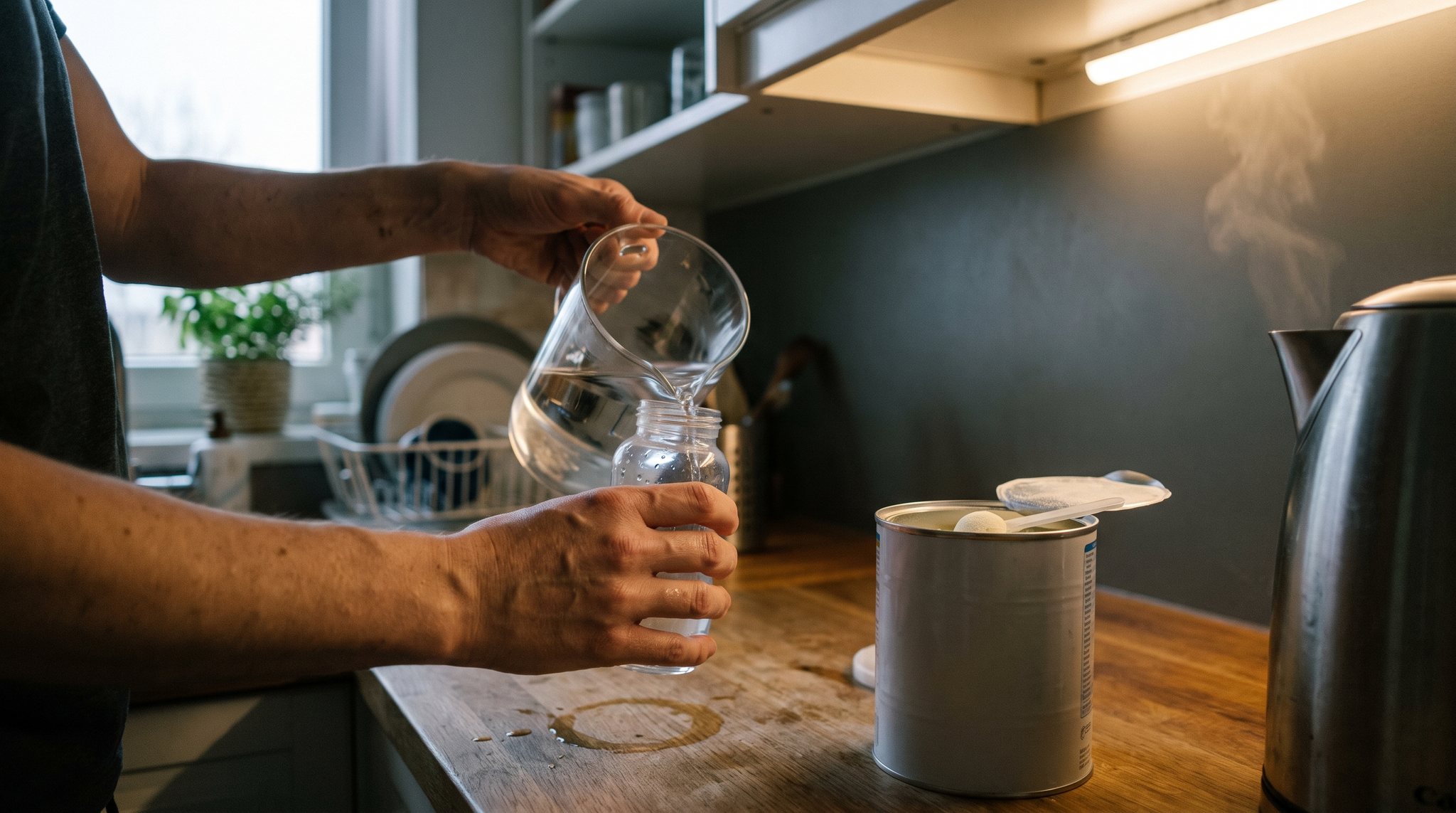
- Pick your water. Cold tap water works for most babies. If your baby is younger than 2 months, was born early or has a weakened immune system, boil the water and wait about five minutes before mixing.
- Measure the water first, then add the powder, using the exact amounts on the formula container.
- Mix, then let the bottle cool to feeding temperature. If you mixed with hot water it will be too hot to feed at first, so wait before you offer it.
- Follow the storage and discard times on the label for anything you don’t use.
Common mistakes to avoid
- Stretching formula with extra water. CDC warns that too much water may leave the formula short of your baby’s nutritional needs, and AAP notes extra water can cause water intoxication and seizures. Too little water makes the kidneys work too hard.
- Cooling boiled water to body temperature before adding powder for a newborn. That skips the hot-water step CDC recommends for higher-risk babies.
- Boiling to remove nitrate or lead. Neither one boils out.
- Assuming bottled or distilled water is sterile. FDA says it is not unless the label says so.
- Using untested well water. Test first, and use bottled water while you wait for results.
Frequently asked questions
Can you use tap water for baby formula?
Yes, in most cases. CDC says it is safe most of the time to mix powdered formula with tap water, filtered or unfiltered. Boil the water first if your baby is younger than 2 months, was born prematurely or has a weakened immune system, and use bottled water if your local water is known to be contaminated.
Is distilled water better than tap water for baby formula?
Not necessarily. Both are acceptable, and no CDC, AAP or ADA source says babies need distilled water. Distilled water is very low in minerals and fluoride, which matters mainly if you want to limit fluoride intake. Ask your pediatrician which suits your baby.
Do you need to boil water for baby formula?
Only for higher-risk babies, or during a boil advisory. CDC and AAP say to boil the water for babies younger than 2 months, premature babies and babies with weakened immune systems, then wait about five minutes before mixing. The extra steps are aimed at those higher-risk groups, so ask your pediatrician if you are unsure which applies to your baby.
What is nursery water, and is it different from distilled water?
Nursery water is bottled water marketed for babies, and AAP describes it as having fluoride added. Distilled water has almost none. Nursery water is not required.
Can you use well water for baby formula?
Only after testing. EPA says not to mix well water containing more than 10 mg/L nitrate with formula, and boiling does not reduce nitrate. CDC recommends testing a private well for nitrates at least once a year. Use bottled water until you have results.
Does a water filter make tap water safe for baby formula?
A filter can reduce specific contaminants, such as lead, if it is certified for them. CDC says most pitcher and fridge filters are not designed to remove germs, so a filter does not replace the boiling step for higher-risk babies.
Bottom line
For most families, safe tap water, boiled when the age rule applies, is all a formula bottle needs. Distilled or other low-fluoride water is a reasonable choice if fluoride is your concern, and it is not a safety upgrade over good tap water. Private wells and older plumbing are the two situations that call for testing. This article is general information, not medical advice, so check with your pediatrician about your baby’s water, especially for newborns and premature babies. Questions about testing or treating your home’s water? Contact our team at info@ampac1.com or (909) 548-4900.
Sources
- CDC, Infant Formula Preparation and Storage
- FDA, Handling Infant Formula Safely
- AAP HealthyChildren.org, How to Safely Prepare Formula With Water
- American Dental Association, Fluoridation FAQs
- CDC, Infant Formula and Fluoride
- AAP HealthyChildren.org, Fluoride Supplements
- EPA, Private Wells and Drinking Water Safety for Infants
- EPA, Will Boiling My Water Help?
- Minnesota Department of Health, Nitrate in Drinking Water
- CDC, Guidelines for Testing Well Water
- CDC, Lead in Drinking Water
- EPA, Basic Information About Lead in Drinking Water
- AAP HealthyChildren.org, Lead in Tap Water and Household Plumbing
- CDC, Choosing Home Water Filters
AMPAC USA engineers custom water purification systems for commercial, industrial, and emergency applications — from 500 GPD to multi-million GPD. Trusted by municipalities, military, and industry worldwide.