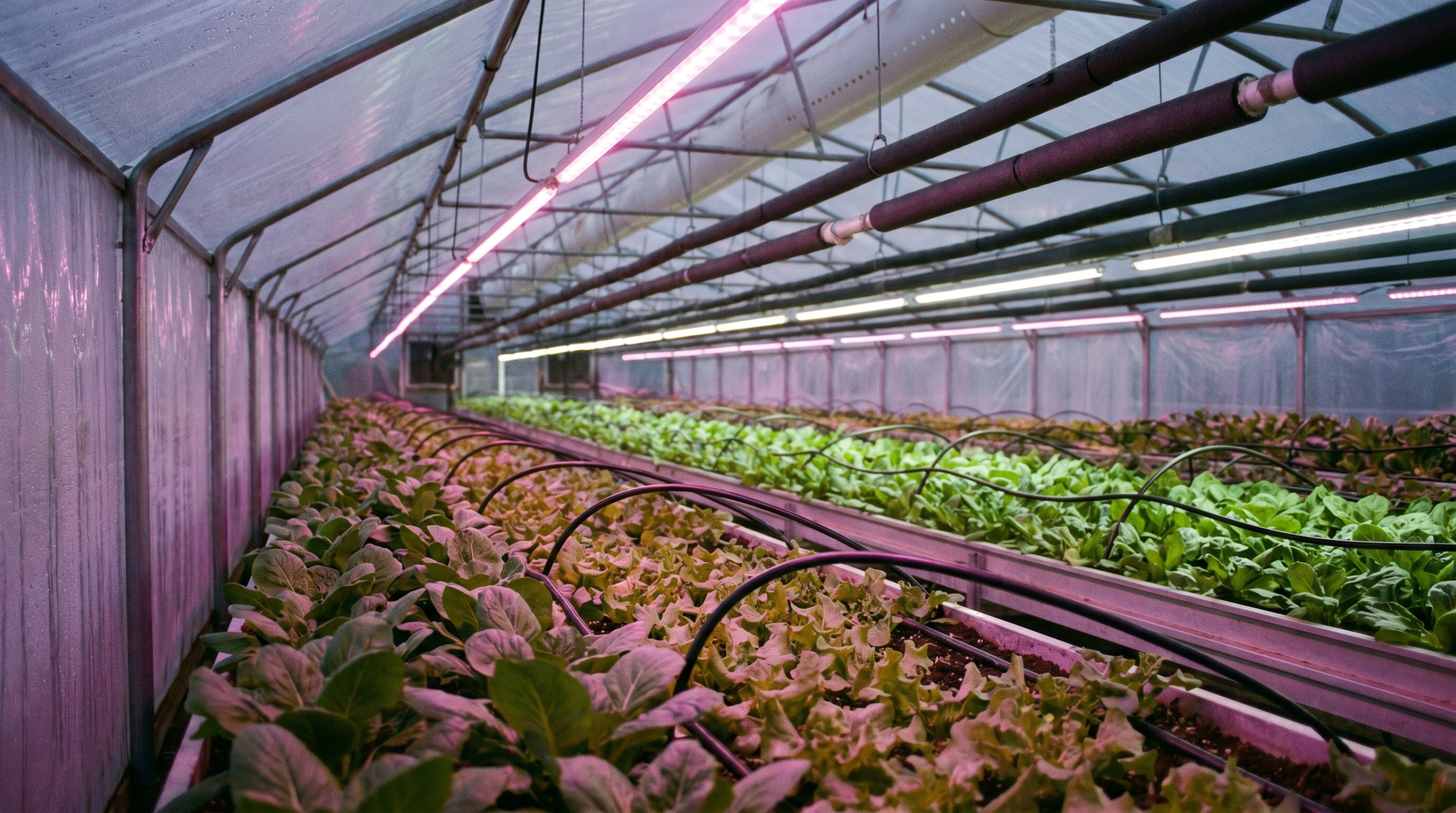

Cannabis cultivation demands more precise water chemistry than almost any other commercial crop. The plant’s sensitivity to nutrient ratios, pH drift, and dissolved mineral interference makes water quality a direct input to yield, potency, and crop consistency. Most large commercial grows have standardized on reverse osmosis as the starting point — not because it’s the most convenient option, but because it’s the only one that gives growers complete control over what’s in the water before nutrients are added.
Why Municipal or Well Water Creates Problems for Cannabis
Cannabis nutrient programs are calibrated to a specific elemental ratio delivered at a target EC (electrical conductivity) and pH. Feed water that already contains calcium, magnesium, sodium, sulfates, chloramines, or other dissolved minerals interferes with that calibration in two ways.
First, the minerals already present in the feed water compete with or add to the nutrients you’re intentionally applying. A grower adding a calcium-magnesium supplement to municipal water that already has 120 ppm calcium ends up with significantly elevated calcium that locks out other nutrients — particularly magnesium, iron, and zinc. The deficiency symptoms that show up in the leaves aren’t from missing nutrients; they’re from excess of competing ones.
Second, tap water TDS varies. Municipal water chemistry shifts seasonally, by source water blend, and after infrastructure events. A nutrient program calibrated for 180 ppm tap water will drift when the utility switches to a different source blend at 240 ppm — and the grower won’t know why the plants are showing stress.
RO water at 5–15 ppm TDS eliminates both problems. The nutrient program starts from a known, consistent baseline. Elemental inputs are the only inputs.
RO Water Quality Targets for Cannabis
| Parameter | Municipal Tap (typical) | RO Target (cannabis) | Why It Matters |
|---|---|---|---|
| TDS | 100–500 ppm | <20 ppm | Baseline for accurate nutrient EC targeting |
| Hardness (Ca + Mg) | 50–400 ppm | <10 ppm | Prevents calcium lockout and nutrient antagonism |
| Chlorine / Chloramine | 0.2–4 ppm | Non-detectable | Kills beneficial microbes in organic/living soil grows; affects plant stress response |
| Sodium | 10–100 ppm | <5 ppm | High sodium reduces potassium uptake; disrupts osmotic balance |
| pH | 6.5–8.5 | 5.8–6.2 (soil) / 5.5–6.0 (hydro/coco) after nutrient addition | pH is adjusted after RO, not before; low-TDS RO water holds pH adjustment well |
RO and Organic / Living Soil Cannabis Grows
Chloramine — the disinfectant used by most US municipal water systems since the 1990s — is particularly damaging in organic and living soil grows. Unlike free chlorine, chloramine does not off-gas with time or aeration. It kills the beneficial bacteria and mycorrhizal fungi in the soil food web that organic growers depend on for nutrient cycling. Carbon filtration alone removes free chlorine but does not remove chloramine effectively — reverse osmosis does.
For organic grows, RO water is not just a precision tool; it’s often necessary to protect the soil biology that makes organic cultivation work. Growers on municipal water who shifted to RO frequently report faster vegetation, improved nutrient uptake efficiency, and reduced pH instability — all attributable to eliminating the chloramine disruption of soil microbiology.
Sizing an RO System for a Cannabis Cultivation Facility
Calculate Daily Water Demand
Cannabis water usage varies by growth stage, cultivation method, and canopy size. General benchmarks:
- Vegetative stage: 0.5–1.5 liters per plant per day (varies by plant size and container volume)
- Flowering stage: 1–3 liters per plant per day
- Hydroponic / NFT / DWC systems: Reservoir replacement and top-off; calculate by reservoir volume and daily evapotranspiration rate
- Coco coir: Higher irrigation frequency; plan for 15–30% runoff per watering to prevent salt buildup
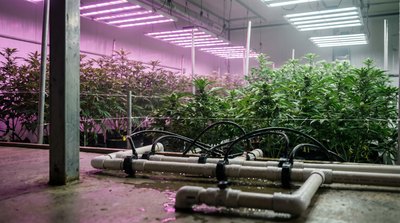
Multiply daily plant water demand × plant count, then add 20–30% for RO reject water (the portion sent to drain during the reverse osmosis process). The RO system must produce the required permeate volume within its daily operating hours.
Sizing Examples
| Canopy / Facility Scale | Estimated Daily Water Need | RO System Size (at 75% recovery) |
|---|---|---|
| Small craft grow (50–100 plants) | 50–200 gallons/day | 100–300 GPD |
| Mid-size cultivation (200–500 plants) | 200–750 gallons/day | 300–1,000 GPD |
| Commercial facility (500–2,000 plants) | 750–3,000 gallons/day | 1,000–4,000 GPD |
| Large commercial (2,000–10,000 plants) | 3,000–15,000 gallons/day | 4,000–20,000 GPD |
| Industrial / multi-room licensed facility | 15,000+ gallons/day | 20,000–100,000+ GPD |
Storage Tank Sizing
Most cannabis cultivation RO systems feed a holding tank — typically 500 to 5,000 gallons depending on facility scale — that the irrigation system draws from. The RO system runs continuously or on a timer to keep the tank filled. Size the tank at a minimum of 1 day’s supply to buffer against peak irrigation periods and any temporary RO downtime.
Pre-Treatment for Cannabis Cultivation RO Systems
The treatment train before the RO membrane depends on source water type:
Municipal Water Source
- 5-micron sediment filter — removes particulates
- Activated carbon block filter — removes chlorine and chloramine (critical for organic grows; required for all grows to protect the RO membrane)
- RO membrane — 95–98% TDS rejection
Well Water Source
Well water introduces additional variables: iron, manganese, hardness, hydrogen sulfide, and biological contamination are all common. The pre-treatment train needs to address what’s in your specific well — a laboratory water test ($50–$150) is essential before specifying a well water RO system.
- Sediment filter (20–50 micron) → iron/manganese removal (if iron above 0.3 ppm) → water softener (if hardness above 10 GPG) → 5-micron fine sediment filter → carbon filter → RO membrane
RO Reject Water in Cannabis Cultivation
RO systems reject 20–35% of feed water as concentrate at typical recovery rates. In a commercial cannabis facility, this reject stream is a water management consideration:
- Drain to sewer: Simplest approach; check local regulations for reject water discharge — most jurisdictions accept it without restriction since it’s concentrated municipal water, not a chemical waste stream.
- Irrigation of outdoor non-cannabis areas: RO reject at 300–600 ppm TDS is suitable for outdoor landscaping irrigation.
- High-recovery RO configuration: Systems designed for 80–85% recovery minimize reject volume; these use antiscalant dosing and may require more frequent membrane cleaning.
Remineralization for Cannabis: When and Why
Some growers — particularly those using base nutrient programs that do not include calcium and magnesium — add a remineralization step to bring RO water to a baseline EC of 0.1–0.3 mS/cm before adding nutrients. This provides a consistent mineral foundation that mimics what a “clean” natural water source would contribute.
The most common approach is adding a small dose of calcium-magnesium supplement (Cal-Mag) or a dedicated RO booster mineral product to bring Ca to 40–60 ppm and Mg to 20–40 ppm before nutrient mixing. This is a nutrient program decision, not an RO system decision — the RO system still produces water at <20 ppm TDS; remineralization happens in the mixing tank.
System Costs for Cannabis Cultivation RO
| System Size | Facility Scale | Equipment Cost | Annual Operating Cost |
|---|---|---|---|
| 100–500 GPD | Small craft grow | $800–$4,000 | $200–$600 |
| 500–2,000 GPD | Mid-size commercial | $3,500–$12,000 | $600–$2,000 |
| 2,000–10,000 GPD | Large commercial | $10,000–$50,000 | $2,000–$8,000 |
| 10,000–50,000 GPD | Industrial / multi-room | $45,000–$200,000 | $8,000–$35,000 |
Integration with Fertigation Systems
Commercial cannabis cultivation operations frequently use automated fertigation systems — inline nutrient injectors or batch mixing tanks that deliver a consistent nutrient solution to the crop. RO water is the preferred input for these systems because its near-zero baseline TDS allows the fertigation system’s EC target to be hit precisely without compensating for variable feed water mineral content.
The RO system and storage tank are typically positioned upstream of the fertigation mixing station. The fertigation system draws from the RO storage tank and adds nutrients, pH adjusters, and any other inputs to the RO water before delivery to the crop. This configuration gives the grower complete control over every input parameter at the plant root zone.
RO Systems for Cannabis Cultivation — AMPAC USA
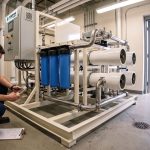
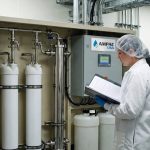
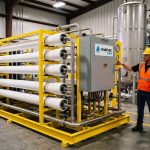
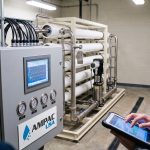
AMPAC USA manufactures commercial reverse osmosis systems for cannabis cultivation facilities, sized from 100 GPD craft-scale systems to 100,000+ GPD industrial installations. Systems include carbon pre-filtration (critical for chloramine removal on municipal water), sediment pre-filters, and inline TDS monitoring. Built in Woods Cross, UT, factory-tested before shipment.
Tell us your plant count, water source (municipal or well), and daily irrigation schedule and we’ll size the right system for your facility.
Frequently Asked Questions
Why do commercial cannabis growers use reverse osmosis water instead of tap water?
Municipal and well water contain variable levels of calcium, magnesium, sodium, and chloramine that interfere with precise nutrient dosing. RO water at 5-15 ppm TDS gives growers a consistent, near-zero baseline so the nutrient program is the only input affecting plant growth.
What TDS should RO water be for cannabis cultivation?
The target is under 20 ppm TDS, with hardness under 10 ppm and chlorine/chloramine non-detectable. This baseline allows accurate EC targeting once nutrients are added.
How do I size an RO system for a cannabis grow?
Calculate daily water demand per plant (0.5-1.5 L/day vegetative, 1-3 L/day flowering), multiply by plant count, then add 20-30 percent for RO reject water. A small craft grow of 50-100 plants typically needs a 100-300 GPD system; a large commercial facility of 2,000-10,000 plants needs 4,000-20,000 GPD.
Why is reverse osmosis important for organic or living soil cannabis grows?
Chloramine, the disinfectant used in most US municipal water since the 1990s, does not off-gas like free chlorine and kills the beneficial bacteria and mycorrhizal fungi that organic soil biology depends on. Carbon filtration alone does not remove chloramine effectively; reverse osmosis does.