
Here’s what seawater desalination actually costs in 2026, before anything else:
- Portable / marine (100–500 GPD): $3,000–$15,000
- Small commercial (1,000–5,000 GPD): $15,000–$60,000
- Mid-size industrial (10,000–50,000 GPD): $60,000–$350,000
- Large industrial (100,000+ GPD): $500,000–$5,000,000+
Those ranges are wide because seawater desalination cost is highly site-specific. Feed water salinity, required output quality, local energy prices, pre-treatment needs, and whether the system needs to be containerized for remote deployment all move the number.
What Drives Seawater Desalination System Cost
Feed Water Salinity
Ocean water typically runs 32,000–38,000 ppm TDS. Brackish water runs 1,000–10,000 ppm. Seawater RO (SWRO) requires operating pressures of 800–1,200 psi. Brackish water RO (BWRO) operates at 100–400 psi. Higher operating pressure means heavier pressure vessels, more powerful pumps, and more energy — all of which add cost.
Required Output TDS
Drinking water requires less than 500 ppm TDS. Industrial applications — pharmaceutical, semiconductor, power generation — may require TDS below 10 ppm, which typically means a second-pass RO system. A two-pass system can cost 40–60% more than a single-pass system at the same flow rate.
Pre-Treatment Complexity
Ocean water is biologically active and contains suspended solids, algae, and seasonal turbidity variation. Pre-treatment for SWRO typically requires multimedia filtration, ultrafiltration (UF) membranes, and chemical dosing. In regions with high biological activity, the pre-treatment system can represent 20–25% of total project cost.
Energy Recovery
On large SWRO systems, energy recovery devices (ERDs) — pressure exchangers or turbochargers — capture energy from the high-pressure reject stream and transfer it back to the feed water. ERDs reduce energy consumption by 30–50% on systems above roughly 10,000 GPD. The device itself adds $15,000–$200,000 to equipment cost, but payback is typically 1–3 years.
Cost Breakdown by System Component
| Component | % of System Cost | Notes |
|---|---|---|
| High-pressure pump | 15–25% | Largest single component cost; multistage centrifugal or positive displacement depending on flow rate |
| RO membranes | 20–30% | SWRO membranes (e.g., FILMTEC SW30XHR) cost more per element than BWRO membranes; replace every 3–7 years |
| Pressure vessels | 10–15% | Must be rated for 1,000+ psi for SWRO; fiberglass composite standard, stainless steel for harsh environments |
| Pre-treatment (filtration, chemicals) | 15–20% | Higher for surface seawater with biological loading; lower for clean offshore intakes |
| Controls and instrumentation | 10–15% | PLC-based control with remote monitoring standard on commercial and industrial systems |
| Frame and housing | 5–10% | Containerized housing adds cost but enables rapid deployment |
| Installation | 10–20% of equipment cost | Varies widely by site — offshore and island installations significantly higher |
Operating Cost: The Number That Matters Long-Term
Energy Consumption
Seawater RO requires 3–6 kWh per cubic meter of product water produced (with energy recovery; 8–15 kWh/m³ without). Brackish water RO typically consumes 0.5–1.5 kWh/m³ — a 4–10x difference.
At $0.12/kWh (US commercial average):
- 10,000 GPD SWRO without ERD: approximately $110–$220/day
- 10,000 GPD SWRO with ERD: approximately $55–$110/day
- 100,000 GPD SWRO with ERD: approximately $550–$1,100/day
Over a 10-year operating life, energy cost for a 10,000 GPD system adds up to $200,000–$800,000 — often more than the equipment cost. Systems in regions with high electricity rates should prioritize energy recovery and high-efficiency pump selection even when it increases upfront cost.
Membrane Replacement
SWRO membranes last 3–7 years under good operating conditions. A 10,000 GPD system might use 20–30 membrane elements at $200–$350 each. Replacement every 5 years: $4,000–$10,500 per cycle.
Seawater RO vs. Brackish RO vs. Municipal RO
| Parameter | Seawater RO (SWRO) | Brackish Water RO (BWRO) | Municipal / Low-TDS RO |
|---|---|---|---|
| Typical feed TDS | 32,000–42,000 ppm | 1,000–10,000 ppm | 100–1,000 ppm |
| Operating pressure | 800–1,200 psi | 100–400 psi | 50–150 psi |
| Energy use | 3–6 kWh/m³ (with ERD) | 0.5–1.5 kWh/m³ | 0.2–0.5 kWh/m³ |
| Typical TDS rejection | 99–99.8% | 95–99% | 90–98% |
| Membrane type | FILMTEC SW30XHR or equivalent | FILMTEC BW30 or equivalent | Low-pressure RO or NF elements |
| Recovery rate | 35–50% | 60–80% | 75–85% |
Applications
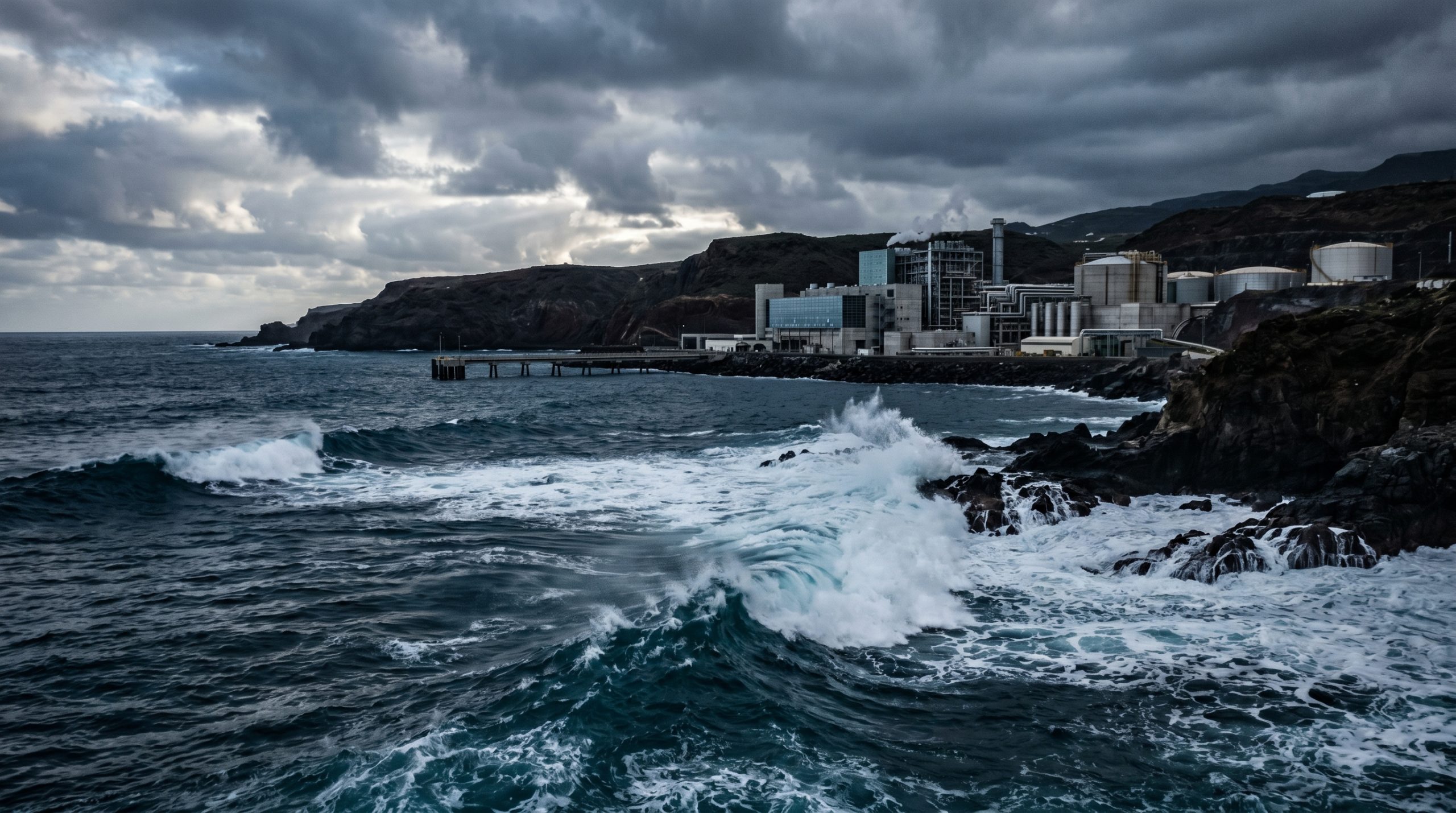
- Island communities and coastal municipalities: Where freshwater supply is limited or aquifers are at risk of saltwater intrusion, SWRO is increasingly the primary water supply source.
- Coastal hotels and resorts: High-end resort properties in water-scarce coastal regions often run their own SWRO systems to achieve water independence.
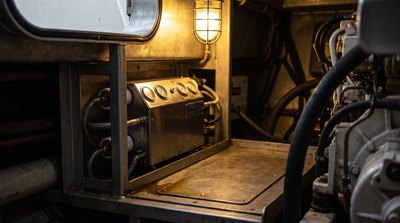
- Offshore platforms and vessels: Oil and gas platforms, research vessels, and large commercial ships use compact SWRO watermakers for crew water supply.
- Marine and recreational: Long-range sailing and motor yachts carry compact SWRO watermakers (100–500 GPD) for offshore passages.
- Emergency and disaster response: Mobile containerized SWRO units are deployed after natural disasters to coastal communities that have lost water infrastructure.
AMPAC USA Seawater Desalination Systems
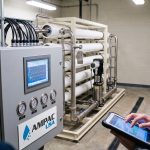
AMPAC USA has manufactured seawater RO systems in Woods Cross, UT since 1994. The product line spans from 100 GPD marine watermakers to 250,000 GPD industrial SWRO systems. Every system ships factory-tested with documented flow rate and rejection performance. FILMTEC SW30-series membranes are standard across the SWRO line — the same membranes used in large municipal desalination plants worldwide.
Systems are available as skid-mounted, trailer-mounted, or ISO-containerized configurations for rapid deployment to remote sites. Custom engineering is available for non-standard feed water chemistry or site-specific installation requirements.
Get a Seawater Desalination System Quote
Tell AMPAC’s engineering team your feed water source (ocean, coastal brackish, estuarine), daily output requirement, deployment location, and power supply. We’ll spec the right system and give you a real number.
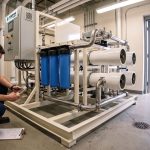
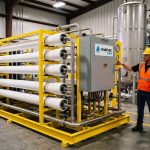
AMPAC USA’s seawater desalination systems span the range these figures describe.
Frequently Asked Questions
How much does a seawater desalination system cost in 2026?
Portable and marine units (100-500 GPD) run 3,000 to 15,000 dollars. Small commercial systems (1,000-5,000 GPD) run 15,000 to 60,000 dollars. Mid-size industrial (10,000-50,000 GPD) runs 60,000 to 350,000 dollars, and large industrial systems (100,000+ GPD) can run 500,000 to 5,000,000 dollars or more.
Why does seawater desalination cost more than brackish water treatment?
Seawater runs 32,000-38,000 ppm TDS versus 1,000-10,000 ppm for brackish water, requiring operating pressures of 800-1,200 psi versus 100-400 psi. Higher pressure means heavier pressure vessels, more powerful pumps, and significantly more energy consumption.
What is an energy recovery device and does it reduce desalination costs?
An energy recovery device (ERD) captures energy from the high-pressure reject stream and transfers it back to the feed water, reducing energy consumption by 30-50 percent on systems above roughly 10,000 GPD. It adds 15,000 to 200,000 dollars to equipment cost but typically pays back in 1-3 years.
How much energy does seawater reverse osmosis consume?
Seawater RO requires 3-6 kWh per cubic meter of product water with energy recovery, or 8-15 kWh per cubic meter without it. Brackish water RO consumes only 0.5-1.5 kWh per cubic meter by comparison.