
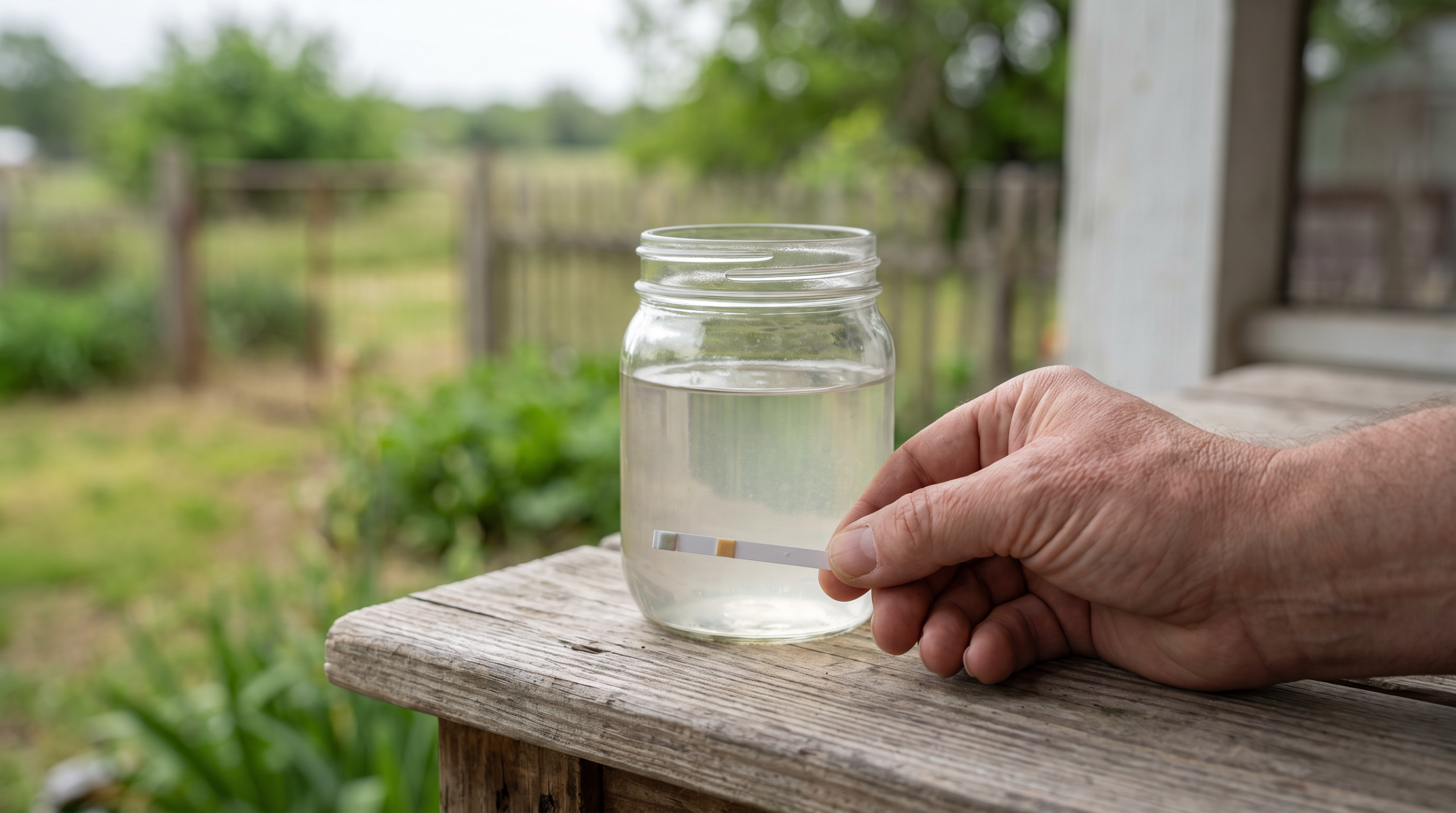

In short: If you get your water from a private well, no federal law requires anyone to test it for arsenic, and no agency will do it for you. The EPA regulates arsenic in public water systems at 10 parts per billion, but that rule stops at the property line. USGS research estimates about 2.1 million people in the continental US rely on domestic wells with arsenic above that same limit, most of them with no idea. Testing costs less than a nice dinner out. Fixing it, once you know, usually means a residential reverse osmosis system.
That gap between “regulated” and “your problem” is the whole story here. It’s not a conspiracy or an oversight nobody’s noticed. It’s just how the Safe Drinking Water Act was written back in 1974: it covers public water systems, full stop. An estimated 44 million Americans get their water from private wells instead, and every one of those wells is legally the owner’s responsibility, from drilling to testing to whatever shows up in the water twenty years later.
Why Isn’t Private Well Water Regulated Like Public Water?
The Safe Drinking Water Act was built around public water systems because that’s where regulation could reach efficiently, utilities serving thousands of connections through a shared pipe network. A private well serves one household, sits on private land, and falls outside the EPA’s jurisdiction entirely. States can step in, and a handful do. Oregon, for example, requires arsenic testing at the point of a real estate sale, with results disclosed to both the buyer and the state health authority. But that’s a state-by-state patchwork, not a national floor. Most well owners in most states have zero testing requirement, ever, for any contaminant.
The result is a quiet accountability gap. Nearly one in four private wells nationally contains at least one contaminant above an EPA health-based guideline, according to well-testing research compiled from state health department data. Arsenic is one of the more dangerous ones, because it’s naturally occurring, colorless, odorless, and tasteless. You cannot smell your way to a diagnosis.
How Many Private Wells Actually Have High Arsenic?
The U.S. Geological Survey estimates that about 2.1 million people in the continental United States use domestic wells with predicted arsenic concentrations above 10 micrograms per liter, the same limit the EPA enforces for public systems. That’s roughly 5% of the 44.1 million people relying on domestic wells nationwide. In targeted USGS sampling, close to 7% of tested wells exceeded that threshold outright.
Arsenic doesn’t distribute evenly. USGS groundwater surveys consistently find it more common and more concentrated in wells across the western US, along with pockets in New England, the upper Midwest, and parts of the Southwest, tied to local bedrock geology rather than anything a homeowner did wrong. Some individual wells have turned up far past the limit. State testing programs in Maine and New Hampshire have documented wells running as high as 3,100 ppb and 1,040 ppb respectively, both roughly 100 to 300 times the federal standard for public water.
And detection is broader than the exceedance number suggests. USGS national groundwater studies have found arsenic present at some measurable level in nearly half of sampled aquifer wells used for drinking water. Most of that is low-level and not a health concern on its own. But it means arsenic in groundwater isn’t rare or exotic. It’s common enough that “I’ll probably be fine” isn’t a great substitute for a $20 to $50 test.
What Does Arsenic Exposure Actually Do to You?
Long-term arsenic ingestion, even at low levels, is one of the more thoroughly documented drinking-water health risks in the toxicology literature. It’s linked to increased risk of bladder, lung, skin, kidney, liver, and prostate cancers. A widely cited EPA-era risk estimate put it plainly: water at the 10 ppb limit could still cause somewhere between 1 and 6 additional cancer deaths per 10,000 people exposed over a lifetime, which is why the agency tightened the standard in the first place. More recent epidemiological work has found that exposure around that same 10 ppb threshold may raise bladder cancer risk by roughly 40%, with some estimates closer to double.
The non-cancer effects matter too, and tend to show up sooner. Skin thickening and discoloration, gastrointestinal symptoms, numbness in the hands and feet, and cardiovascular effects have all been tied to chronic low-dose exposure. None of this happens overnight. That’s precisely the problem. Arsenic exposure is slow, cumulative, and invisible until it isn’t, which makes it a bad fit for a “test if something seems off” mentality. Nothing seems off. That’s the point.
Why Did the EPA Set the Arsenic Limit Where It Did?
The current 10 ppb standard is newer than most people assume. The US Public Health Service set arsenic at 50 ppb back in 1942, and the EPA carried that number forward unchanged when the agency was created decades later. It wasn’t until a 1999 National Academy of Sciences review concluded that 50 ppb “does not achieve EPA’s goal for public health protection” that the agency moved. The EPA finalized the drop to 10 ppb in January 2001, and it took effect in January 2006, five years of phase-in for public utilities to retool their treatment.
That history matters for one reason: the number wasn’t picked as a nice round figure. It followed a scientific reassessment that the old standard was letting through a real, measurable cancer risk. Public water customers got the benefit of that correction automatically, through utility-run treatment. Private well owners got the same updated risk science with none of the built-in protection, because nobody is required to apply it on their behalf.
What Should a Well Owner Actually Do About This?
Test first. Arsenic can’t be seen, smelled, or tasted, so a lab test is the only way to know where a specific well stands. Most state health departments or accredited private labs offer arsenic testing in the $20 to $50 range, and results typically take one to two weeks. If a well sits in a known higher-risk region, western states particularly, or in an area with documented geological arsenic, retesting periodically is worth the cost even after a clean result, since concentrations can shift with aquifer conditions and seasonal water table changes.
If a test comes back above 10 ppb, or even meaningfully elevated below it, the standard fix is treatment at the point of use, and reverse osmosis is the technology with the strongest track record. NSF/ANSI 58, the certification standard specific to RO systems, requires demonstrated reduction of pentavalent arsenic down to below the EPA’s MCL under controlled testing. Real-world certification data has shown RO systems cutting arsenic from around 50 ppb down to 0.7 ppb, better than 98% reduction. It’s also worth knowing that reverse osmosis is currently the only home filtration technology, aside from distillation, that has ever earned NSF/ANSI 58 certification for arsenic. No pitcher filter or faucet-mount unit has managed it.
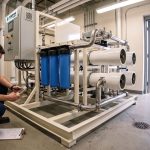
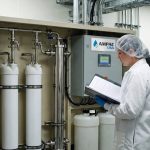
AMPAC USA builds residential reverse osmosis systems sized for exactly this scenario: a well that’s tested positive and a household that needs a real fix, not a stopgap. For a broader look at how the technology works across arsenic, lead, nitrates, and other well contaminants, our reverse osmosis overview covers system types and what to expect from installation to ongoing maintenance.
Should Testing Ever Become Mandatory?
That’s a genuinely open policy question, and reasonable people land in different places. A mandatory federal testing rule for tens of millions of private wells would be expensive to administer and hard to enforce on private property. But the current setup effectively treats geography as a health lottery: a family two miles from a public water hookup gets EPA-guaranteed arsenic protection, and a family on a well next door gets nothing unless they pay for testing themselves and happen to know they should. States that have already added disclosure requirements at point of sale, like Oregon, offer a lighter-touch model, catching wells at least once during a natural transaction point without a full federal mandate. It’s not a complete fix, but it beats the current default of silence.
Until a state or federal rule closes that gap, the responsibility sits with well owners, which mostly comes down to one fact: nobody else is going to test the water. Doing it yourself is a small cost against a health risk that’s well documented and, once identified, straightforward to treat.
Frequently Asked Questions
Is arsenic in well water actually common, or is this an overstated risk?
It’s genuinely widespread but geographically uneven. USGS data shows arsenic detectable at some level in nearly half of sampled aquifer wells nationally, with about 2.1 million people on domestic wells exceeding the EPA’s 10 ppb limit, concentrated more heavily in the western US and parts of New England.
How do I know if my well has arsenic without a lab test?
You can’t. Arsenic has no color, taste, or odor at the concentrations that cause health effects, so visual or sensory checks tell you nothing. A certified lab test, typically $20 to $50 through a state health department or accredited private lab, is the only reliable way to know.
Can boiling or basic filter pitchers remove arsenic from water?
No. Boiling concentrates arsenic rather than removing it, since the water evaporates but the arsenic doesn’t. Standard carbon pitcher filters aren’t certified for arsenic reduction either. Reverse osmosis and distillation are currently the only home technologies certified under NSF/ANSI 58 for arsenic removal.
How effective is reverse osmosis at removing arsenic specifically?
NSF/ANSI 58 certified RO systems are tested against arsenic challenge concentrations and have demonstrated reductions above 98%, including documented results dropping 50 ppb source water down to roughly 0.7 ppb, well under the EPA’s 10 ppb limit for public systems.
If my state doesn’t require well testing, is there any point in testing regularly?
Yes. The absence of a legal requirement doesn’t change the underlying health science, it just means no one else is going to do the testing for you. Given that private well contamination is common (nearly one in four wells has at least one contaminant above EPA guidelines) and arsenic specifically carries well-documented cancer risk, periodic testing remains one of the cheapest health precautions a well-owning household can take.
Sources: U.S. Geological Survey (Arsenic and Drinking Water; estimated domestic well population data); U.S. EPA (Chemical Contaminant Rules, arsenic MCL history); National Academy of Sciences (1999 arsenic risk assessment); NSF International (NSF/ANSI 58 certification data); Mass.gov (Arsenic in Private Well Water FAQs); state well-testing survey data (Maine, New Hampshire).
AMPAC USA engineers custom water purification systems for commercial, industrial, and emergency applications — from 500 GPD to multi-million GPD. Trusted by municipalities, military, and industry worldwide.