

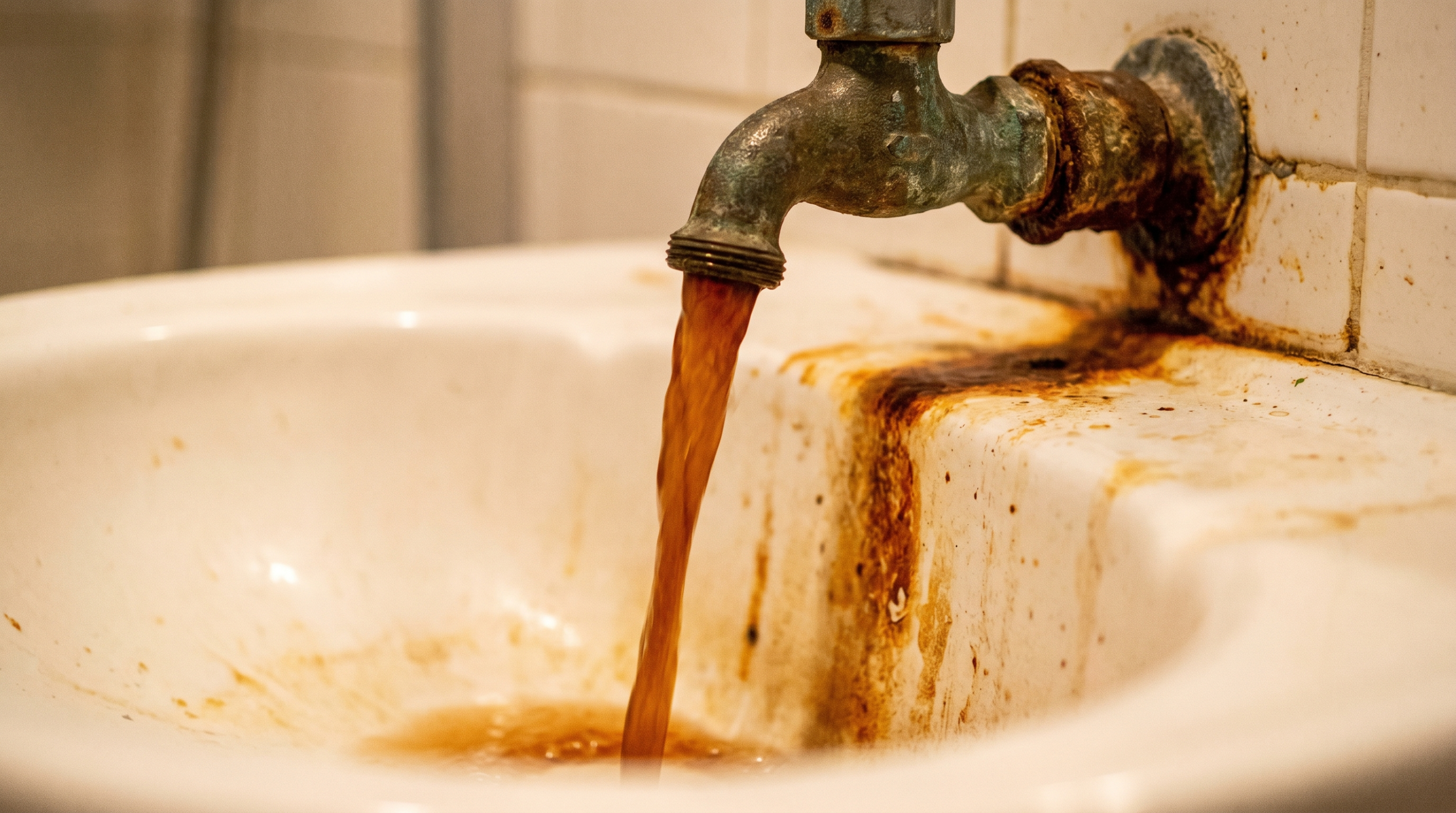

Chromium-6 (hexavalent chromium, Cr(VI)) became nationally known after the Hinkley, California groundwater contamination case documented in the Erin Brockovich story — but it’s a widespread contaminant, not a California-specific one. A 2016 Environmental Working Group analysis found chromium-6 in the drinking water of more than 200 million Americans across all 50 states. Reverse osmosis is one of the most effective treatment technologies available for removing chromium-6 at the point of use.
Chromium-6 in Drinking Water: Regulation and Health Effects
Chromium exists in drinking water in two primary forms with very different health profiles:
- Chromium-3 (trivalent chromium, Cr(III)): An essential trace nutrient at low concentrations. EPA considers it non-carcinogenic at drinking water concentrations.
- Chromium-6 (hexavalent chromium, Cr(VI)): A known human carcinogen. Linked to stomach and gastrointestinal cancers via ingestion. The National Toxicology Program (NTP) classified Cr(VI) as a known human carcinogen in 2024 via drinking water exposure.
Current US regulation covers total chromium (Cr(III) + Cr(VI) combined):
- EPA MCL for total chromium: 100 ppb (0.1 mg/L) — This standard was set in 1991 and was designed primarily around Cr(III). It does not adequately protect against the carcinogenic risk of Cr(VI) at concentrations well below 100 ppb.
- California MCL for Cr(VI): 10 ppb — California established a separate Cr(VI)-specific standard in 2014 (the first in the world), which was subsequently vacated by courts on economic feasibility grounds. California adopted a new Cr(VI) MCL of 10 ppb effective 2024.
- EPA proposed federal Cr(VI) MCL: The EPA has been evaluating a separate, lower Cr(VI) standard for years. A federal Cr(VI)-specific MCL below 20 ppb is under active regulatory development.
- Health-based guidance: The EPA’s non-enforceable MCLG for total chromium is 100 ppb, but public health advocates and the EWG propose a health-protective level for Cr(VI) of 0.02 ppb based on cancer risk — a standard that no practical treatment can guarantee without two-pass RO or deionization.
Sources of Chromium-6 in Drinking Water
- Natural geological sources: Chromium-bearing rock (chromite, serpentinite) weathering releases Cr(VI) into groundwater in many regions. California’s Central Valley, much of the Southwest, and parts of the Mountain West have naturally elevated Cr(VI) in groundwater.
- Industrial contamination: Chromium-6 was widely used in industrial processes — chrome plating, leather tanning, cooling tower anti-corrosion additives (Pacific Gas & Electric’s use of Cr(VI) in compressor station cooling towers is the Hinkley case), and aerospace manufacturing. Decades of industrial use left Cr(VI) in groundwater near thousands of industrial sites.
- Coal ash leachate: Coal combustion residuals (fly ash) contain chromium; coal ash impoundments near power plants are a documented source of Cr(VI) in nearby groundwater.
How Reverse Osmosis Removes Chromium-6
Chromium-6 exists in water as chromate (CrO₄²⁻) and dichromate (Cr₂O₇²⁻) — both are highly soluble anions. RO membranes reject chromate through charge repulsion (divalent anion) and size exclusion:
| Chromium Species | Charge | Typical RO Rejection |
|---|---|---|
| Chromate (CrO₄²⁻) — Cr(VI) at neutral/alkaline pH | Divalent anion | 92–97% |
| Dichromate (Cr₂O₇²⁻) — Cr(VI) at acidic pH | Divalent anion | 92–97% |
| Chromium(III) (Cr³⁺) — Cr(III) at acidic to neutral pH | Trivalent cation | 96–99% |
Practical example: Feed water at 50 ppb Cr(VI) through a well-maintained TFC RO system at proper operating conditions (50 PSI minimum, 77°F, 15% recovery or less for point-of-use) will typically produce permeate at 1.5–4 ppb Cr(VI) — well below California’s 10 ppb MCL and significantly below the federal 100 ppb MCL.
NSF P473 and chromium: NSF Protocol P473 is a certification standard for drinking water treatment units for PFAS reduction that also evaluates chromium-6. Some RO systems tested under NSF P473 show Cr(VI) rejection achieving 95%+ under standardized test conditions. Look for NSF P473 certification when selecting a system for chromium-6 reduction.
Chromium-6 Treatment Options Compared
| Technology | Cr(VI) Removal | Notes |
|---|---|---|
| Reverse osmosis | 92–97% | Most versatile. Removes Cr(VI) plus TDS, PFAS, nitrates, arsenic, lead. Point-of-use and whole-house options. |
| Anion exchange resin (Cr(VI)-selective) | 95–99% | High Cr(VI) removal. Regeneration produces chromium-laden brine requiring proper disposal. Higher maintenance than RO. |
| Reduction + filtration (Fe²⁺ or SO₂ reduction to Cr(III), then filtration) | 90–99% | Municipal-scale treatment. Converts Cr(VI) to Cr(III) then precipitates. Not practical at residential scale. |
| Activated carbon | <10% | Standard activated carbon does NOT remove Cr(VI). A common misconception. |
| Water softener | <10% | Does NOT remove Cr(VI). Softeners are designed for cation removal; chromate is an anion. |
Testing for Chromium-6
Standard water tests for “total chromium” do not distinguish Cr(VI) from Cr(III). If you’re concerned about chromium-6 specifically — particularly if you’re in California, near industrial sites, or in a region with naturally elevated chromium — request a test that specifies Cr(VI) (hexavalent chromium) separately from total chromium.
Municipal water users: Your utility’s annual Consumer Confidence Report (CCR) reports total chromium. For Cr(VI) specifically, contact your utility directly — California utilities subject to the 10 ppb MCL must test and report Cr(VI) separately. For private well users, a state-certified laboratory test for Cr(VI) typically costs $25–60.
AMPAC USA RO Systems for Chromium-6 Reduction
AMPAC USA residential reverse osmosis systems using FILMTEC™ thin-film composite membranes achieve 92–97% rejection of chromate (Cr(VI)) under standard operating conditions. For households with chromium-6 in drinking water:
- Under-sink (50–100 GPD) — Treats drinking and cooking water. Appropriate for most households where the primary concern is ingestion exposure from the drinking tap.
- Whole-house (200–1,000+ GPD) — Full-home treatment including shower and bath water. While Cr(VI) absorption through skin contact is considered lower risk than ingestion, whole-house RO is recommended for facilities with high Cr(VI) concentrations or where comprehensive exposure reduction is desired.
Water test showing elevated chromium-6? Share your results — including Cr(VI) concentration, pH, and TDS — and we’ll specify the right system. Contact AMPAC USA for a free consultation. One business day response.
Related: PFAS Removal by Reverse Osmosis | Arsenic Removal by Reverse Osmosis | Lead Removal by Reverse Osmosis | Residential RO Systems
Related Articles
- Nitrate Removal by Reverse Osmosis: Well Water Treatment Guide | AMPAC USA
- Lead in Drinking Water: How Reverse Osmosis Removes Lead | AMPAC USA
- Iron in Well Water: Does Reverse Osmosis Remove Iron? | AMPAC USA
- Fluoride Removal by Reverse Osmosis: Does RO Filter Fluoride? | AMPAC USA
Frequently Asked Questions
Does reverse osmosis remove chromium-6 from drinking water?
Yes. RO rejects chromate (Cr(VI)) at 92-97 percent through charge repulsion and size exclusion, since chromate is a divalent anion. Feed water at 50 ppb Cr(VI) typically produces permeate at 1.5-4 ppb, well below California’s 10 ppb standard.
Does activated carbon or a water softener remove chromium-6?
No. Standard activated carbon removes less than 10 percent of chromium-6, and water softeners are designed for cation removal while chromate is an anion, so neither is an effective standalone treatment.
What’s the difference between chromium-3 and chromium-6 in drinking water?
Chromium-3 is an essential trace nutrient considered non-carcinogenic at drinking water concentrations, while chromium-6 is a known human carcinogen linked to stomach and gastrointestinal cancers. Current EPA regulation only covers total chromium at 100 ppb, which does not adequately address chromium-6 risk at lower concentrations.
How do I know if my water has chromium-6 specifically?
Standard total chromium tests don’t distinguish Cr(VI) from Cr(III). You need to request a test that specifically reports hexavalent chromium separately, especially if you’re in California, near industrial sites, or in a region with naturally elevated chromium.
