

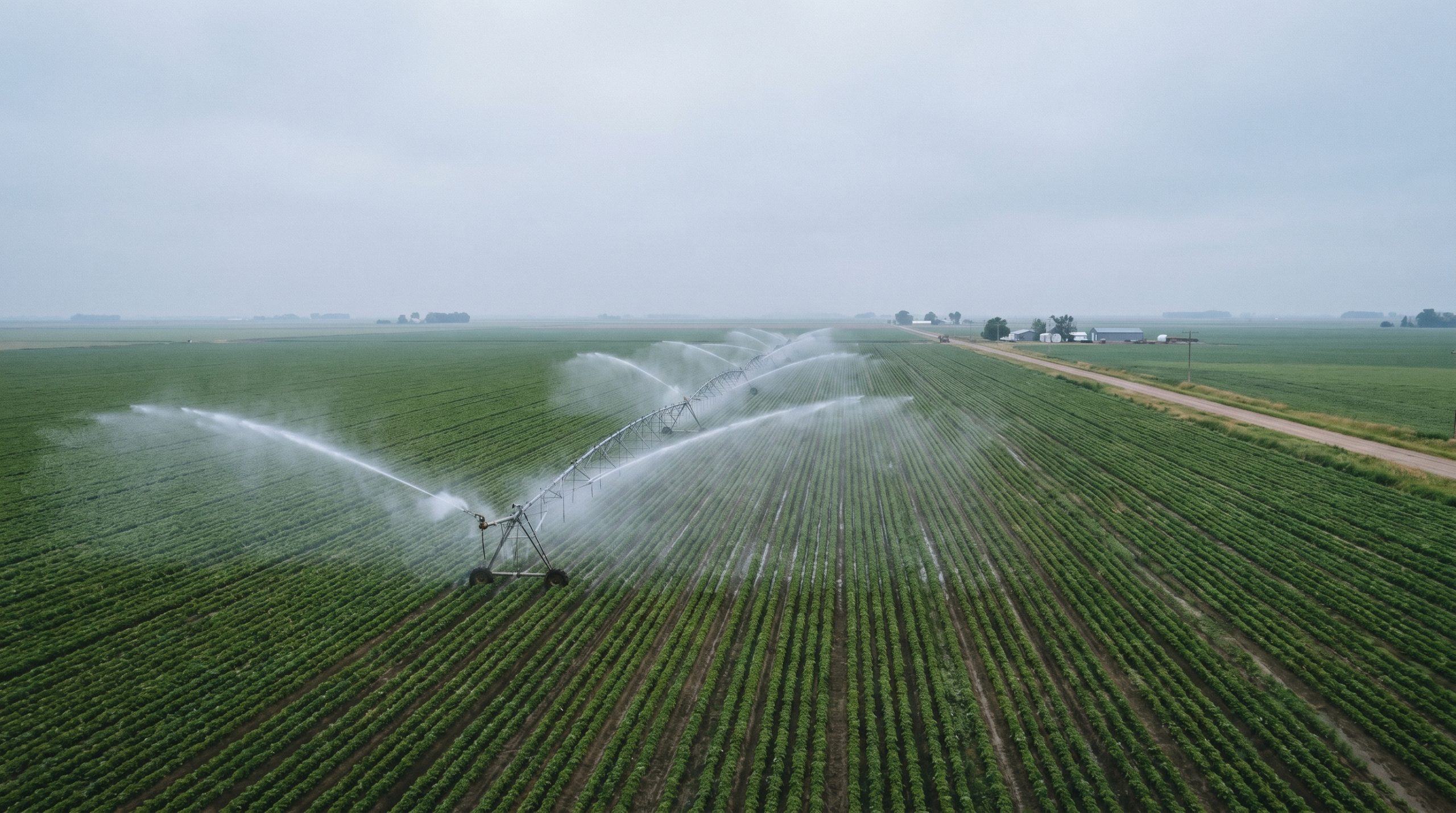

Nitrates are one of the most common groundwater contaminants in the United States, particularly in agricultural regions where nitrogen fertilizers and animal waste enter the water table. The EPA’s Maximum Contaminant Level (MCL) for nitrate in public drinking water is 10 mg/L as nitrogen (10 ppm NO₃-N, equivalent to 45 mg/L as nitrate-NO₃). Reverse osmosis is one of only three technologies classified by the EPA as Best Available Technology (BAT) for nitrate removal, and the most practical option at the residential and light commercial scale.
Sources of Nitrates in Drinking Water
Nitrate contamination in drinking water is predominantly a groundwater problem, concentrated in agricultural areas. Major sources:
- Agricultural fertilizers — Synthetic nitrogen fertilizers applied to crops convert to nitrate in soil and leach into groundwater over months to years. The Corn Belt (Iowa, Illinois, Indiana, Nebraska, Kansas, Minnesota) has the highest rates of nitrate contamination in shallow wells due to intensive row-crop agriculture.
- Animal feeding operations — Concentrated Animal Feeding Operations (CAFOs) generate large volumes of manure; nitrogen in manure converts to nitrate and leaches into surrounding groundwater.
- Septic systems — Residential and commercial septic systems in areas with high density of on-site wastewater treatment contribute nitrate to shallow aquifers.
- Urban runoff — Lawn fertilizers, pet waste, and storm runoff contribute to nitrate loading in shallow wells and surface water.
Private well owners in agricultural areas are at highest risk. The EPA MCL applies only to public water systems — private well owners must test and treat their own water. USGS surveys estimate that approximately 20% of private wells in agricultural areas exceed the 10 ppm nitrate-N standard at least periodically.
Health Effects of Nitrates in Drinking Water
The primary acute health risk from nitrates is methemoglobinemia (“blue baby syndrome”) in infants under 6 months. Nitrate in the infant gut is converted to nitrite, which reacts with hemoglobin to form methemoglobin — a form that cannot carry oxygen. Severe cases cause cyanosis (blue skin) and can be fatal. This is why the 10 ppm MCL was originally established specifically to protect infants.
Chronic effects in adults are less established but emerging:
- Cancer risk: Epidemiological studies associate chronic nitrate exposure above 5–10 ppm with increased colorectal cancer risk. Nitrate can react with amines in the gut to form N-nitrosamines, which are carcinogenic.
- Thyroid effects: Nitrate competes with iodide for uptake by the thyroid gland, potentially suppressing thyroid hormone production at chronic exposure levels.
- Pregnancy outcomes: Some studies link elevated nitrate exposure during pregnancy to neural tube defects and preterm birth, though the evidence base is less conclusive than for infant methemoglobinemia.
How Reverse Osmosis Removes Nitrates
RO membranes reject nitrate (NO₃⁻) through charge repulsion and size exclusion. Nitrate is a monovalent anion — smaller than many divalent ions like sulfate — so RO rejection is slightly lower for nitrate than for sulfate or calcium, but still highly effective:
| Feed Nitrate (ppm NO₃-N) | Typical RO Rejection | Permeate Concentration |
|---|---|---|
| 10 ppm (EPA MCL) | 85–95% | 0.5–1.5 ppm (well below MCL) |
| 25 ppm | 85–95% | 1.25–3.75 ppm |
| 50 ppm | 85–95% | 2.5–7.5 ppm |
| 100 ppm | 85–95% | 5–15 ppm |
Note on high nitrate concentrations: At feed nitrate above 50 ppm, a single-pass RO system may not achieve the 10 ppm permeate target reliably. For highly contaminated well water (above 50 ppm), a two-pass RO system or blending of RO permeate with softened water is recommended. Contact our engineering team for sites with confirmed nitrate above 25 ppm — we’ll size the system to achieve the target permeate quality.
Nitrate Treatment Options Compared
| Technology | Nitrate Removal | Notes |
|---|---|---|
| Reverse osmosis | 85–95% | EPA BAT. Also removes TDS, arsenic, lead, PFAS. Best choice for multi-contaminant treatment. |
| Ion exchange (nitrate-selective resin) | 90–99% | EPA BAT. High nitrate-specific removal. Requires regeneration with brine; produces nitrate-laden waste brine. Higher maintenance. |
| Distillation | 95%+ | EPA BAT. Effective but impractical at scale — slow, high energy use. |
| Activated carbon | <10% | Does NOT remove nitrates. A common consumer misconception. |
| Water softeners | <5% | Do NOT remove nitrates. Designed for hardness, not anion removal. |
| Boiling | 0% (concentrates nitrate) | Boiling evaporates water and increases nitrate concentration. Never use boiling to treat nitrate-contaminated water. |
Important: Boiling water does NOT remove nitrates — it concentrates them. This is a dangerous misconception among well water users. If your well tests positive for nitrate above the MCL and you have infants in the home, use bottled water or an NSF 58-certified RO system for infant formula and drinking water immediately while planning a permanent treatment solution.
Nitrate Testing for Private Wells
Annual nitrate testing is recommended for all private wells in agricultural areas. Testing guidelines:
- Test in late spring through summer — nitrate levels in shallow wells typically peak after spring fertilizer application and heavy rain events
- Use a state-certified laboratory; collect sample according to lab instructions (typically first-draw or post-flush, depending on lab protocol)
- Test total nitrate as nitrogen (NO₃-N); some labs also report nitrate as nitrate (NO₃), which is 4.4× higher numerically — confirm which unit your result uses before comparing to the 10 ppm MCL
- If nitrate is detected above 5 ppm, test annually and especially after heavy rain events or following fall fertilizer application
AMPAC USA RO Systems for Nitrate Removal
AMPAC USA point-of-use and whole-house RO systems achieve 85–95% nitrate rejection with FILMTEC™ thin-film composite membranes. For households with private well nitrate contamination:
- Under-sink (50–100 GPD) — Treats drinking and cooking water. Appropriate for households where nitrate is the primary concern and infant formula/cooking water is the critical exposure pathway.
- Whole-house (200–1,000+ GPD) — Full-home treatment including bath and shower water. Appropriate for high nitrate levels where total exposure reduction is desired.
For commercial agricultural operations, food processing facilities, or livestock operations where nitrate in process water is a concern, AMPAC USA industrial RO systems from 1,500–20,000+ GPD provide nitrate reduction at scale.
Well water testing positive for nitrates? Share your test results — including nitrate concentration, TDS, hardness, and iron — and we’ll specify the right system and pre-treatment. Contact AMPAC USA for a free consultation. One business day response.
Related: Arsenic Removal by Reverse Osmosis | Whole House RO Systems | Free Water Quality Assessment
Related Articles
- Chromium-6 in Drinking Water: Reverse Osmosis Removal Guide | AMPAC USA
- Iron in Well Water: Does Reverse Osmosis Remove Iron? | AMPAC USA
- Fluoride Removal by Reverse Osmosis: Does RO Filter Fluoride? | AMPAC USA
- Lead in Drinking Water: How Reverse Osmosis Removes Lead | AMPAC USA
Frequently Asked Questions
Does reverse osmosis remove nitrates from well water?
Yes, RO is one of only three EPA-recognized Best Available Technologies for nitrate removal, typically achieving 85-95 percent rejection. Feed water at the EPA MCL of 10 ppm nitrate-N produces permeate around 0.5-1.5 ppm.
Why are nitrates dangerous specifically for infants?
Nitrate converted to nitrite in an infant’s gut reacts with hemoglobin to form methemoglobin, which cannot carry oxygen, causing methemoglobinemia or ‘blue baby syndrome.’ This is why the EPA’s 10 ppm MCL was originally established to protect infants under 6 months.
Does boiling water remove nitrates?
No. Boiling evaporates water and actually concentrates nitrates rather than removing them. This is a dangerous and common misconception among well water users with nitrate contamination.
What should I do if my well tests above the nitrate MCL and I have an infant at home?
Use bottled water or an NSF 58-certified RO system for infant formula and drinking water immediately while arranging a permanent treatment solution, since untreated nitrate-contaminated water poses acute risk to infants under 6 months.
