

People shopping for a home water filter run into a frustrating problem: every system claims to be the best. Carbon filters, UV purifiers, distillers, alkaline machines, nanofiltration, reverse osmosis – each one comes with its own set of marketing claims and each one genuinely does something well. The real question is whether reverse osmosis is the best way to filter water for your specific situation. The honest answer is: it depends – but for most homes and most contaminants, RO comes out on top.
Here’s a straight comparison across each major filtration method, including where RO wins, where it doesn’t, and when a different approach actually makes more sense.
What Reverse Osmosis Actually Removes
Before comparing methods, it helps to know what RO is actually doing. Reverse osmosis uses a semi-permeable membrane with pores at 0.0001 microns – small enough to block dissolved ions, heavy metals, PFAS compounds, bacteria, and viruses while letting water molecules pass through.
In April 2024, the EPA finalized the first enforceable limits for PFAS in drinking water and named reverse osmosis one of its Best Available Technologies (BATs) for meeting those limits. Here’s what the removal rates look like in practice:
- Lead: ~99% removal
- Arsenic: ~95% removal
- PFAS (PFOA/PFOS): 95-99% removal
- Fluoride: 85-95% removal
- Nitrates: 83-92% removal
- Dissolved salts (TDS): 97-99.5% removal
- Bacteria and viruses: 99% (physical exclusion by pore size)
That’s a broad, deep removal profile. No other single residential filter technology comes close to that breadth.
RO vs. Carbon Filters: The Most Common Comparison
Activated carbon filters are everywhere – pitcher filters, refrigerator filters, undersink filters, whole-house filters. They work through adsorption: contaminants stick to the carbon surface. They’re genuinely effective at improving taste, reducing chlorine and chloramines, and cutting VOCs. What they can’t do is touch dissolved inorganic contaminants.
Carbon filters don’t remove lead. They don’t remove nitrates. They don’t remove fluoride. They don’t remove PFAS (standard activated carbon removes some long-chain PFAS but fails on short-chain compounds, and the EPA’s newly certified filter list reflects this). They don’t reduce TDS.
The practical takeaway: carbon and RO aren’t really competing – they’re complementary. Every quality RO system uses carbon pre-filters and carbon post-filters. Carbon protects the RO membrane from chlorine damage; a carbon polish stage improves final taste. If your only concern is chlorine taste in municipal water and your pipes test clean, carbon alone is fine. If you need contaminant removal, carbon alone isn’t enough.
RO vs. UV Purification
UV systems do one thing very well: kill bacteria, viruses, and cysts using ultraviolet light without adding any chemicals. They’re fast, they don’t affect taste or minerals, and they’re effective when the water flowing through them is clear.
What UV can’t do is remove any chemical contaminant. No lead, no arsenic, no nitrates, no PFAS. Zero. UV is a biological treatment, not a chemical one.
There’s also a catch with UV: turbid or highly colored water blocks UV penetration. If the water has high TDS or organic matter, UV effectiveness drops significantly. This is why UV is typically used as a final polishing step, not a standalone solution.
For well water with biological contamination risk and chemical concerns, UV + RO in series is the answer. For municipal water that’s already disinfected but has chemical contamination concerns, RO alone (with a carbon stage) does the job.
RO vs. Distillation: Similar Results, Very Different Tradeoffs
Distillation heats water to steam, then condenses it back into liquid – leaving behind dissolved solids, heavy metals, and most contaminants. The output is extremely pure water, similar in profile to high-quality RO permeate.
The differences come down to practicality:
- Speed: A countertop distiller produces about 1 gallon every 4-6 hours. A comparable RO system produces water continuously with a storage tank.
- Energy: Distillation is energy-intensive – you’re boiling water. RO uses pressure, not heat, and is far more energy-efficient.
- VOCs: Here’s a counterintuitive one – distillation can carry volatile organic compounds over into the distillate, because some VOCs boil at lower temperatures than water. Without a carbon post-filter, distilled water can actually have more VOCs than well-designed RO permeate.
- Cost to run: Distillers are cheaper upfront ($150-400), but the electricity cost over years typically exceeds what a good RO system costs to maintain.
Distillation is a fine option for small-volume applications – laboratory samples, specialty uses. For a household needing 2-5+ gallons of drinking water per day, RO is considerably more practical.
RO vs. Nanofiltration: The Technical Sibling
Nanofiltration (NF) sits between ultrafiltration and RO in pore size – about 0.001 microns, compared to RO’s 0.0001 microns. NF rejects divalent ions (calcium, magnesium, sulfate) effectively, making it useful for water softening. It operates at lower pressure than RO, which means lower energy costs.
The problem: NF has poor rejection of monovalent ions. Sodium rejection in NF runs around 12%, chloride around 27%. For general TDS reduction and contaminant removal, that’s not good enough. RO achieves 97-99.5% TDS rejection. If your goal is softening without full desalination, NF is worth considering. If you need meaningful contaminant removal, NF doesn’t get there.
Where RO Falls Short
A fair comparison has to include the limitations – and RO has a few real ones.
Water waste. Traditional under-sink RO units waste 3-4 gallons for every gallon of clean water produced. Modern high-efficiency systems have improved this substantially, reaching 1:1 or 2:1 ratios, but it’s still a consideration in drought-prone areas or homes with high water costs.
Mineral removal. RO removes calcium and magnesium along with everything else – about 95% of both. This produces water that tastes slightly flat to some people. Adding a remineralization stage (a calcite post-filter or an alkaline mineral cartridge) restores these minerals and improves taste. Most current multi-stage systems include this.
Pressure requirements. RO needs at least 40 PSI feed pressure to work properly; 60-80 PSI is ideal. Well water systems or low-pressure municipal supplies may need a small booster pump.
When it’s overkill. If your city water tests clean and your only concern is chlorine taste, carbon filtration is faster, cheaper, and wastes no water. Don’t buy an RO system to solve a taste problem a $30 pitcher filter handles fine.
So – Is Reverse Osmosis the Best Way to Filter Water?
For homes dealing with lead, PFAS, arsenic, nitrates, or any significant chemical contamination, yes. Nothing else available at the residential level removes such a broad spectrum of contaminants in a single pass. The EPA’s endorsement of RO as a Best Available Technology for PFAS compliance in 2024 confirms that assessment at the regulatory level.
For someone on clean municipal water who just wants better-tasting coffee? A simple carbon filter might be all they need.
The honest answer is that the best filtration system is the one matched to what’s actually in your water. Start with a water test, identify the specific contaminants present, then match the technology to the problem. In most cases, that path leads to RO.
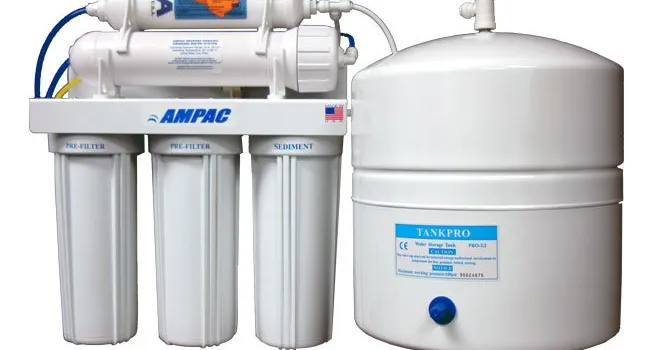
AMPAC USA offers residential RO systems from compact under-sink units to whole-house configurations. Explore our under-sink RO systems and find the right fit for your water.
Related Articles
- Enhancing Home Water Quality with Advanced Under Sink Reverse Osmosis Systems
- Pros and Cons of Reverse Osmosis Filter Systems
- How Whole House and Under Sink Reverse Osmosis Drinking Water Filtration Systems Works?
- Reverse Osmosis Water Filtration – Making Home Healthier
Frequently Asked Questions
What contaminants does a reverse osmosis system effectively remove?
Reverse Osmosis systems are highly effective, removing 90-98% of water contaminants. This includes dissolved salts, microorganisms like bacteria, sediments, and substances such as chlorine and sulfur. AMPAC USA systems often integrate carbon filters to further eliminate odors and improve taste, ensuring comprehensive purification.
How does Reverse Osmosis contribute to providing safe drinking water globally?
RO is a crucial, economical solution addressing the global challenge of unsafe drinking water, particularly for the 663 million lacking access. It enables the desalination of abundant seawater in coastal, desert, and offshore regions, transforming it into potable water. Furthermore, RO is a key process used by virtually every bottling plant worldwide to ensure water safety and quality.
What are some key industrial or specialized applications for Reverse Osmosis filtration?
Beyond residential use, RO systems are vital for industrial and specialized applications, including the pretreatment of reagent-grade chemicals and ensuring safe drinking water in areas with radiation contamination risk, such as near nuclear power plants. AMPAC USA’s engineers have direct field experience installing these systems on offshore oil rigs, military bases, luxury resorts, municipalities, and food & beverage plants.
Are Reverse Osmosis systems difficult to install or maintain?
Reverse Osmosis systems are designed for ease of installation, high efficiency, and minimum maintenance requirements. Their robust design, often complemented by advanced technologies like GAC filters and UV rods, ensures long-term reliability and consistent water quality. AMPAC USA engineers focus on practical, durable solutions that simplify operation.
Why is Reverse Osmosis considered an economical method for water purification?
Reverse Osmosis is recognized as the most economical method for removing 90-98% of water contaminants, providing a cost-effective solution for safe drinking water. Its ability to desalinate readily available seawater in water-scarce regions makes it particularly economical for large-scale applications. AMPAC USA aims to provide efficient, economical systems that deliver required drinking water output.
What role do sediment filters play in a reverse osmosis (RO) system?
Sediment filters are the first stage of pre-treatment in most reverse osmosis (RO) setups. They strip out sand, rust, and other particulate matter from the incoming water supply before it reaches the finer carbon and membrane stages, which protects the RO membrane from premature fouling and extends its service life. Homes on a well or older municipal water supply with visible sediment benefit the most from this pre-filtration step — without it, RO membranes clog faster and need replacement more often.
AMPAC USA engineers custom water purification systems for commercial, industrial, and emergency applications — from 500 GPD to multi-million GPD. Trusted by municipalities, military, and industry worldwide.