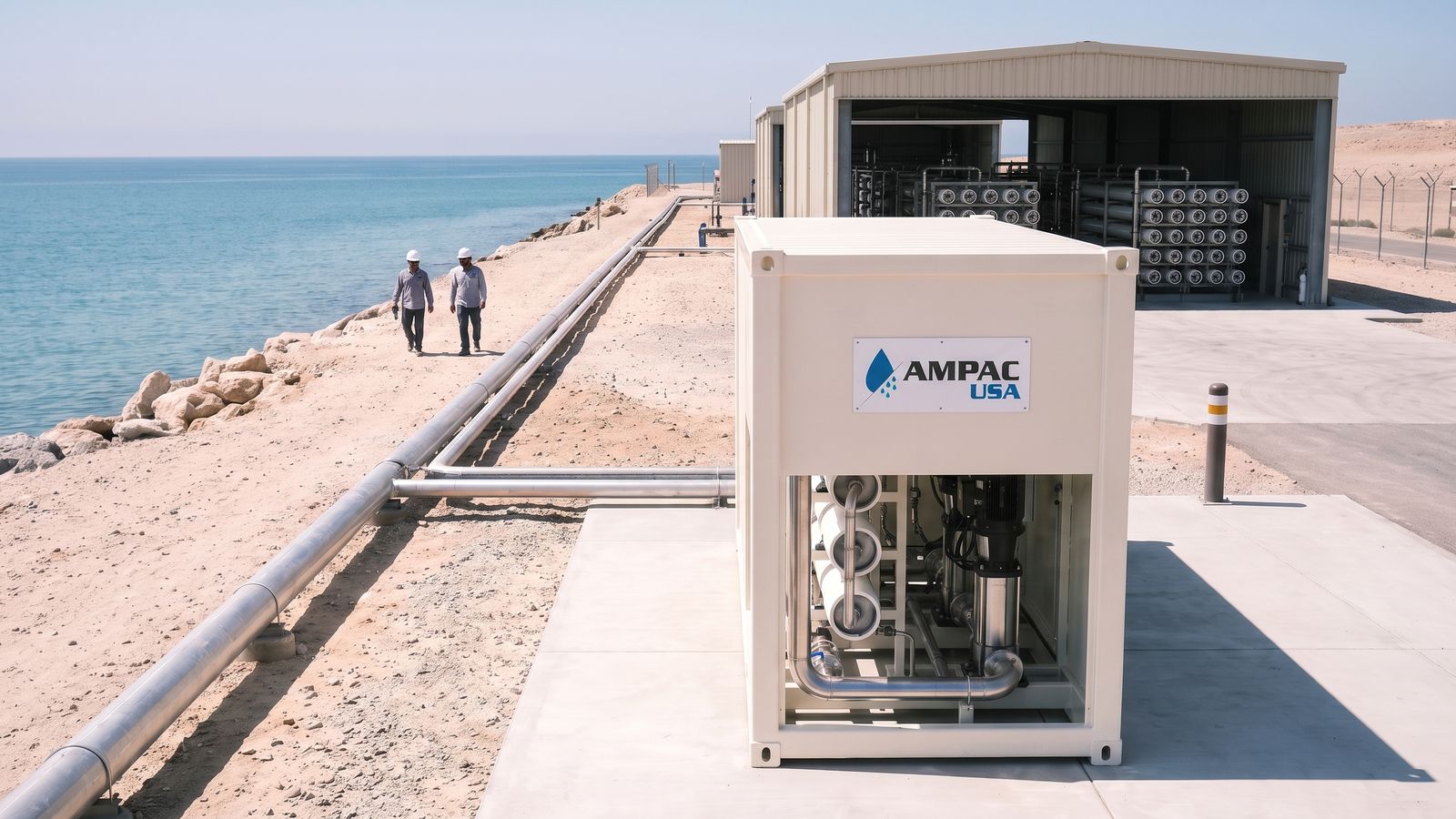

The Middle East is a dry place, with little water. This means big problems for its quickly growing population and economies. Seawater desalination is a key technology here. It’s a real solution for meeting the region’s rising water needs. We’ll look at how seawater desalination helps water security in the Middle East, what it can do, new tech, and its role in regional growth.
Why the Middle East Really Needs Water Security
Water security is super important for the Middle East. Natural freshwater is scarce and spread out unevenly. Fast population growth, farming expansion, and industry have caused a serious water shortage. So, water security is a top priority for stability and a good future.
Seawater Desalination: A Water Source
Seawater desalination takes salt and other stuff out of seawater to make fresh water. It’s a real hope. The Middle East has plenty of seawater from the Arabian Gulf, Red Sea, and Mediterranean Sea. This makes desalination a great way to boost its water supply.
Better Desalination Technologies
Newer desalination tech has helped it spread across the Middle East. Reverse osmosis (RO) and multi-stage flash (MSF) distillation are the main methods. RO is popular because it uses less energy and costs less to run. MSF is still chosen for making lots of water.
Read: Top 10 Reasons Why Purified Water Should Be Your Drink of Choice
Energy-Saving Solutions and Green Energy
Energy use is a big deal in desalination. The Middle East has really worked on using renewable energy, like solar and wind power, in its desalination plants. This doesn’t just cut down on the carbon footprint. It also fits the region’s plan for sustainable growth and different energy sources.
How This Helps Regional Growth
Seawater desalination does more than just give the Middle East fresh water. It helps farming, industry, and city growth. This builds economic variety and resilience against climate change.
More Water Means More Economic Options
Having fresh water from desalination helps the Middle East’s economy grow in new ways. It lets water-heavy industries expand and supports sustainable farming. This reduces how much the region depends on oil money, creating a more balanced economy.
City Growth and Better Lives
Desalination directly affects city growth and life quality in the Middle East. By making sure there’s a steady water supply, desalination helps cities grow and build modern, sustainable places to live. This makes life better for everyone there.
Read: Why seawater desalination system required in oceanic countries?
Tackling Environmental and Economic Issues
Desalination helps with water scarcity, but it also creates environmental and economic issues we need to fix. Brine, a leftover from desalination, can harm the environment. We need new ways to manage it. Also, desalination projects need to be affordable, which means cutting operating costs and energy use. This shows how important it is to keep building better tech and improving efficiency.
Smart Brine Management and Getting Resources Back
We’re looking into smart ways to manage brine. Think zero liquid discharge (ZLD) systems or taking out minerals and salts for sale. These ideas aim to lower environmental impact and make desalination more sustainable.
What’s Next: Keeping Desalination Sustainable
The future of seawater desalination in the Middle East depends on using sustainable methods. We need to balance making water with protecting the environment and keeping costs down. This means investing in research to build more energy-efficient desalination tech, having strict environmental rules, and working together regionally to share knowledge and resources.
Read: How Seawater Desalination is Changing Lives?
Working Together Regionally and Sharing What We Know
Countries in the Middle East need to work together. This is key to making desalination better and improving water security. Regional projects that share knowledge, do joint research, and build shared infrastructure can help everyone adopt the best practices faster. It creates a team approach to solving water scarcity.
Seawater desalination isn’t just a tech solution; it’s a must-have for the Middle East. It offers a path to water security, supporting sustainable growth, diverse economies, and better lives. By using new tech, green energy, and working together, the Middle East can use desalination to beat its water scarcity issues and build a great future for its people.
Frequently Asked Questions
What are the primary desalination technologies used in the Middle East?
The Middle East predominantly utilizes Reverse Osmosis (RO) and Multi-Stage Flash (MSF) distillation for seawater desalination. RO systems are favored for their energy efficiency and lower operational costs, making them increasingly popular for producing fresh water. MSF technology, while more energy-intensive, remains a key method for large-scale water production due to its robust capabilities.
How does reverse osmosis (RO) contribute to water security in the Middle East?
Reverse Osmosis (RO) significantly enhances water security in the Middle East by efficiently removing salts and impurities from seawater, transforming it into potable fresh water. Its energy-efficient operation and lower operational costs make it a sustainable choice for augmenting the region’s limited natural freshwater resources. AMPAC USA designs and manufactures commercial RO systems capable of meeting the diverse water demands of municipalities, industries, and resorts across the region.
What challenges does the Middle East face regarding water security?
The Middle East confronts severe water security challenges due to its arid climate, scarce natural freshwater resources, and uneven distribution. Rapid population growth, extensive agricultural expansion, and increasing industrial development collectively exert immense pressure on existing water supplies. This acute water scarcity necessitates advanced solutions like desalination to ensure regional stability and prosperity.
How are desalination plants in the Middle East addressing energy consumption?
Desalination plants in the Middle East are actively addressing energy consumption by integrating renewable energy sources such as solar and wind power. This strategic shift not only reduces the carbon footprint associated with desalination processes but also aligns with the region’s broader vision for sustainable development and energy diversification. Advanced RO systems, like those engineered by AMPAC USA, are designed for optimal energy efficiency, further minimizing operational energy demands.
Why is seawater desalination considered a sustainable solution for the Middle East?
Seawater desalination is considered a sustainable solution for the Middle East because it taps into the region’s abundant marine resources, including the Arabian Gulf and Red Sea, providing a virtually limitless water source. This technology ensures a reliable, long-term supply of fresh water crucial for supporting agricultural activities, industrial expansion, and the needs of a growing population. By integrating renewable energy, desalination also contributes to environmental sustainability.
AMPAC USA engineers custom water purification systems for commercial, industrial, and emergency applications — from 500 GPD to multi-million GPD. Trusted by municipalities, military, and industry worldwide.