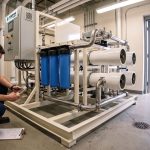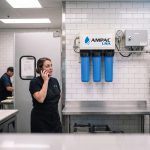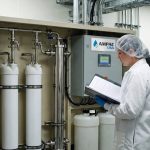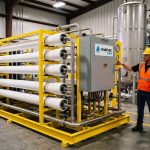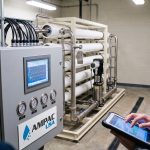

Commercial RO isn’t just a fleeting trend; it’s absolutely essential for modern water treatment. Here at AMPAC USA, we build tough solutions. Our systems give you safe, clean water for everything from big apartment buildings to critical industrial jobs. We engineer them to pull out maximum contaminants and run reliably—because you can’t afford downtime.
Let’s be honest: almost every water source today is questionable. Even many freshwater supplies just aren’t dependable anymore. That’s why commercial reverse osmosis is booming—and it’s not slowing down. This proven technology strips out impurities, leaving water truly clean. It’s that simple.
So, why is commercial reverse osmosis so vital? We’ve seen it firsthand, in thousands of places. Let’s break down the main reasons AMPAC USA engineers always talk about.
- Water Quality is Paramount in Commercial Establishments
Here’s the deal: the water you use directly affects your product or service. Period. Whether you’re brewing craft beer or making fancy meals, bad water means bad results. To give customers a truly great experience, your water quality just has to be excellent.
- Health and Safety are Vital
For any business, customer health and safety are non-negotiable. Good water treatment technology like RO systems effectively removes toxins, germs, and other nasty stuff. This isn’t just about following rules; it’s about protecting your brand and your customers.
- Purity is Guaranteed Every Time
The reverse osmosis process consistently delivers water that’s clear, odorless, and tasteless. More importantly, it’s incredibly pure. Honestly, most buyers today expect this basic level of purity—especially in food service or hospitality. Fall short, and they’ll absolutely go somewhere else. That’s just how the market works.
- Works for Various Establishments
One huge plus? Commercial reverse osmosis systems are super versatile. We’ve put them in countless different places, always seeing equally great results. Think about it: From a busy coffee shop needing pure espresso water, to a fancy resort in the Maldives handling complex drinking water, or even a big food & beverage plant needing ultra-pure water for consistent products, these systems adapt and perform. That flexibility is key.
- Value for Money Always Matters
Anyone running a business needs real value. They need a system built for their specific water flow and chemistry—one that truly helps them reach their goals, not just a generic box. Our commercial RO systems are built to last; we’re talking strong parts, sturdy skid-mounted frames, and smart engineering. This means a long-lasting asset that works consistently for years, keeping your total cost of ownership low. We’ve even seen systems we put in over 15 years ago still running strong.
AMPAC USA – Your Partner for Commercial RO Systems
Looking for a commercial RO system? You need one that’s not just priced right, but truly custom, expertly built, and delivered fast. That’s exactly what we do at AMPAC USA. We don’t just sell systems; we provide reliable, long-lasting, tough solutions engineered for top performance and clear value. We’ve been doing this for over 30 years—we know what works. Call us directly at 909-548-4900 to talk about your specific commercial water treatment problems.
Related Articles
- Whole House Reverse Osmosis System for Commercial & Industrial Water Treatment
- Cannabis Water Treatment: Why Commercial Grows Use Reverse Osmosis
- Commercial Reverse Osmosis System Buyer's Guide: 100 to 10,000 GPD
- Does Reverse Osmosis Remove PFAS? What Commercial Operators Need to Know
The Bottom Line
We’ve explained why reverse osmosis isn’t just a technology, but an essential investment for clean water in homes, businesses, and industries. If your business or organization needs dependable RO purification, don’t settle for something off-the-shelf. AMPAC USA engineers custom systems—precisely made for your specific water quality issues and flow needs. We’re here to help you get it right. Reach out to our team at info@ampac1.com or (909) 548-4900 to discuss your water treatment needs.
Why Commercial RO is an Enduring Necessity
Water quality isn’t just a buzzword; it directly impacts people’s health, how productive your operations are, and how long your important equipment lasts. The ongoing need for commercial RO is a big deal for facility managers, engineers, and even homeowners who really understand water quality. We—AMPAC USA—design and build water treatment systems that tackle all kinds of contaminants: from dissolved solids and heavy metals to biological threats and those tricky new compounds.
Reverse osmosis technology? It’s the backbone of almost all advanced water treatment. RO membranes are incredibly effective, blocking up to 99% of dissolved contaminants. We’re talking about lead, arsenic, nitrates, fluoride, and even chlorine byproducts. The semipermeable membrane acts like a super-fine filter, letting only pure water molecules through. The result? Exceptionally pure water right where you need it.
Sizing an RO system isn’t a “one-size-fits-all” deal. It depends on your exact daily water needs, the source water’s TDS (Total Dissolved Solids) levels, temperature, and how much water you want to recover. Industrial systems can range from a modest 500 GPD (Gallons Per Day) to massive multi-million GPD capacities. Home units, on the other hand, usually run smaller, around 50–200 GPD. Here’s a pro tip: proper pre-treatment—that includes sediment filters, activated carbon, and antiscalant dosing—is a must. It dramatically extends membrane life and keeps your system working at its best. Always check TDS rejection, pressure differences, and flow rate. These numbers make sure your system stays within its design and performs reliably.
Frequently Asked Questions
What specific impurities does commercial reverse osmosis remove from water?
Commercial reverse osmosis effectively eliminates a wide range of impurities, including toxins, microbes, dissolved solids, and other harmful elements. AMPAC USA systems are engineered for maximum contaminant removal, ensuring water is consistently colorless, odorless, and tasteless. This process guarantees a high level of purity essential for health and safety in commercial settings.
Why is consistent water quality crucial for commercial businesses?
Consistent water quality is paramount for commercial establishments because it directly impacts the quality of products and services offered, as well as customer satisfaction. Poor water quality can compromise health and safety, leading to customer dissatisfaction and potential brand damage. AMPAC USA systems ensure the best water quality to meet these critical business needs.
Which commercial sectors commonly utilize reverse osmosis systems?
Commercial reverse osmosis systems are widely adopted across diverse sectors, from neighborhood cafés and large restaurants to wineries, luxury resorts, and municipalities. AMPAC USA’s 30+ years of experience includes installations on offshore oil rigs, military bases, and food & beverage plants, demonstrating their versatility and performance in various demanding environments.
How does AMPAC USA ensure the reliability and longevity of its commercial RO systems?
AMPAC USA ensures reliability and longevity through superior engineering, robust build quality, and sturdy system architecture. Our systems feature a genius technical design, are customized to specific business needs, and are built to be resilient and long-lasting. This commitment to quality provides maximum performance and value for money, backed by decades of field experience.
Are natural freshwater sources sufficient for commercial water needs today?
No, the purity of almost every water source, including most freshwater sources, is increasingly being questioned and deemed unreliable for commercial applications. Commercial reverse osmosis technology is essential to eliminate impurities and make water contamination-free, ensuring the health, safety, and operational integrity that businesses require.
AMPAC USA engineers custom water purification systems for commercial, industrial, and emergency applications — from 500 GPD to multi-million GPD. Trusted by municipalities, military, and industry worldwide.